Moscow’s Victory Day parade goes without tanks amid Ukraine drone threat
For the first time since 2007, Moscow’s Victory Day parade skipped tanks and missiles, a conspicuous sign of how Ukraine’s drone war is reshaping Kremlin spectacle.
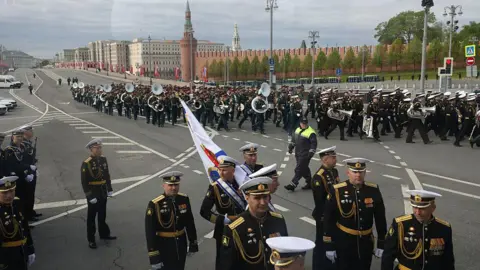
Moscow’s Victory Day parade went ahead on Red Square without the tanks, missiles and armored vehicles that have long been used to turn Russia’s most important national ritual into a display of force. For the first time since 2007, the annual May 9 procession marking the 81st anniversary of victory over Nazi Germany was held without military hardware, a striking adjustment for a ceremony built around the projection of power.
Russian officials said the pared-back format reflected the “current operational situation,” while Kremlin spokesman Dmitry Peskov blamed Ukraine’s “terrorist activity,” a reference to drone strikes deep inside Russia. The parade still included marching servicemen and a military aircraft flyover, but the absence of hardware from Red Square undercut the familiar image of Russian strength that the Kremlin has cultivated for nearly two decades. Red Square parades have featured military equipment every year since 2008, and after Russia’s full-scale invasion of Ukraine the event became even more closely tied to the war effort.
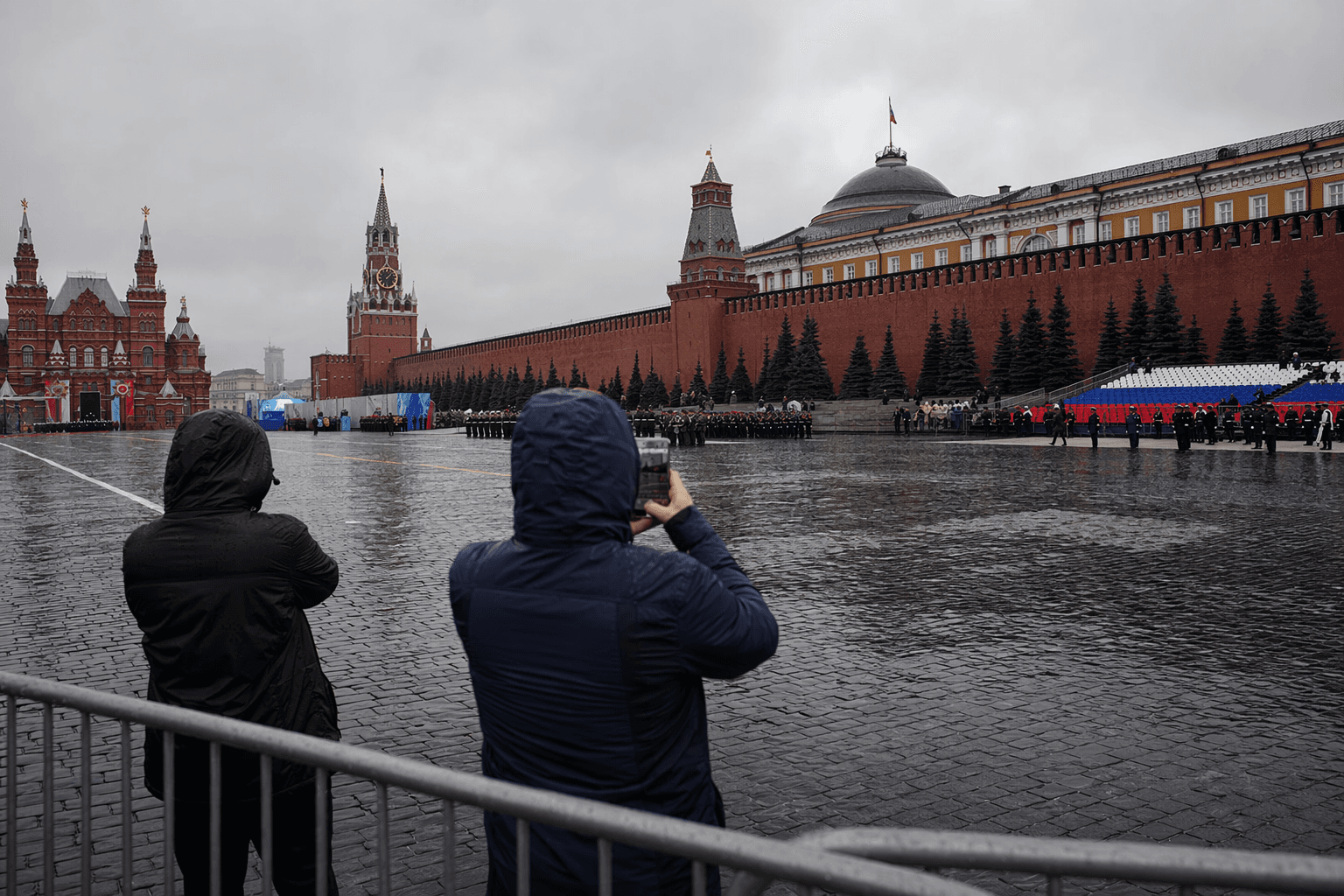
The change came as Moscow faced tighter security and a U.S.-brokered three-day ceasefire that eased fears of a Ukrainian disruption during the spectacle. Vladimir Putin and several foreign leaders attended, but the visual message was unmistakable: the Kremlin kept the choreography of victory while trimming the symbols that usually give it weight. The Soviet Union lost 27 million people in World War II, and that trauma remains central to Russian state memory, making Victory Day one of the Kremlin’s most powerful tools for mobilizing patriotism and legitimizing sacrifice.
This year, that tool looked less muscular. Many Russian regions also cancelled or scaled back their own Victory Day events, and the Immortal Regiment march, one of the most prominent civilian commemorations, was restricted in some places or moved online. The wider pattern suggested a state recalibrating its public messaging as the war in Ukraine makes it harder to disguise strain. On Red Square, the Kremlin still staged unity and endurance, but the missing military hardware told a different story: even Russia’s biggest show of strength now has to account for the war at its borders and the vulnerability it exposes.
This article was produced by Prism’s automated news system from verified source data, official records, and press releases, then run through automated quality and moderation checks before publishing. The system is built and supervised by the people who set the standards it runs under. Read our full AI policy.
Did this article answer your question?


