Most Americans Call Iran Strike a Mistake, Fear Economic Fallout
Most Americans now call the Iran strike a mistake, a backlash echoing Iraq and Vietnam as recession fears and higher gas prices deepen the gloom.
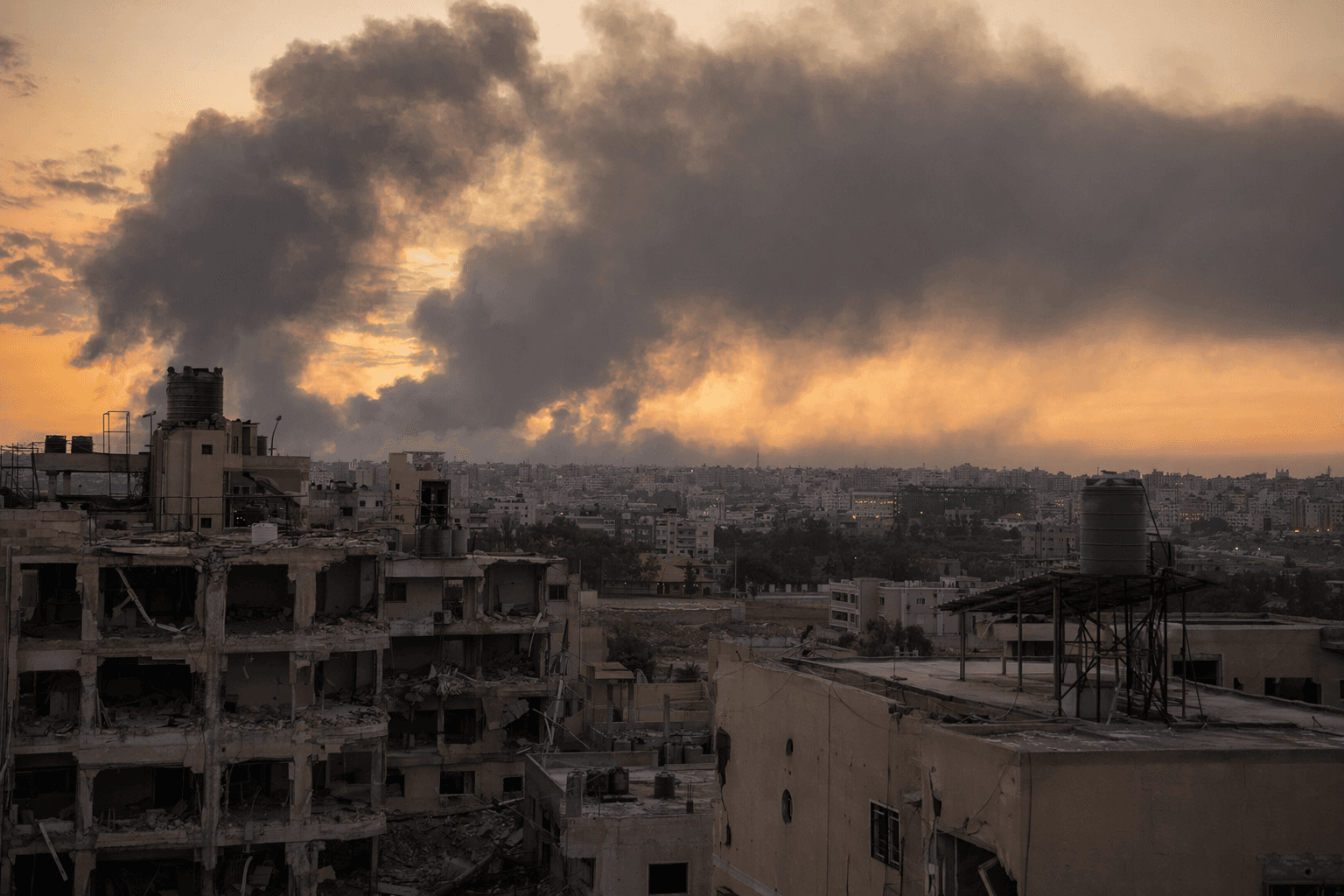
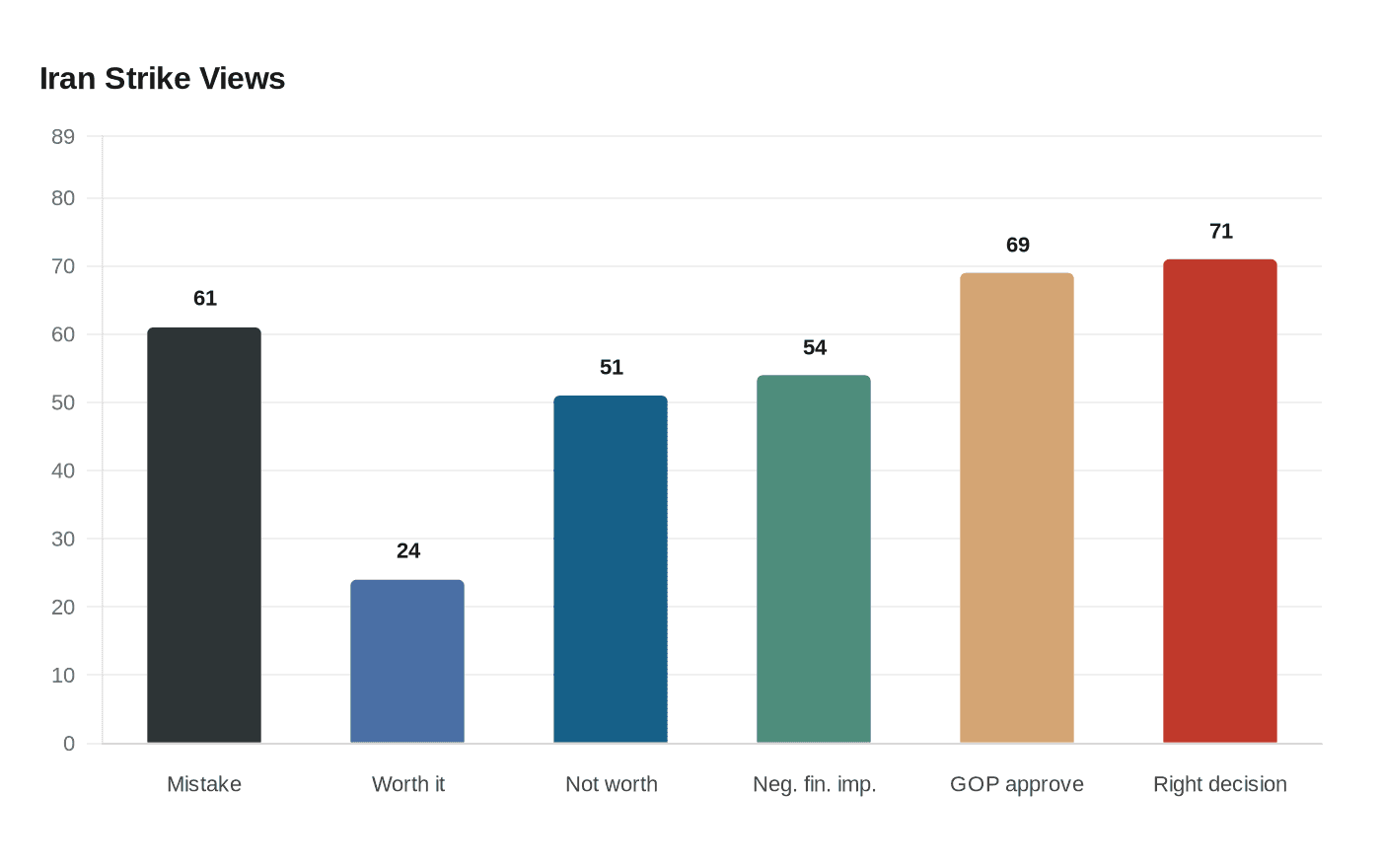
Sixty-one percent of Americans now say using military force against Iran was a mistake, a level of disapproval that echoes the public reversals seen during the Iraq war in 2006 and the Vietnam era in the early 1970s. The ABC News/Washington Post/Ipsos poll, conducted April 24-28 among 2,560 U.S. adults, suggests Donald Trump is facing not just unease over a single strike, but the kind of historical political danger that can harden into broader opposition when a war begins to look open-ended and costly.
The numbers point to a country that is broadly skeptical, but not uniformly so. Most Americans said they were not confident any agreement with Iran would prevent Tehran from developing nuclear weapons, and most said U.S. military action had increased the risk of terrorism against Americans. Yet Republican support remains strong enough to keep the debate polarized rather than fully nationalized. Pew Research Center found March 16-22 that 69% of Republicans approved of Trump’s handling of the conflict and 71% said the United States made the right decision to use force, even as 61% of Americans overall disapproved of his handling.
Still, even within Trump’s party there were signs of strain. A slim majority of Republicans reacted negatively to his Truth Social post warning, “A whole civilization will die tonight.” That matters because it shows the issue is not only dividing Democrats and Republicans, but also creating discomfort among some voters who otherwise remain loyal to Trump on security and foreign policy.
Economic anxiety is making the political damage worse. Half of Americans expect gas prices to rise further over the next year, 4 in 10 say they are not as well off financially as they were when Trump returned to the White House in 2025, and nearly a quarter say they are falling behind. Ipsos found on April 10-12 that only 24% said the military action had been worth it, while 51% said it had not been worth it; 54% said the war had had a mostly negative impact on their personal financial situation.
That pessimism is colliding with a dangerous energy backdrop. ABC News reported March 30 that the U.S.-Israeli attacks on Iran had triggered one of the worst global oil shocks in decades, with Goldman Sachs lifting its 12-month recession probability from 25% to 30% and Moody’s Analytics putting recession odds just below 50%. Crude had climbed above $112 a barrel, and average U.S. gasoline prices had risen to $3.99 a gallon, up $1.01 in a month. With gas prices reaching a four-year high and public confidence weakening, the Iran strike is now testing not only Trump’s foreign-policy standing, but his economic one too.
This article was produced by Prism’s automated news system from verified source data, official records, and press releases, then run through automated quality and moderation checks before publishing. The system is built and supervised by the people who set the standards it runs under. Read our full AI policy.
Did this article answer your question?

