Most people choose £50,000 over a 50-50 shot at £1m
Three in four British adults chose £50,000 now over a 50-50 shot at £1m, and women backed the guaranteed payout 82%.
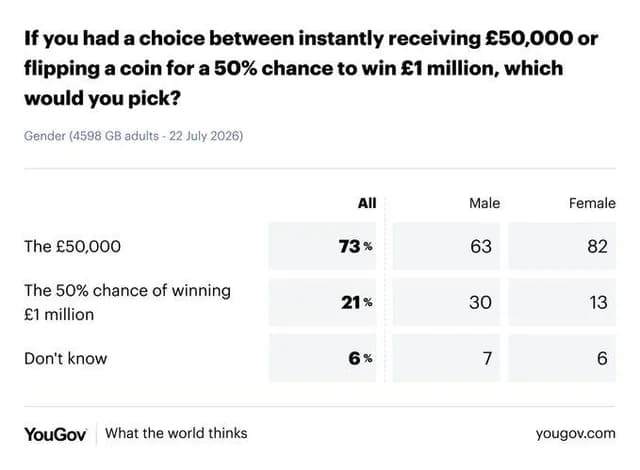
YouGov’s question put a blunt choice in front of British adults: take £50,000 immediately or flip a coin for a 50/50 chance of £1m. Seventy-three per cent chose the guaranteed payout, while 21% chose the gamble, and women were even more cautious, backing the certain £50,000 option by 82%.
The response reads like a snapshot of households that value certainty over upside. £50,000 is enough to wipe out debt, rebuild savings or make a major purchase without waiting for luck. John Stepek argued the question may work better the other way round, as how much someone would pay for a lottery ticket that offered a 50/50 chance at £1m, because that would show the amount respondents see as “near enough to life-changing as not to be worth risking”.

That caution fits a wider British conversation about odds. BBC News said in 2015 that when Lotto moved from 49 balls to 59, the jackpot odds worsened from 1 in 14 million to 1 in 45 million, even though the chance of winning something improved from 1 in 59 to 1 in 9.3. In January 2016, BBC News reported a statistician saying winning the lottery had become “less than ever” likely. Allwyn said in June 2026 that changes to Lotto would improve the chance of winning a prize from 1 in 9.3 to 1 in 4.9, with the first new draw set for Wednesday 10 June 2026.
The contrast is stark: lottery marketing sells the dream of a life-changing windfall, but the public response to £50,000 versus £1m showed how often people prefer a guaranteed reset to a mathematically better but far riskier prize. Even the rarest lottery stories, like a couple who won £1m twice with odds described as more than 24-trillion-to-one, underline why certainty still carries a premium in Britain.
This article was produced by Prism’s automated news system from verified source data, official records, and press releases, then run through automated quality and moderation checks before publishing. The system is built and supervised by the people who set the standards it runs under. Read our full AI policy.
Did this article answer your question?