Moulton challenges Hegseth on Iran war, demands public Pentagon hearing
Seth Moulton pressed Pete Hegseth over Iran, turning their Iraq War backgrounds into a fight over congressional power, secrecy and the lessons of another open-ended war.
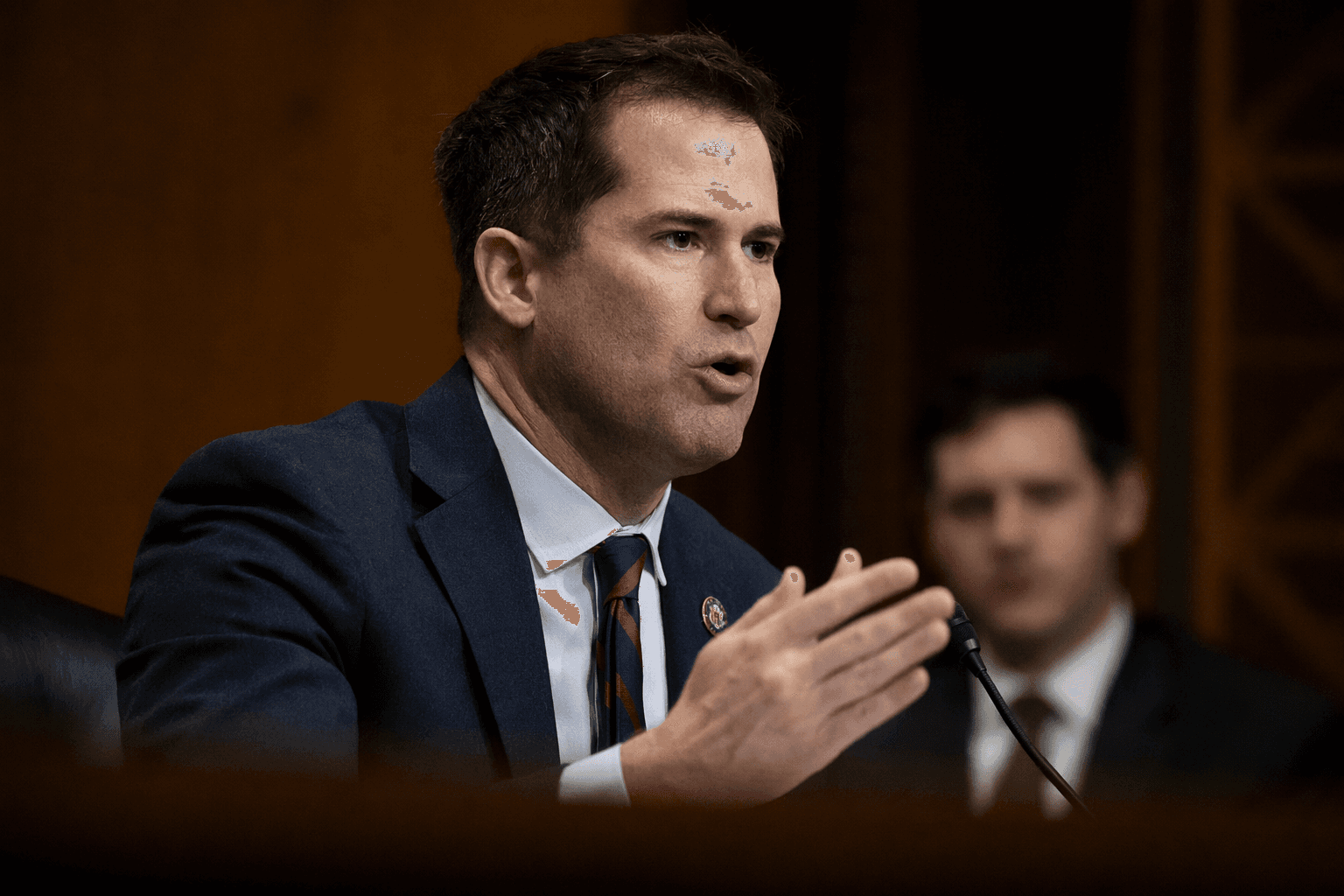
Seth Moulton turned a shared Iraq War past into a sharp challenge over Iran, confronting Defense Secretary Pete Hegseth as Congress escalated demands for answers about a campaign that Democrats say has unfolded without enough public scrutiny. The Massachusetts Democrat, who serves on the House Armed Services Committee, pressed Hegseth at an April 29 hearing, his first testimony since the onset of what Moulton and other Democrats described as a 60-day war with Iran.
The confrontation captured the central split now running through Washington’s Iraq veterans. Moulton is using that war’s legacy to argue for restraint, congressional oversight and clearer limits on military action. Hegseth’s own Iraq-era service, by contrast, has been folded into the Trump administration’s posture of force, making his experience both a credential and a point of vulnerability as lawmakers ask whether the White House is repeating the habits that dragged the country into Iraq without a full political debate.
Moulton and House Armed Services Committee Democrats, led by Ranking Member Adam Smith of Washington, said they were demanding an open Pentagon hearing on the military action against Iran. Their concern centered on transparency, including reports surrounding the deaths of 13 U.S. personnel, and on whether the administration had moved ahead without new congressional authorization under the War Powers Resolution.

Congress has already begun to test that question. In 2026, lawmakers introduced H.Con.Res. 38 and S.J.Res. 116 to direct the president to remove U.S. forces from unauthorized hostilities in Iran. Another House measure, H.Con.Res. 86, was introduced on April 20 to direct the president to remove U.S. Armed Forces from hostilities with Iran. The measures reflect a growing clash over whether Donald Trump can sustain the campaign on his own authority.
The Defense Department’s own fact sheet puts the scale of the operation in stark terms. It says U.S. Central Command commenced Operation Epic Fury against Iran on Feb. 28, 2026, at 1:15 a.m., with targets struck exceeding 12,300, combat flights above 13,000 and more than 155 Iranian vessels damaged or destroyed. Those figures suggest a sustained military effort rather than a limited strike campaign, sharpening demands for an accounting in public.

Hegseth’s Pentagon has also leaned hard on martial symbolism. The Defense Department’s 2026 National Defense Strategy refers to him as Secretary of War and says he met World War II veterans in Normandy on the 81st anniversary of D-Day. But inside Congress, the Iraq generation is being used for a different purpose now: as a warning that experience in war does not settle the question of when a president may launch one.
This article was produced by Prism’s automated news system from verified source data, official records, and press releases, then run through automated quality and moderation checks before publishing. The system is built and supervised by the people who set the standards it runs under. Read our full AI policy.
Did this article answer your question?

