MPs Vote Down Australian-Style Social Media Ban for Under-16s, 307 to 173
With 107 of its own MPs abstaining, Labour's government defeated an Australian-style social media ban for under-16s 307 to 173, exposing a deep party rift over children's online safety.
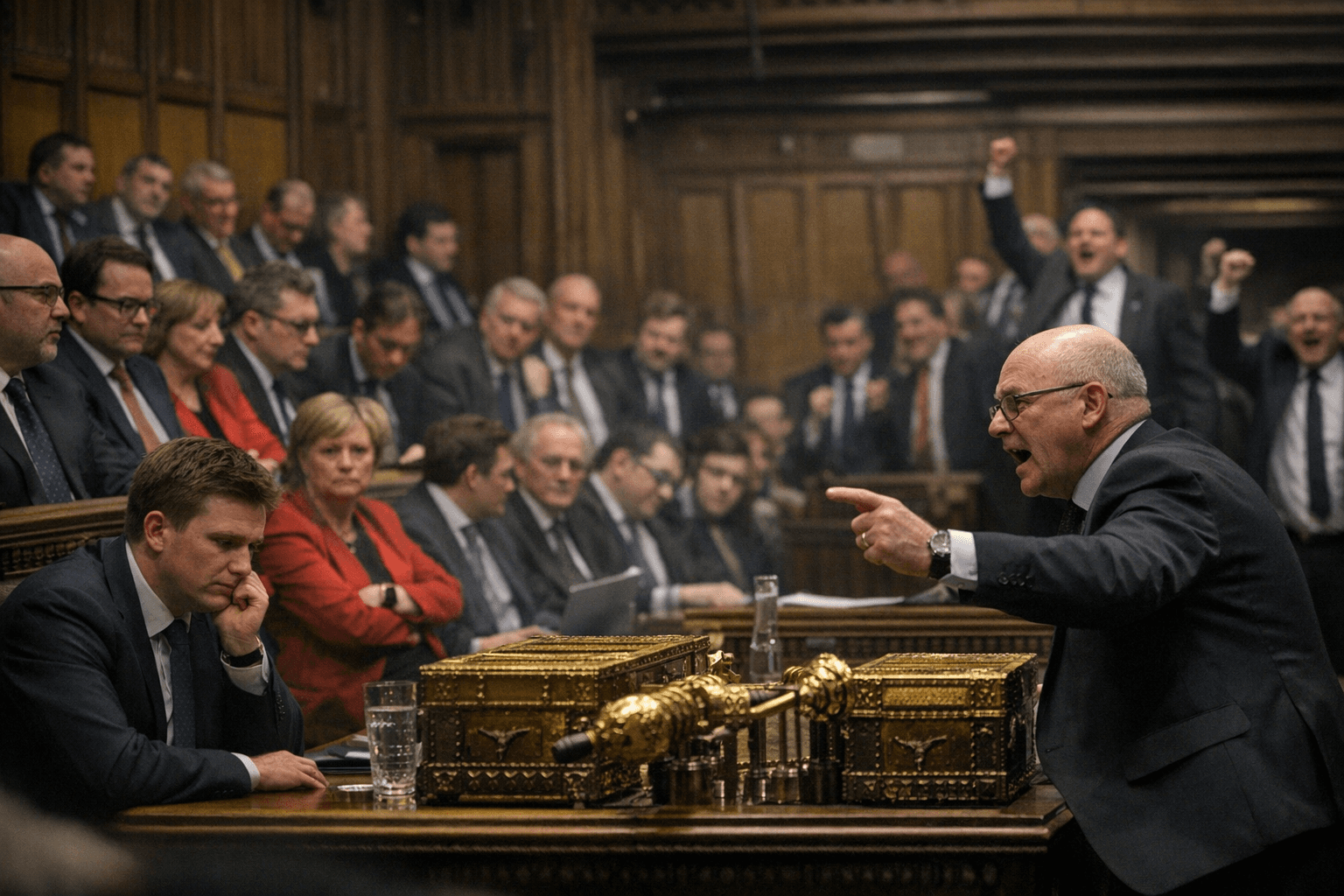
One hundred and seven Labour MPs refused to back their own government Monday when the Commons voted 307 to 173 to reject an amendment that would have banned children under 16 from social media, a margin that masked a party deeply divided over one of the sharpest child welfare questions of this parliament.
The vote defeated a proposed change to the Children's Wellbeing and Schools Bill brought forward by Conservative former minister Lord Nash, whose amendment had already cleared the Lords earlier this year, backed by peers after growing calls from campaigners including actor Hugh Grant. The final majority against was 134.
The rebellion inside Labour was visible in the division lobby. John McDonnell, the MP for Hayes and Harlington, broke with the government and voted for the Lords amendment. Among the 107 colleagues who abstained was Sadik Al-Hassan, Labour MP for North Somerset, who had already laid out his case in stark clinical terms. "As a pharmacist," Al-Hassan said, "I know if a drug were causing such measurable harm for 78 per cent, it would be withdrawn, reformulated or placed behind a counter with strict controls on who could access it. We would act, because that is what the evidence demanded. The same logic must apply here. We have an identifiable source, we have overwhelming evidence of harm, and we have the power to act." He had also described parents as being "locked in a daily battle that they simply cannot win alone, fighting platforms that have been specifically designed to keep children hooked."
The government's response to defeat was not retreat but a pivot toward executive power. Under an amendment in lieu that the Commons approved, Science Secretary Liz Kendall could "restrict or ban children of certain ages from accessing social media services and chat bots," limit children's VPN use, restrict access to addictive features, and change the age of digital consent. Ministers simultaneously launched a consultation on minimum age requirements and on switching off features such as autoplay, with the process due to close on 26 May.
Running alongside the consultation is a six-week pilot programme run by the Department for Science, Innovation and Technology. The trial will involve 300 young people aged 13 to 17, divided into four groups: one whose parents use parental controls to simulate a full ban; one facing a daily one-hour cap on platforms including TikTok, Snapchat and Instagram; one under a nightly curfew cutting off access between 9pm and 7am; and a control group whose habits remain unchanged. Researchers will monitor effects on schoolwork, sleep patterns and family life. Professor Orben, cited in coverage of the pilot, said "large randomised controlled trials, like the one in Bradford, will allow us to both better understand the impact of social media and select interventions that work for young people as well as their families."
The Liberal Democrats were unsparing. Munira Wilson, the party's education, children and families spokesperson, said: "The government's failure to commit to a ban on harmful social media is simply not good enough. Families need concrete assurances now. We need the government to confirm that their consultation will not result in yet more dither and delay."
Supporters of the Australian-style ban said parents are in "an impossible position" over the online harms their children are being exposed to, while the NSPCC warned a ban could drive teenagers into unregulated corners of the internet. France is among the countries that have also been weighing age limits modelled on Australia's policy.
The Children's Wellbeing and Schools Bill now returns to the House of Lords for further consideration and will only become law if both chambers agree on its final form, leaving the prospect of an outright ban unresolved but not foreclosed.
This article was produced by Prism’s automated news system from verified source data, official records, and press releases, then run through automated quality and moderation checks before publishing. The system is built and supervised by the people who set the standards it runs under. Read our full AI policy.
Did this article answer your question?

