Museveni begins new term as first lady’s absence draws notice
Janet Museveni’s absence from Yoweri Museveni’s swearing-in turned a choreographed show of power into a question about health, succession and the president’s grip on Uganda.
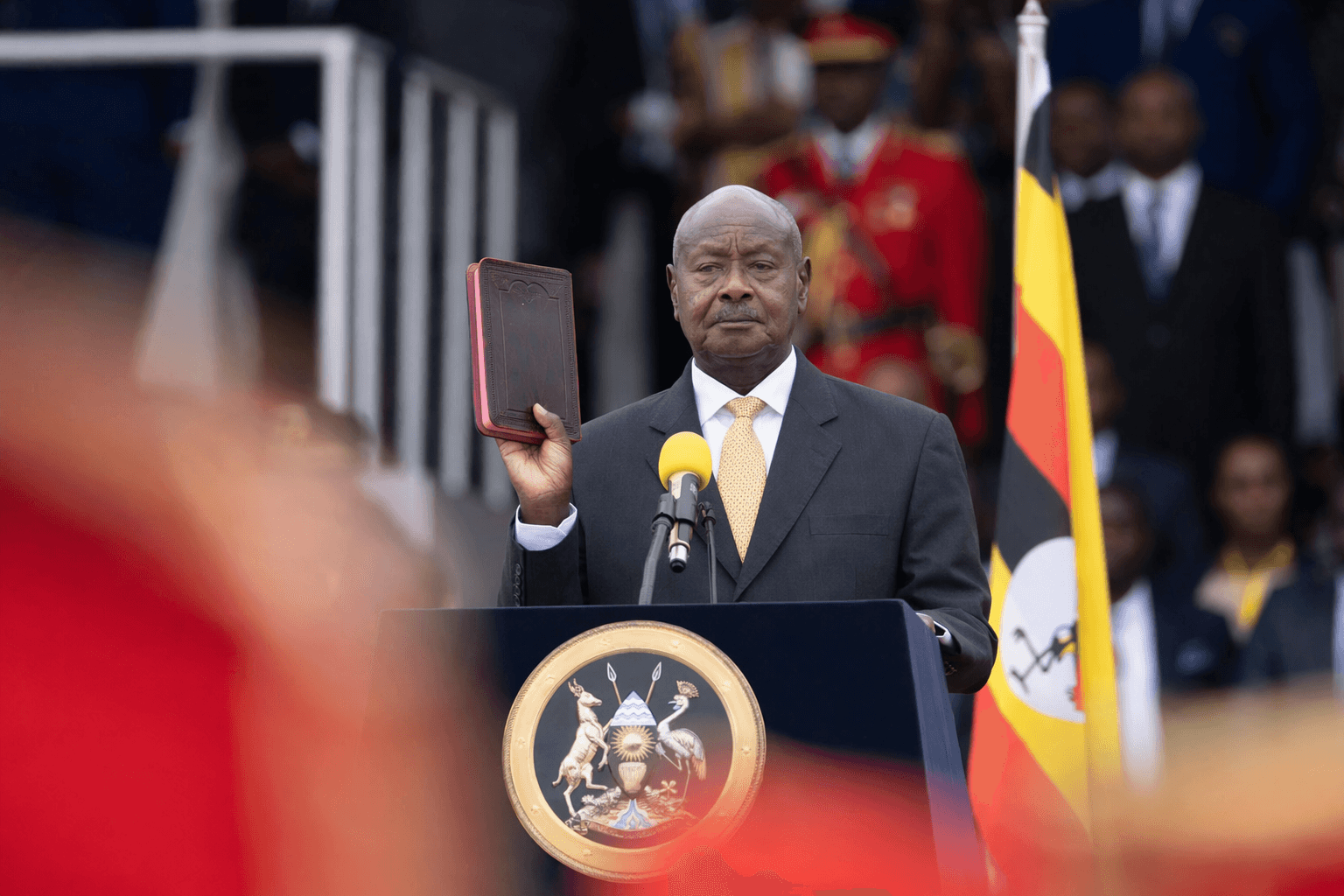
A crowded military ceremony at Kololo Ceremonial Grounds was missing one of Uganda’s most familiar political figures, and that absence quickly became the story. Yoweri Museveni took the oath for a seventh term on May 12, 2026, arriving in a convoy of more than 10 vehicles, reviewing an armed forces parade and standing under heavy security as military flyovers and paratrooper displays framed the day.
The president’s victory in January, when he was declared the winner with 71.65 percent of the vote, or 7,946,772 votes, gave him another five years and pushed his rule deeper into its fifth decade. The result came after an election marked by violent incidents and allegations of fraud, a reminder that the durability of his political machine has always been paired with pressure on the institutions around it.
What gave the inauguration its sharpest edge was not who stood at the center, but who was missing from the front row. Janet Kataaha Museveni, the first lady and minister of education and sports, was absent and had not been seen publicly for more than a month. It was the first time since 1996 that she had missed her husband’s swearing-in ceremony, a break from a long pattern that helped fuel immediate speculation in the crowd and online.
The uncertainty widened when Bishop Sheldon Mwesigwa, the Anglican dean of the Province of the Church of Uganda, prayed publicly for her health and later said she had “healed and recovered.” That brief remark, delivered in a setting built to project certainty, only sharpened questions about why one of the most visible members of Uganda’s ruling family had disappeared from view.
Museveni did not appear alone. His son, Gen. Muhoozi Kainerugaba, accompanied him during the parade inspection, and his daughter Natasha Karugire stood beside him at the ceremony. The family tableau underscored how much of Uganda’s power now runs through a narrow circle around the president, even as the first lady’s absence hinted at the fragility beneath the pageantry.
The event drew at least 15 heads of state, after earlier expectations that at least 35 would attend and more than 30 foreign delegations were likely. That international turnout showed the continuing weight of Museveni’s regional role, but it also highlighted the contradictions of his rule, a presidency that remains steady enough to command foreign attention and secure enough to stage a vast public ritual, yet still shadowed by succession questions and elite tensions that one missing figure made impossible to ignore.
This article was produced by Prism’s automated news system from verified source data, official records, and press releases, then run through automated quality and moderation checks before publishing. The system is built and supervised by the people who set the standards it runs under. Read our full AI policy.
Did this article answer your question?