Musk-Altman trial exposes OpenAI’s origins, mission, and internal tensions
A Brockman diary line and a Musk email to Jensen Huang are now central evidence in the fight over whether OpenAI stayed true to its nonprofit mission.
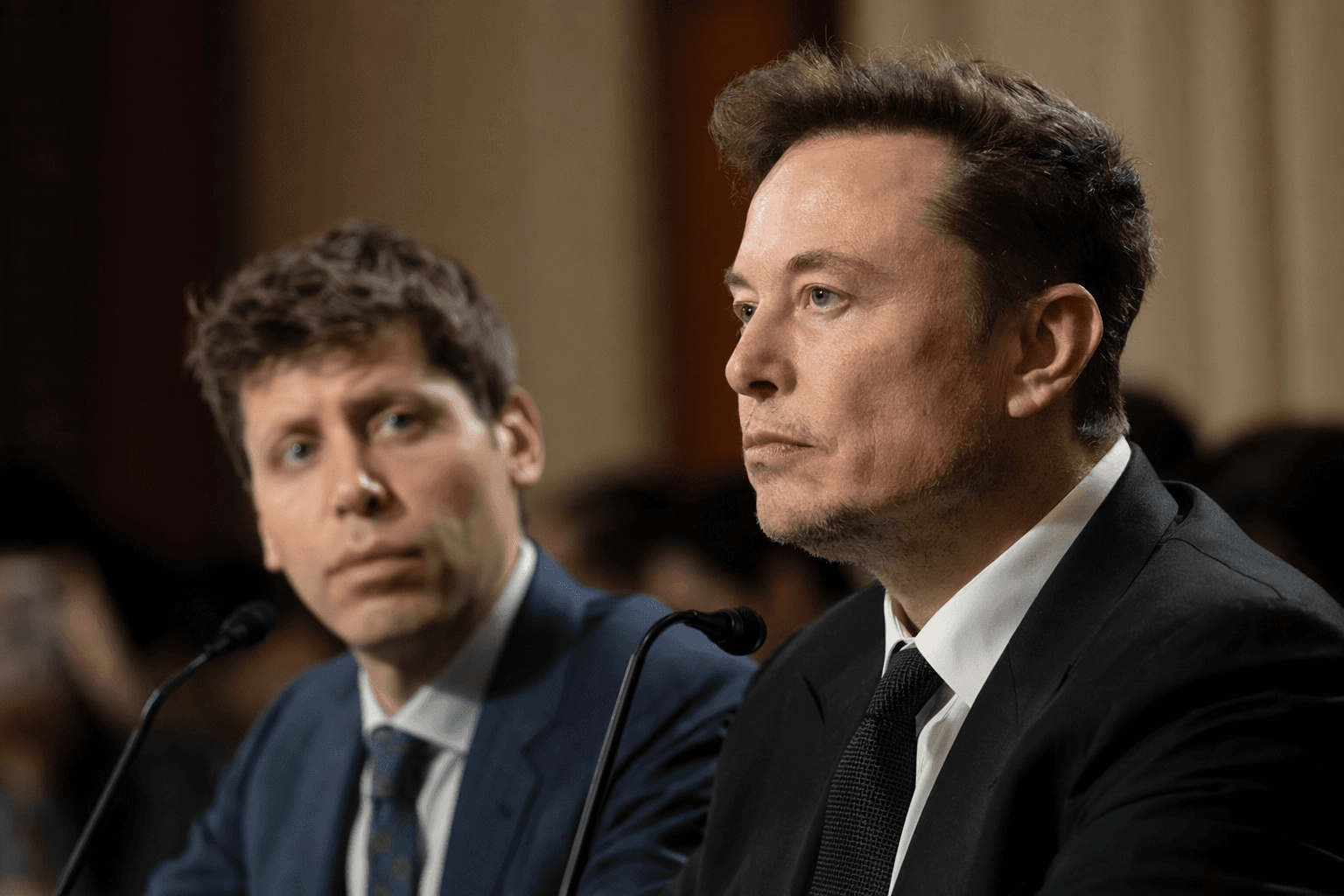
A private diary line from Greg Brockman and a 2016 email from Elon Musk have become some of the sharpest evidence in the trial over OpenAI’s origins, exposing a founding project that began as a nonprofit ideal and quickly collided with questions of control, capital and commercialization. The exhibits now circulating in court show the dispute is not just about personality. It is about who steered OpenAI, who financed it, and whether the company drifted from the mission that made it possible.
OpenAI was announced on December 11, 2015, as a nonprofit artificial intelligence research company. Its launch message said the goal was to advance digital intelligence for the benefit of humanity, unconstrained by a need to generate financial return. That language is now central to Musk’s case against OpenAI, Sam Altman and Greg Brockman, which he filed in 2024. Musk is seeking $150 billion in damages, with any proceeds intended for OpenAI’s charitable arm, placing the original nonprofit structure at the center of a battle that could shape how frontier AI companies are organized.
The trial reached a new stage in Oakland, California, where jury selection finished on April 28, 2026, and opening statements were expected the next day. By then, exhibits had already begun to reconstruct OpenAI’s earliest days, before the lab even had a formal name. One diary entry from Brockman in the fall of 2017 captured the internal strain in stark terms: “This is the only chance we have to get out from Elon.” That line underscores how deeply Musk’s influence was felt inside the group he helped launch, and how quickly the relationship had turned from alliance to suspicion.
Another exhibit shows Musk in 2016 emailing Nvidia chief executive Jensen Huang to ask for an early DGX-1 supercomputer unit for OpenAI, while stressing that OpenAI was unaffiliated with Tesla. The email, along with photos and corporate documents from the early period, cuts against any simple version of the company’s beginnings. It suggests Musk was still actively trying to equip the lab even as tensions over control were already building.
The record now portrays OpenAI’s path from a nonprofit research lab in Brockman’s apartment to a company valued at more than $850 billion. That trajectory is at the heart of the case. Musk says the company was misled and moved away from its charitable purpose. OpenAI argues the later structure was necessary to secure the compute and capital required for frontier AI research. The trial is now testing which account best fits the evidence, and whether the company’s future, including a possible initial public offering, can survive the scrutiny.
This article was produced by Prism’s automated news system from verified source data, official records, and press releases, then run through automated quality and moderation checks before publishing. The system is built and supervised by the people who set the standards it runs under. Read our full AI policy.
Did this article answer your question?


