Musk selfie moment with Xiaomi chief goes viral in China
A grimacing Elon Musk selfie with Xiaomi chief Lei Jun shot to the top of Weibo, drawing more than 20 million views and exposing China’s fascination with his business pull.
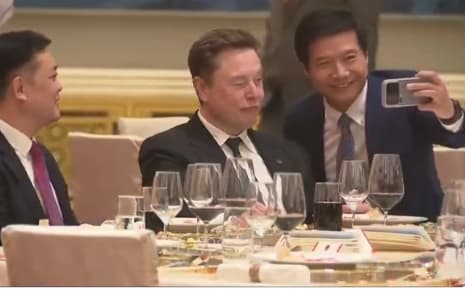
A brief, awkward selfie exchange between Elon Musk and Lei Jun raced across China’s social media, turning a state banquet into a test of how far Musk’s image still reaches in the world’s biggest EV market. The clip showed Lei, the founder and chief executive of Xiaomi, leaning in for a photo while Musk appeared exasperated or grimacing, and the moment quickly climbed into the top three trending topics on Weibo.
The scene unfolded at Beijing’s Great Hall of the People during a state banquet tied to a high-profile U.S.-China gathering. Lei Jun, whose Xiaomi has moved aggressively into electric vehicles, is not just another corporate host. He is one of China’s best-known tech executives and, by his own long-standing admiration for Musk, a public devotee of the Tesla chief. That made the encounter feel to many online like a full-circle moment between two executives whose businesses now overlap more directly than ever.
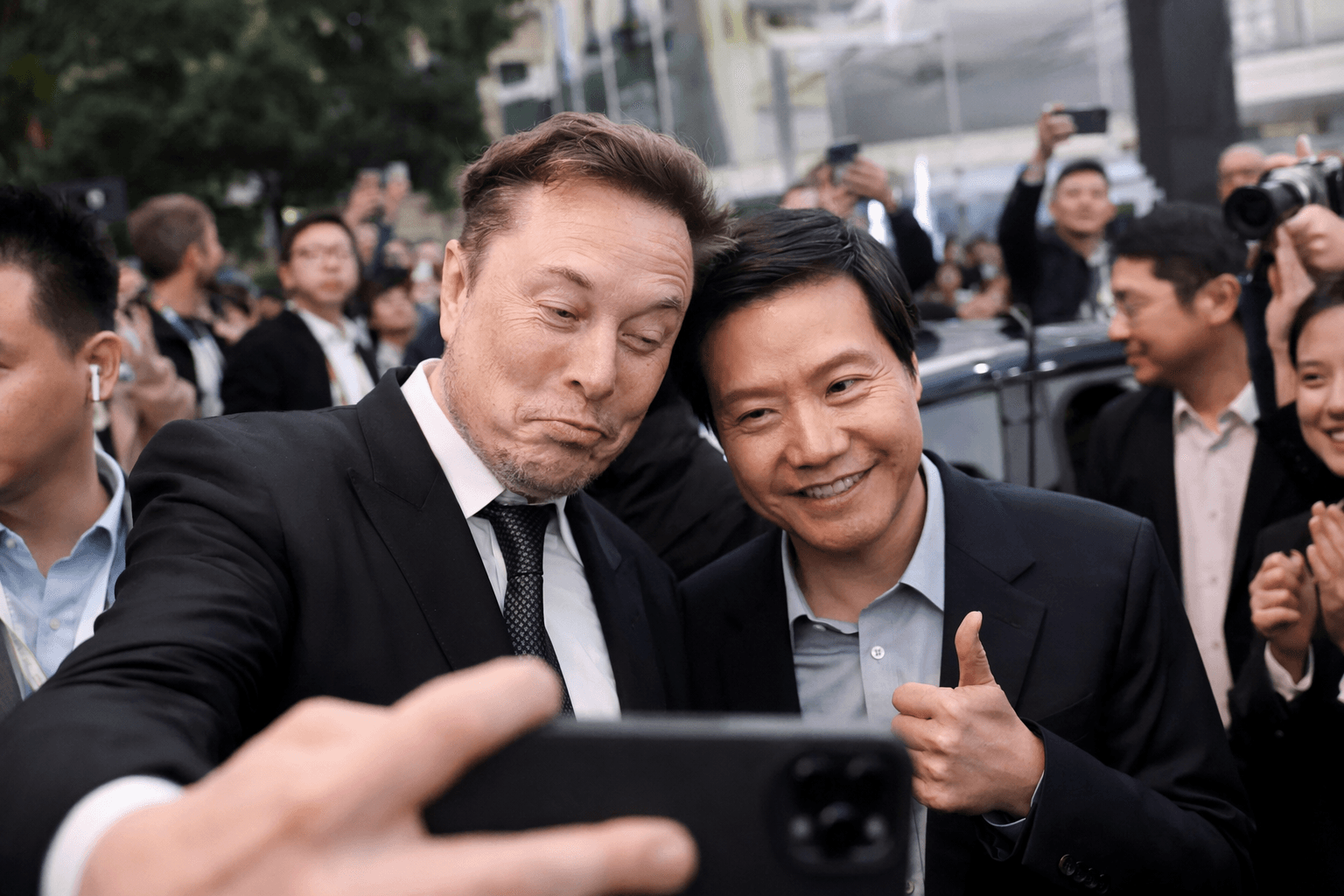
The online reaction mixed celebrity fascination with a sharper business edge. One report said the hashtag linked to Lei Jun and Musk posing together drew more than 20 million views on Chinese social media. Some commenters joked that Lei had been “humbled” by meeting his business hero, while other users fixated on Musk’s raised eyebrows and visible annoyance. The reaction underscored how quickly a few seconds of body language can become a referendum on status, ambition and national pride in China’s hyperactive internet culture.
The episode also highlighted why Musk remains unusually influential in China even as Tesla faces stiffer competition from domestic EV makers on both technology and price. Tesla was the first foreign automaker allowed to set up an automaking operation in China without a local partner, and its Shanghai factory became a landmark in the company’s expansion there. Tesla sold around 626,000 vehicles in China last year, according to reporting cited from the China Passenger Car Association, and China accounted for roughly a fifth of Tesla’s revenue, based on company data cited in coverage.
Analysts say Musk’s staying power in China rests on more than brand recognition. Kyle Chan of the Brookings Institution has argued that Beijing’s priorities line up closely with Musk’s businesses, including electric vehicles, autonomous vehicles, AI, humanoid robots, brain-computer interfaces and satellites. Musk has also signaled that he still sees room to grow, telling reporters he wanted to accomplish “many good things” in China. The selfie may have lasted only seconds, but the reaction showed that in China, Musk remains both a business rival and a cultural spectacle.
This article was produced by Prism’s automated news system from verified source data, official records, and press releases, then run through automated quality and moderation checks before publishing. The system is built and supervised by the people who set the standards it runs under. Read our full AI policy.
Did this article answer your question?
%3Amax_bytes(150000)%3Astrip_icc()%2FCertificate-of-deposit-2301f2164ceb4e91b100cb92aa6f868a.jpg&w=1920&q=75)