Musk tells Davos tariffs slow U.S. solar growth, highlights robot future
Elon Musk said U.S. solar tariffs hinder large domestic projects and outlined Tesla’s longer-term push into humanoid robots and automation.
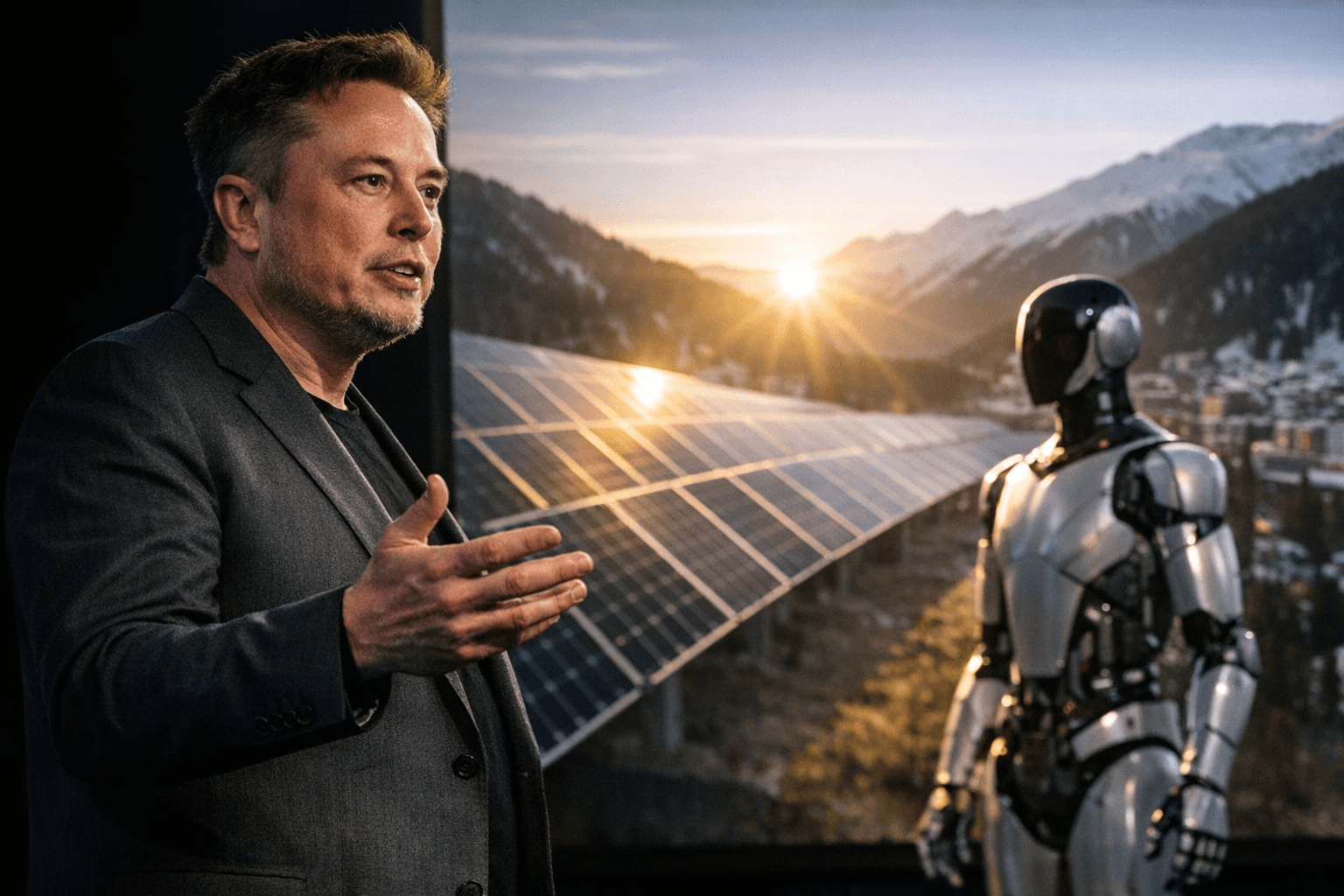
Elon Musk used a World Economic Forum interview in Davos to argue that U.S. tariffs on imported solar panels are slowing the pace of domestic solar deployment and to sketch a broader vision in which robots play an increasing role in industry and daily life. The comments, carried Jan. 22–23, 2026, put a high-profile CEO at the center of a heated policy debate over trade, climate and technological change.
Musk criticized the tariffs as an impediment to scaling up large solar projects in the United States, saying they make such developments less economically attractive. His assessment highlights a persistent tension in U.S. energy policy: tariffs are designed to protect domestic manufacturers and jobs, but they can raise equipment costs for utilities, developers and consumers, potentially slowing the adoption of clean energy technologies that are central to climate targets.
Tesla, which operates a solar and battery division alongside its electric vehicle and energy storage businesses, has a vested interest in faster solar diffusion. Musk’s comments signal pressure from industry leaders for policymakers to weigh near-term economic protections against longer-term climate objectives. Economists and energy analysts say tariff-driven price increases can shift project economics, delaying investments in utility-scale arrays and community solar initiatives that rely on tight cost assumptions to secure financing.
Beyond trade policy, Musk used the platform in Davos to revisit Tesla’s longer-term ambitions for robotics and automation. He framed robots as a critical component of future manufacturing and service sectors, and as a technological frontier the company intends to pursue in earnest. Tesla’s Optimus program, introduced in previous years, has been described by the company as an effort to build general-purpose humanoid robots that could perform repetitive or hazardous tasks and augment labor shortages.
The convergence of solar deployment and robotics in Musk’s remarks underscores a broader conversation about how technological innovation interacts with industrial policy. Advocates for protective tariffs argue that preserving domestic manufacturing capability is essential for national security and high-skilled employment. Opponents counter that tariffs can stall the rapid uptake of low-carbon technologies, making it harder to achieve emissions reductions at scale and increasing the cost of the energy transition.
Policy makers face a difficult calculus. Reducing trade barriers could accelerate renewable installations and lower power-system costs, but could also expose U.S. factories and workers to competition from lower-cost foreign suppliers. Investing in domestic manufacturing, meanwhile, requires time and capital and may need ongoing support to reach global competitiveness. Musk’s intervention at Davos is likely to intensify calls from industry for policymakers to reassess the balance of incentives and protections.
The debate is consequential not just for energy markets but for employment and economic strategy as robots and automation promise to reshape work in manufacturing and services. How Washington reconciles short-term industrial priorities with long-term climate commitments will influence the trajectory of both solar growth and the adoption of advanced robotics in the United States.
This article was produced by Prism’s automated news system from verified source data, official records, and press releases, then run through automated quality and moderation checks before publishing. The system is built and supervised by the people who set the standards it runs under. Read our full AI policy.
Did this article answer your question?