Musk's lawyers press OpenAI president over $30 billion stake in trial after nonprofit shift
Musk’s lawyers cast Greg Brockman as a $30 billion beneficiary of OpenAI’s shift, sharpening the fight over whether the company still serves the public good.
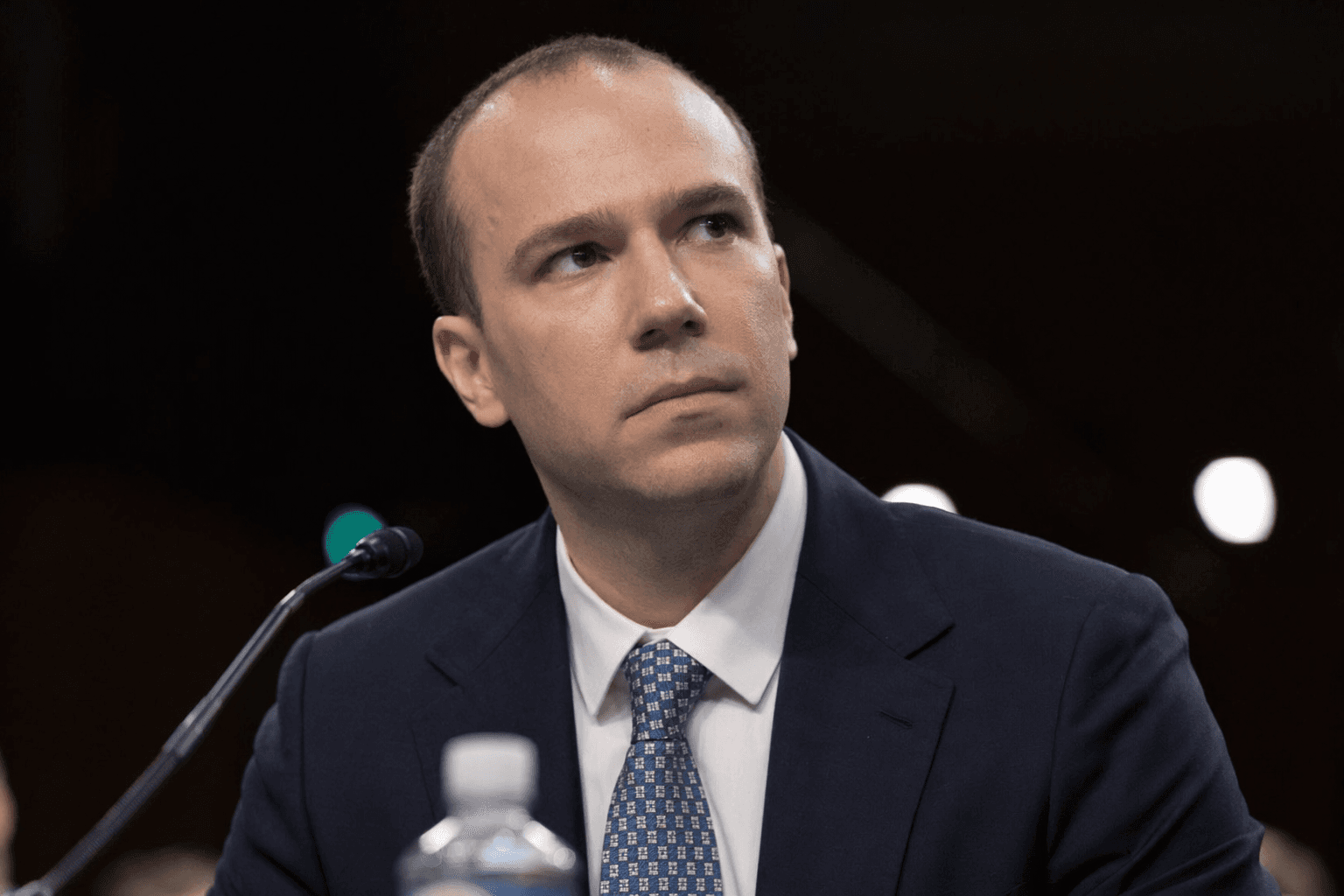
Elon Musk’s trial against OpenAI took a sharp turn as his lawyers pressed President Greg Brockman on a stake they said underscored the company’s drift from its original mission. Brockman testified in federal court in Oakland, California, that his OpenAI holdings are worth nearly $30 billion, saying under questioning that the value is more than $20 billion and closer to $30 billion. He also said he did not invest any of his own money in the startup.
The questioning was aimed at more than Brockman’s personal fortune. Musk’s lawyer used the testimony to argue that OpenAI’s leaders have become rich from a company that began in December 2015 as a nonprofit research lab backed by a promised $1 billion from Musk, Sam Altman, Brockman and other early supporters. The company was founded, in Musk’s telling, to make artificial intelligence broadly beneficial and prevent advanced systems from causing harm. Now Musk says OpenAI abandoned that pledge when it moved toward a for-profit structure.
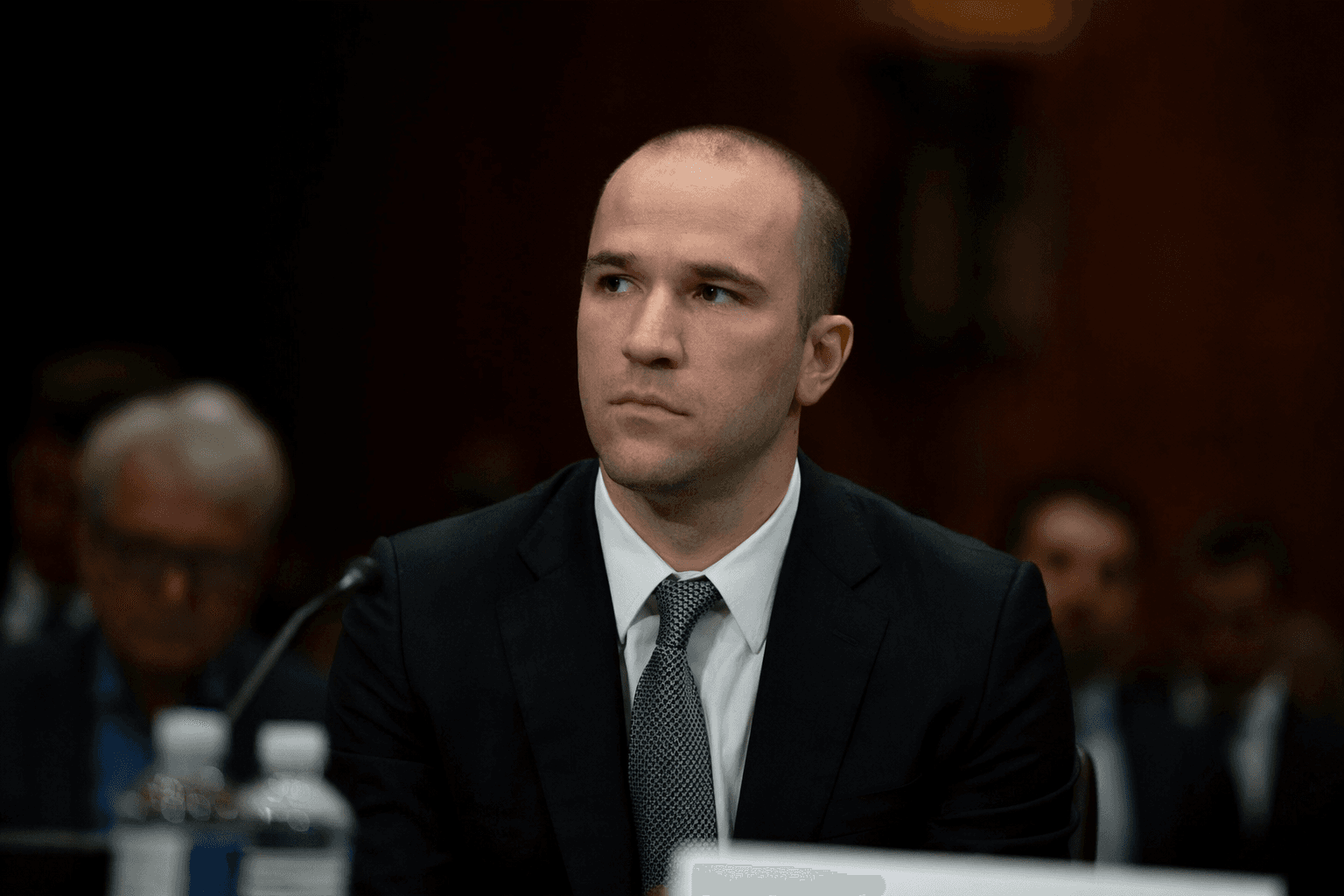
That dispute is playing out before U.S. District Judge Yvonne Gonzalez Rogers in a trial that began April 28 and is expected to last several weeks, with a verdict possible by mid-May. Musk is seeking $150 billion in damages from OpenAI and Microsoft, plus changes to OpenAI’s leadership. OpenAI has argued that the lawsuit is really an attempt to damage a rival company.
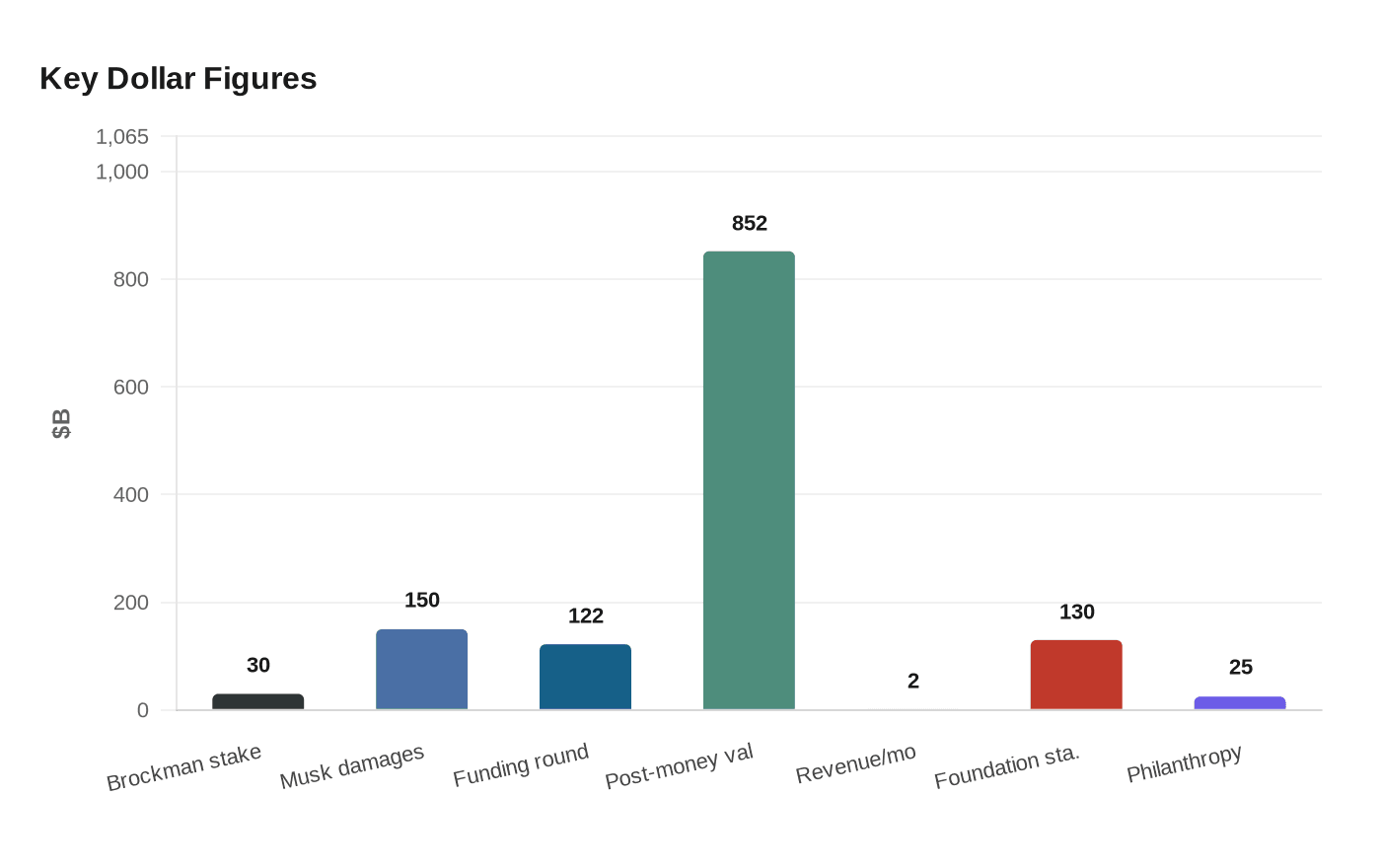
The stakes around the case have only risen as OpenAI has grown into one of the most valuable companies in the AI industry. On March 31, the company said it closed a $122 billion funding round at an $852 billion post-money valuation and said it is generating $2 billion in revenue per month. OpenAI also says it is exploring an initial public offering, a sign of how far the business has moved from its nonprofit origins.
The trial is also unfolding after OpenAI said in October 2025 that it completed a recapitalization in which the nonprofit, now called the OpenAI Foundation, holds a controlling stake in the for-profit OpenAI Group PBC. CNBC reported that the Foundation’s stake was worth about $130 billion and that Microsoft held roughly 27% of OpenAI Group PBC. The Foundation said it planned to direct resources toward philanthropic work, including an initial $25 billion commitment tied to health breakthroughs and AI resilience.
A separate wrinkle emerged just before the trial opened: Musk texted Brockman on or about April 25 to discuss settlement, and when Brockman suggested both sides drop their claims, Musk allegedly warned that by the end of the week Brockman and Altman would be “the most hated men in America.” The case has become a proxy fight over what drives the leaders of the AI boom, safety mission, corporate control or personal wealth, and that question now sits at the center of OpenAI’s public-interest story.
This article was produced by Prism’s automated news system from verified source data, official records, and press releases, then run through automated quality and moderation checks before publishing. The system is built and supervised by the people who set the standards it runs under. Read our full AI policy.
Did this article answer your question?