Myanmar holds contested second phase of post-coup general election
Myanmar expanded voting to 100 more townships in a divisive, three-stage election under junta rule, raising fresh questions about legitimacy and economic fallout.
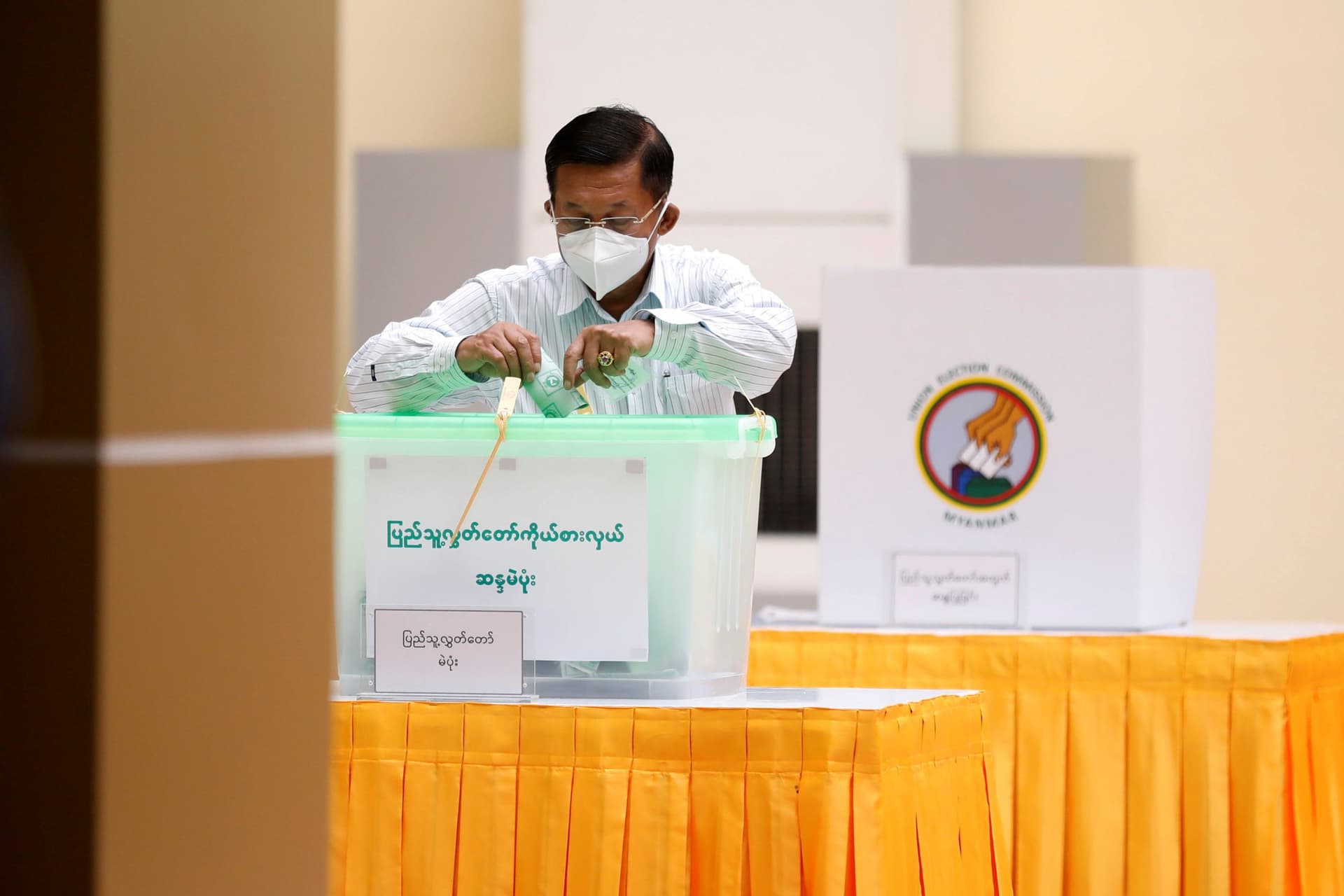
Myanmar moved into the second phase of a three-part general election on Jan. 11, expanding voting to 100 additional townships as the military government presses ahead with plans to reconstitute a national legislature amid ongoing civil war. The balloting, the first nationwide contest since the 2021 coup, took place in areas across Sagaing, Magway, Mandalay, Bago and Tanintharyi regions and in Mon, Shan, Kachin, Kayah and Kayin states, with polling also reported in parts of Yangon. Many of the included townships have seen recent clashes or remain under heightened security.
The staggered schedule follows a Dec. 28 first phase that covered 102 of Myanmar’s 330 townships and precedes a final phase set for Jan. 25. Sixty-five townships are not participating because of active fighting and insecurity. The country’s two-house national legislature comprises 664 seats, and the 2025 constitution continuing through the coup period reserves 25 percent of seats for the military, an institutional advantage that significantly shapes post-election outcomes.
Officials said the military government recorded a 52 percent turnout in the first phase. Pro-military party claims of early dominance were substantial: the Union Solidarity and Development Party reported winning more than 80 percent of contested seats in the lower house in phase one, and authorities attributed to the USDP more than 80 percent of combined seats in both houses from the opening phase. Those figures have not been independently verified by international observers, and many opposition parties, including Aung San Suu Kyi’s National League for Democracy, were dissolved or failed to register, dramatically narrowing electoral choice.
The mechanics of the constitution mean parliamentary arithmetic is decisive: the party or coalition that holds a combined majority can select the next president, who then appoints a cabinet and forms a government. With the military’s guaranteed quota and a strong USDP showing, the junta could secure control of state institutions without broad electoral competition, undermining claims of democratic legitimacy.

Security conditions and an active civil war underlie the partial franchise. Rebel groups and many anti-junta forces have refused to participate, and dozens of anti-military parties were eliminated from the roll. The exclusion of sizable portions of the country and key political forces has prompted harsh criticism from foreign governments, rights groups and other observers who say the process is designed to formalize military rule rather than produce a representative transition.
Beyond politics, the election outcome has material economic implications. Consolidation of junta control is likely to prolong international nonrecognition and targeted sanctions, deterring foreign direct investment and complicating access to global banking and trade networks already strained since 2021. Continued instability and fragmented governance will raise risk premia for businesses and push up borrowing costs, constrain critical exports and impede humanitarian access, deepening the country’s development setbacks.
Military spokespeople have indicated that both houses will be convened in March and that a new government would assume duties in April. Whether foreign governments accept those results and whether the vote will ease conflict or entrench it remain the central questions as the final voting phase approaches and provisional tallies are tallied.
This article was produced by Prism’s automated news system from verified source data, official records, and press releases, then run through automated quality and moderation checks before publishing. The system is built and supervised by the people who set the standards it runs under. Read our full AI policy.
Did this article answer your question?