Myanmar pardons former president Win Myint, Suu Kyi still detained
Win Myint was freed in Myanmar’s New Year amnesty, but Aung San Suu Kyi stayed behind bars, exposing a careful show of mercy rather than a political opening.
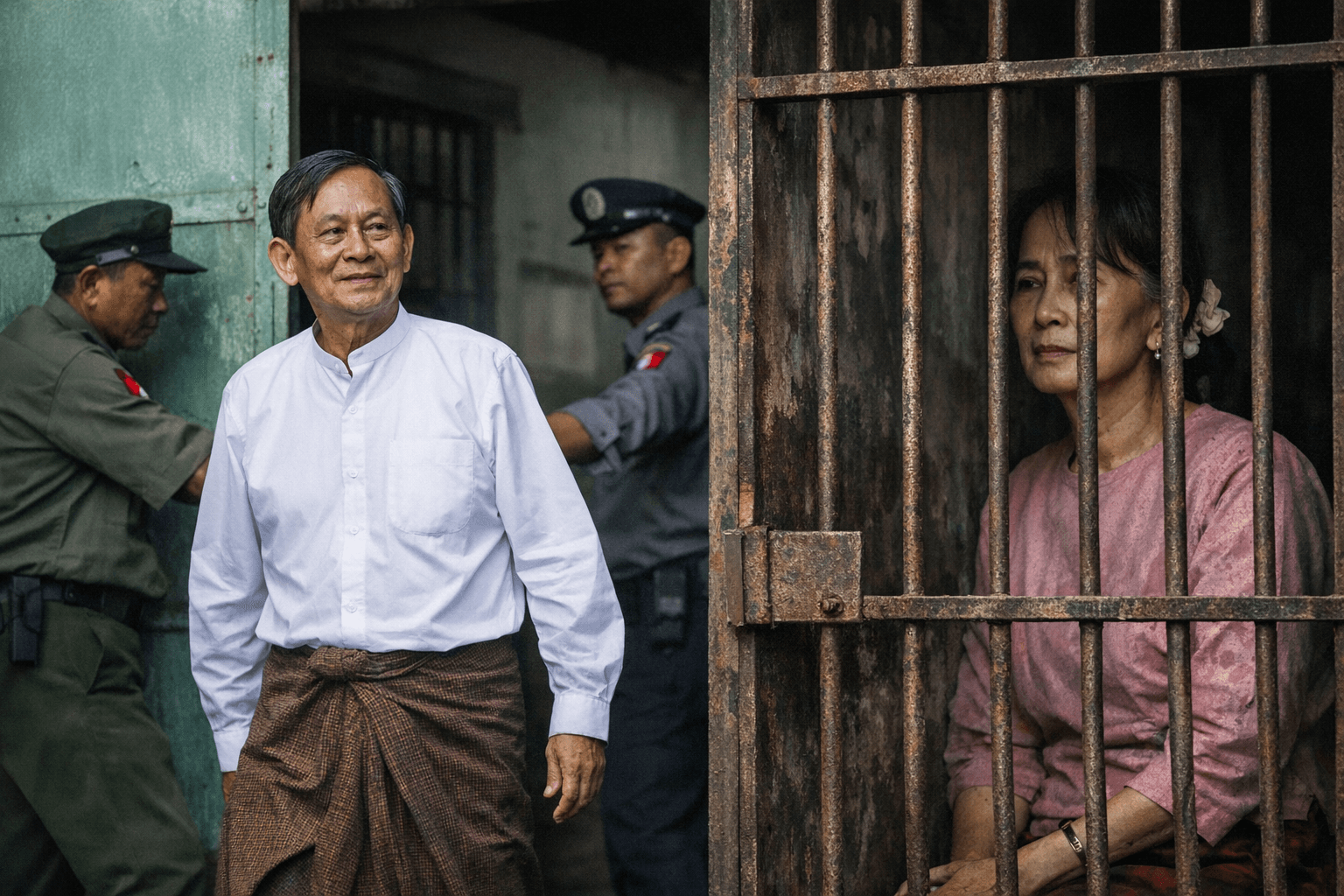
Former president U Win Myint walked free while Aung San Suu Kyi remained imprisoned, a split decision that highlighted how narrowly Myanmar’s military government is managing dissent. The amnesty, approved by Min Aung Hlaing on April 17, released 4,335 prisoners and ordered the deportation of 179 foreign prisoners, but it stopped short of freeing the country’s most prominent civilian leader.
Myanmar Radio and Television said death sentences were commuted to life imprisonment, life terms were reduced to 40 years, and some other sentences were cut by one-sixth. Win Myint, who served as president from 2018 until the Feb. 1, 2021 coup, was among those pardoned. Aung San Suu Kyi, 80, was not released. Her 27-year sentence was reduced by one-sixth, but not canceled, leaving her in detention and underscoring the junta’s willingness to ease pressure without surrendering leverage.
The timing mattered. Min Aung Hlaing was sworn in as president on April 10, 2026 after a pro-military parliamentary process that followed an election criticized by United Nations experts and rights groups as neither free nor fair. The amnesty was the third in the past six months, fitting a familiar pattern in Myanmar, where prisoner releases often coincide with Independence Day in January and New Year in April. This one, though, came with the country still engulfed in civil war and the political stakes higher than ever.
More than 3.5 million people have been displaced by the conflict that began after the 2021 coup toppled Win Myint and Suu Kyi’s elected government and triggered first a nationwide nonviolent resistance movement, then armed resistance. The Assistance Association for Political Prisoners says more than 30,000 people have been detained on political charges since the takeover, a measure of how central prisons remain to the military’s control of the country.
The release of Win Myint, a close ally of Suu Kyi, may be intended to suggest flexibility to domestic and foreign audiences. But by keeping Suu Kyi locked up, the military signaled that it still intends to control the terms of any future transition. In Myanmar’s political arithmetic, the pardon looked less like reconciliation than a calculated message: some prisoners can go home, but the symbols of resistance will remain in custody.
This article was produced by Prism’s automated news system from verified source data, official records, and press releases, then run through automated quality and moderation checks before publishing. The system is built and supervised by the people who set the standards it runs under. Read our full AI policy.
Did this article answer your question?