Young State Department Adviser Drives Trump’s Europe Policy Shift
Five years out of college, Samuel Samson helped steer a State Department push that cast Europe as a battleground over speech, migration and religion.
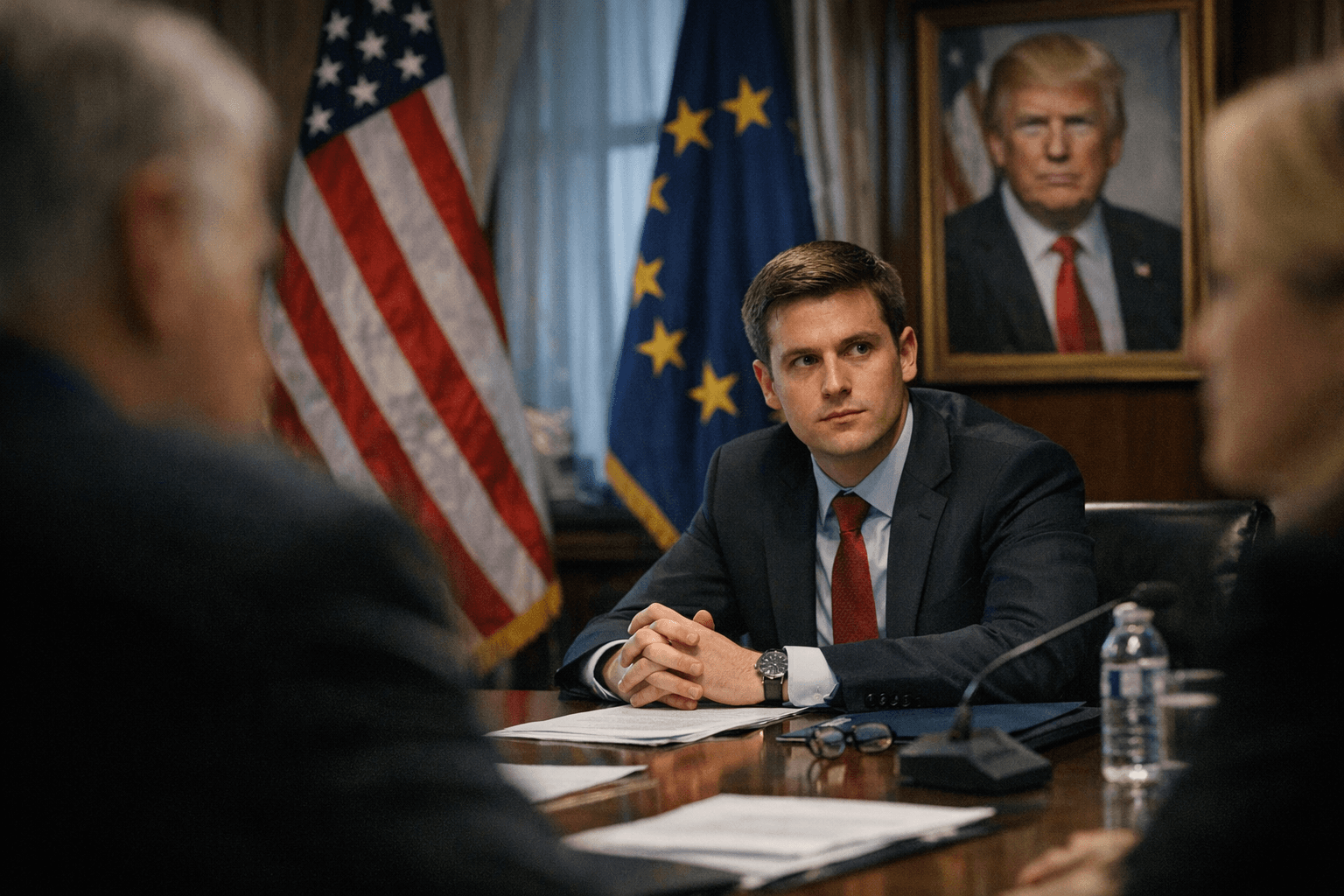
Five years out of college, Samuel Samson emerged as one of the most visible aides pushing the Trump administration’s effort to remake America’s postwar relationship with Europe. Working as a senior policy adviser in the State Department’s Bureau of Democracy, Human Rights, and Labor, Samson turned an internal culture-war argument into official diplomacy, linking speech, migration and religion to the future of the transatlantic alliance.
His role came into public view in May 2025, when he published a State Department Substack essay titled “The Need for Civilizational Allies in Europe.” In it, Samson described Europe as a “hotbed of digital censorship, mass migration, restrictions on religious freedom and numerous other assaults on democratic self-governance.” The language marked a sharp break from the traditional U.S. approach of pressing allies to manage disputes quietly while preserving a broader strategic front against Russia and other adversaries.
Samson soon carried that message abroad. In late May 2025, he led a State Department delegation to Paris and London to press Washington’s new emphasis on ending European restrictions on speech, especially right-wing speech. Reporters described the group’s reception from Reporters Without Borders as chilly, underscoring how quickly the administration’s message ran into resistance in Europe’s media and rights circles.
The outreach did not stop there. Internal State Department emails reportedly showed officials discussing invitations to representatives from Alternative for Germany, France’s National Rally, the Netherlands’ Party for Freedom and Britain’s Reform UK, along with governments in Hungary and Slovakia. Samson also reportedly proposed support for Marine Le Pen as she sought a path to the French presidency in 2027, a recommendation that drew scrutiny inside the department and alarm among critics who saw a deliberate tilt toward nationalist movements.
By December 15, 2025, Samson was putting the same argument on a larger stage in Budapest, where he delivered “The Western Commitment to Natural Rights: The Key to Transatlantic Renewal” at the Hungarian Institute of International Affairs. There, he argued that the Allied victory in World War II depended on industrial mobilization by the United States and Allied Europe, and he cast Hungary as part of a broader struggle over Western identity and the postwar democratic order.
The result has been a widening split inside the transatlantic alliance. Some U.S. conservatives praised Samson’s willingness to confront European governments over speech and migration, while critics in Europe and in transatlantic policy circles said the administration was effectively siding with nationalist forces and weakening decades of alliance-building. With NATO burden-sharing, free speech, migration and democratic norms already straining relations, Samson’s rise showed how ideological foreign policy was being operationalized by a new generation of young, little-known staffers inside Washington.
This article was produced by Prism’s automated news system from verified source data, official records, and press releases, then run through automated quality and moderation checks before publishing. The system is built and supervised by the people who set the standards it runs under. Read our full AI policy.
Did this article answer your question?


