Myanmar refugee chefs keep Burmese cuisine alive in exile
Exiled Myanmar chefs are keeping Burmese cuisine visible, using restaurants and pop-ups to preserve identity while reshaping global tastes.
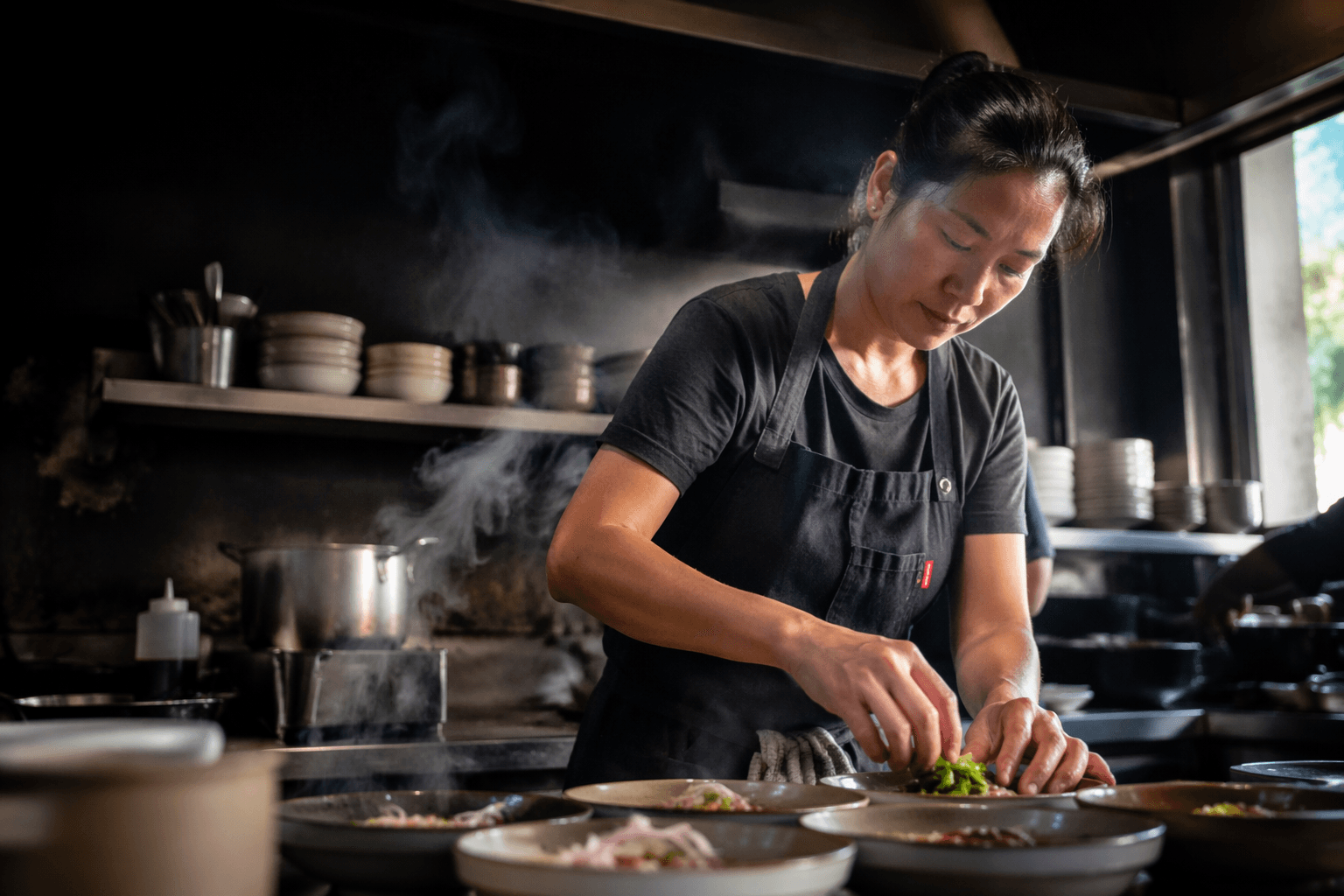
Myanmar’s kitchens have traveled with its people. After the military seized power on February 1, 2021, detaining Aung San Suu Kyi and Win Myint, chefs, home cooks, and restaurant workers carried recipes into refugee camps, apartments, pop-ups, and dining rooms across Thailand, the United States, and beyond. What began as survival has become a way to preserve culture, support livelihoods, and make a country known internationally for repression visible through food.
Displacement has remade the map of Myanmar food
The scale of the crisis explains why cuisine has become such a potent form of memory. UN data put internal displacement in Myanmar at 3.5 million in 2024, a 35 percent jump from 2.6 million at the end of 2023. Around 280,000 refugees from Myanmar were living in Malaysia, India, and Thailand, while roughly 1 million stateless Rohingya remained in Bangladesh.
Thailand sits at the center of that displacement story. UNHCR says the country hosts more than 80,000 refugees from Myanmar in nine temporary shelters along the border, plus about 5,000 urban refugees and asylum-seekers from more than 40 countries. Most camp-based refugees there have lived in the country for decades after fleeing conflict since the mid-1980s, a reminder that Myanmar’s displacement crisis did not begin with the coup, even if the 2021 takeover widened it sharply.
The latest flow into Thailand remains large. According to the Royal Thai Government, more than 52,000 people crossed into Thailand seeking protection after February 2021. UNHCR reported that no new arrivals were recorded after June 2024, but the pressure on the border has not faded: the International Organization for Migration estimated at least 1.7 million Myanmar migrants living in communities in Thailand were in irregular situations in July 2024, and said 1.3 million Myanmar nationals entered Thailand in 2024, with long-term entries up 28 percent from 2023.
Cooking has become a form of continuity
In that environment, Burmese food has become more than a menu category. Refugee and exiled chefs are using restaurants, pop-ups, and community cooking projects to keep their cuisine visible and to create spaces where displaced people can recognize themselves in the room. The dishes are a record of movement, but they are also a practical response to upheaval, because cooking is one of the few skills that can travel intact across borders and immigration systems.
Trish, the founder of Bamama Cooks, fled to Chiang Mai, Thailand after the coup and began cooking for fellow refugees. That detail matters because it shows how culinary work can start as mutual aid before it becomes commerce or public-facing cultural work. In exile, sharing a meal is not just hospitality. It is a way to rebuild trust, re-create social life, and keep daily Burmese habits from disappearing into displacement.
The pattern extends beyond one city. In camps and urban neighborhoods, food becomes a portable archive: recipes for curries, salads, noodles, and fermented dishes carry dialect, family memory, and regional identity. That is especially important for a country where displacement has scattered people across borders and where many communities now live far from the kitchens that originally shaped them.
Suu Khin turned a blog into a public platform
Suu Khin built Burmalicious from a blog and Instagram account into a successful pop-up in Houston. She has described the effort as a way to make Burmese cuisine “less mysterious and a little more loved,” a mission that captures how diaspora food can work as both outreach and assertion. The project also shows how visibility grows: what starts as online storytelling can become a ticketed meal, then a neighborhood fixture, then a broader cultural reference point.
Her rise has carried Burmese food into the kind of culinary recognition that rarely reaches immigrant cuisines this quickly. Suu Khin was a 2025 James Beard Award Emerging Chef semifinalist, a marker that places Burmese cooking inside one of the United States’ most watched food institutions. That recognition does not erase displacement, but it does expand who gets to define Burmese cuisine and where that definition appears.
Burmalicious matters because it links memory to audience. In Houston, a city with a large immigrant food economy, the pop-up format gives Burmese dishes room to meet diners who may have little prior knowledge of Myanmar beyond headlines about the coup, military rule, and humanitarian crisis. The food becomes an introduction, but it also resists reduction, insisting that the country’s identity is bigger than its politics.
Recognition is reaching from Houston to Ojai
Saw Naing has pushed Burmese food into another register of visibility. He is co-owner and executive chef of The Dutchess in Ojai, California, one of only five Burmese restaurants recognized by the Michelin Guide worldwide. That placement matters because Michelin recognition can change how diners, investors, and other chefs read a cuisine: not as a niche curiosity, but as a serious culinary tradition with enough depth and range to hold its own on a global stage.
The Dutchess is part of a broader shift in which Burmese restaurants are no longer confined to diaspora enclaves. When a Burmese dining room appears in a place like Ojai, it creates a new public image of Myanmar, one shaped less by state power than by technique, seasoning, and regional memory. For a country often discussed through conflict reporting, that kind of recognition functions as soft power, even when it is built from exile.
The same logic is visible in Bangkok, where Burmese, Shan, and other border cuisines are becoming more mainstream, from upscale teahouses to rooftop restaurants. That shift suggests that the diaspora is not merely preserving old recipes in private. It is also reshaping how international diners encounter Myanmar’s culinary identity, especially in a city that sits close to the border and absorbs the movement of people, labor, and taste across it.
The result is a cuisine that now carries two histories at once. It keeps faith with displaced communities who need familiar flavors to survive upheaval, and it introduces Myanmar to outsiders through restaurants that can outlast the headlines. In exile, Burmese food has become both an inheritance and an argument, proof that culture can move even when a country is under strain.
This article was produced by Prism’s automated news system from verified source data, official records, and press releases, then run through automated quality and moderation checks before publishing. The system is built and supervised by the people who set the standards it runs under. Read our full AI policy.
Know something we missed? Have a correction or additional information?
Submit a Tip