NASA Approves Critical Engine Burn to Propel Artemis II Crew Toward Moon
NASA cleared Artemis II for a 6-minute engine burn tonight that will propel four astronauts toward the moon for the first time in more than 50 years.
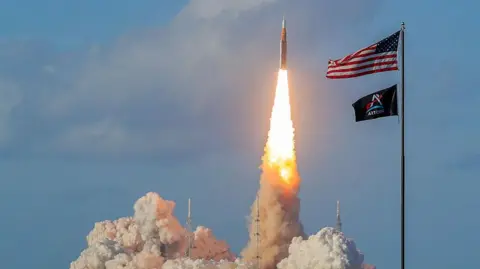
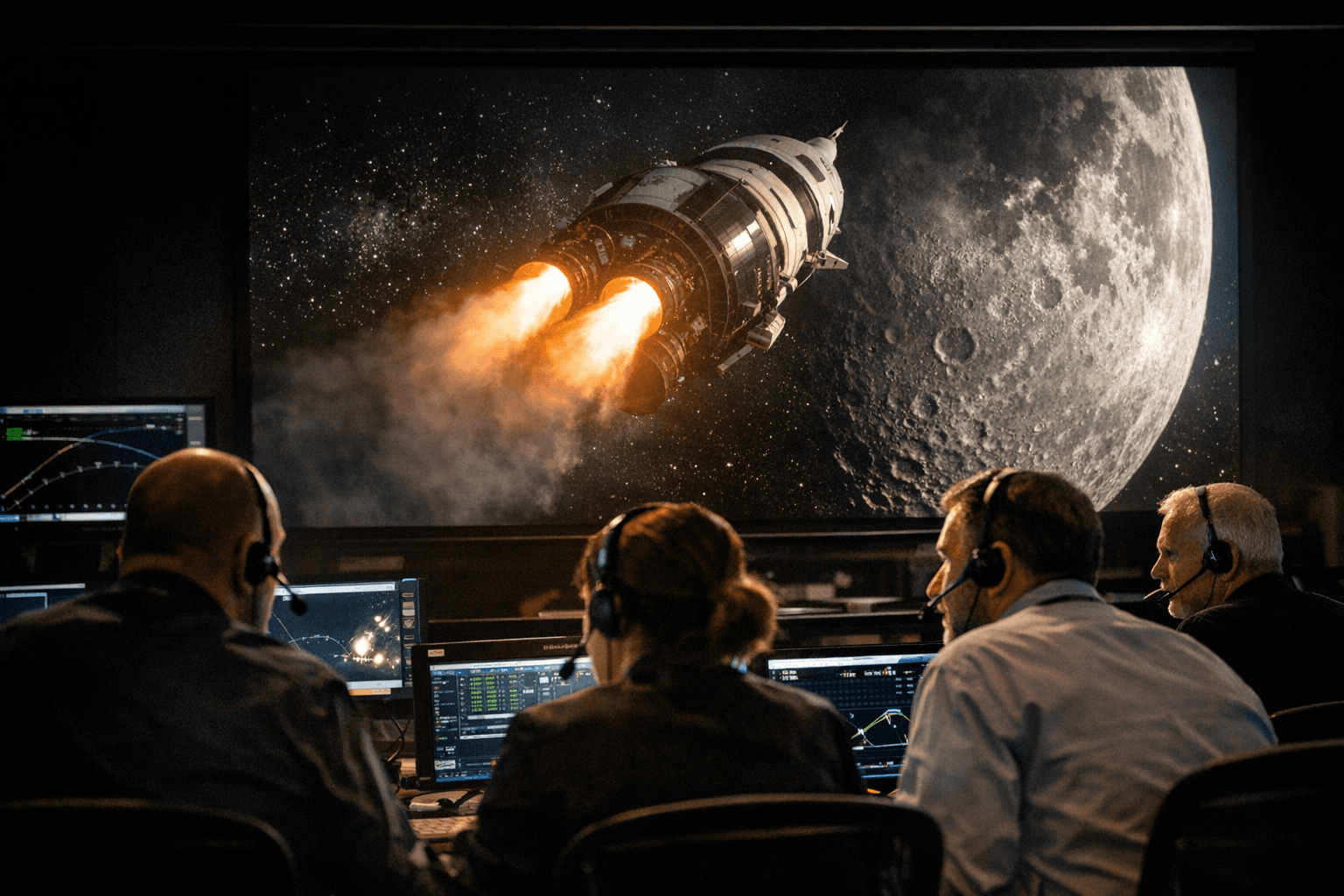
NASA's mission management team polled "Go" for a translunar injection burn set for 7:49 p.m. EDT Thursday, clearing the Artemis II crew for a 5-minute, 49-second engine firing that will accelerate Orion by 1,274 feet per second and break it free from Earth's orbit entirely.
The burn will send Commander Reid Wiseman, Pilot Victor Glover, and Mission Specialists Christina Koch and Jeremy Hansen on a four-day journey toward the moon, the first crewed lunar voyage since Apollo 17 launched on December 7, 1972. "The translunar injection burn is the last major engine firing of the mission," NASA officials wrote in the Artemis II press kit. "It propels Orion on a path toward the moon and sets it on the free-return trajectory that will ultimately bring it back to Earth for splashdown."
The approval came on Flight Day 2, roughly 24 hours after the 322-foot Space Launch System rocket lifted off from Launch Complex 39B at Kennedy Space Center at 6:35 p.m. EDT on Wednesday. The Interim Cryogenic Propulsion Stage fired twice after launch to place Orion into an elongated orbit stretching 1,500 miles by 46,000 miles, with the spacecraft traveling at 17,500 miles per hour and completing one full loop around Earth every 90 minutes. Tonight's burn will end that loop for good.
Artemis II is a 10-day crewed flyby, not a landing. The crew will trace a figure-eight free-return trajectory that swings around the lunar far side on Day 6, a region Apollo astronauts could never directly observe, before returning for splashdown in the Pacific Ocean on Day 10. Upon reentry, Orion's heat shield will face speeds exceeding 24,000 miles per hour. NASA's uncrewed Artemis I mission in 2022 validated the heat shield at those speeds; this will be the first time it carries a crew.
The four astronauts collectively shattered a set of records with their launch. Glover became the first person of color to travel beyond low Earth orbit, Koch became the first woman, Hansen became the first non-U.S. citizen, and Wiseman became the oldest person to reach that threshold. None of the four were born before Apollo 17 launched.
Harrison Schmitt, the 90-year-old Apollo 17 moonwalker who departed the lunar surface on December 14, 1972, offered personal advice to the Artemis II crew ahead of their launch. Former President Barack Obama called the mission "inspiring" on X, noting it marks NASA's first crewed flight toward the moon since 1972.
The mission carries a deliberate homage to Apollo's defining imagery. The Artemis II mission patch is modeled on the "Earthrise" photograph, taken December 24, 1968, by Apollo 8 astronaut William Anders, replicated down to the specific cloud patterns visible in the original. The crew's zero-gravity indicator plushie, named "Rise" in the photograph's honor, is flying aboard Orion alongside cameras from National Geographic.
The gap between Schmitt's final steps on the lunar surface and tonight's scheduled burn spans more than five decades. What Apollo 17 closed as a chapter, this crew is reopening as the first page of something new.
Sources:
Know something we missed? Have a correction or additional information?
Submit a Tip