Troops Using Personally Purchased Guns to Carry Out Military Base Shootings
Every major U.S. military base mass shooting since 2009 involved a personally purchased weapon — the same class of firearm Hegseth now wants more troops carrying on base.
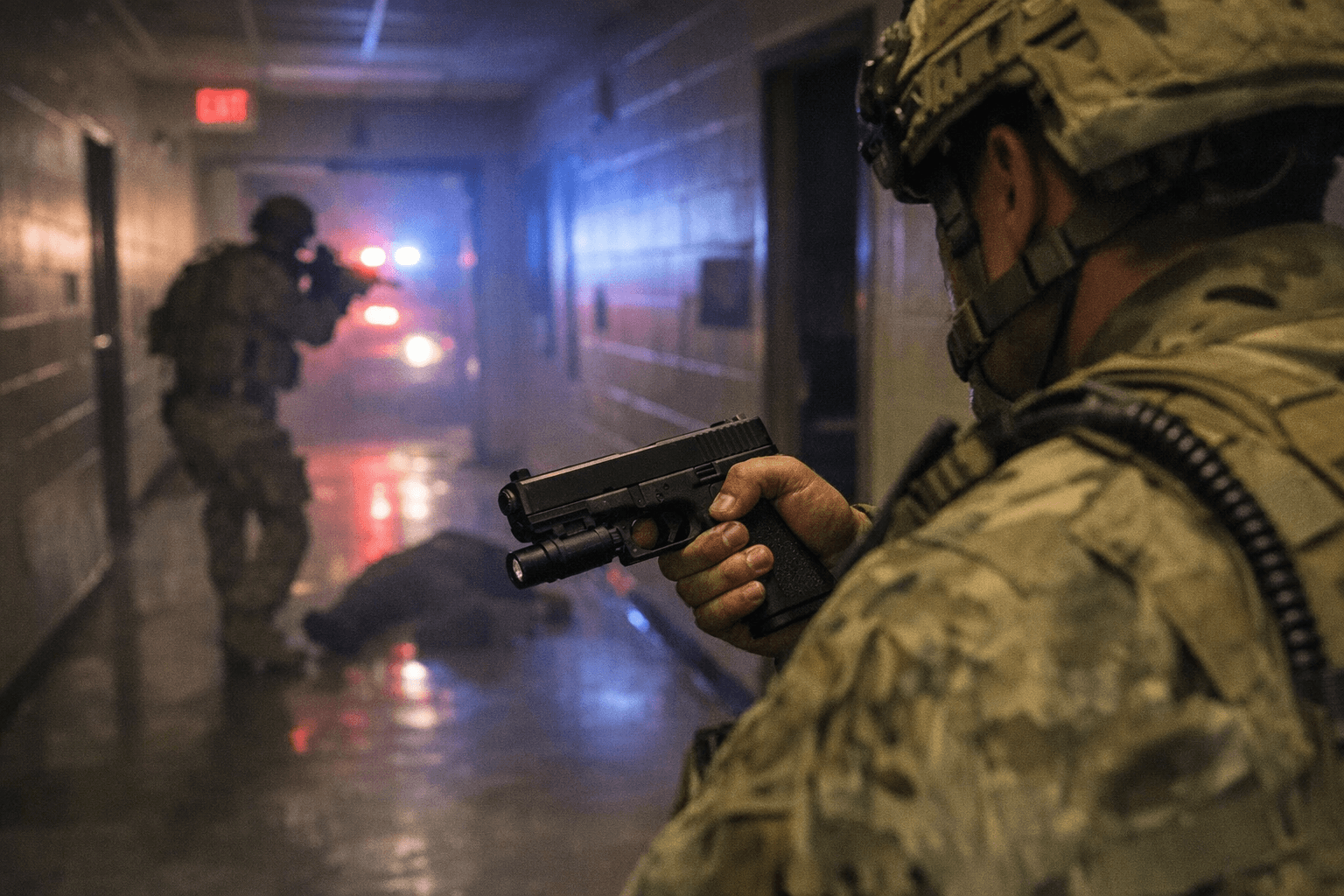
In each of the deadliest attacks on American military soil over the past 17 years, the weapon used was not a military-issued firearm. It was one the shooter bought themselves.
Army Major Nidal Hasan killed 13 people and wounded more than 30 at Fort Hood, Texas in November 2009 using a personally purchased weapon. Four years later, at the same installation, Specialist Ivan Lopez killed three soldiers and wounded 12. Both Hasan and Lopez legally purchased their murder weapons at the same gun shop near Fort Hood. In December 2019, a Saudi Air Force officer training at Naval Air Station Pensacola, Florida killed three U.S. sailors and wounded eight others; U.S. officials described it as an act of terrorism. A review of media reports found approximately 30 shootings and other violent episodes at military installations since 2009, and Pensacola was at least the seventh mass shooting of its kind.
In August 2025, logistics Sgt. Quornelius Radford, 28, shot and wounded five fellow soldiers at Fort Stewart, Georgia. According to officials, Radford used a personal handgun, not a military firearm. Fellow soldiers tackled and subdued him. Radford later testified his ultimate goal had been to attract military police and die in a confrontation. Most recently, on March 17, 2026, a civilian and military veteran identified as Ashanti Stewart shot an active-duty airman at Holloman Air Force Base in New Mexico, then took her own life. The 49th Wing confirmed the shooting was domestic-related and an isolated incident.
It was precisely these incidents that Defense Secretary Pete Hegseth cited Thursday when he signed a memo lifting longstanding restrictions on personal firearms at U.S. military installations. "Recent events like what happened at Fort Stewart, Holloman Air Force Base, or Pensacola Naval Air Station have made clear that some threats are closer to home than we'd like," Hegseth said. The memo directs installation commanders to permit requests from service members to carry personal firearms on base "for personal protection," with denials required to be explained in writing.
The tension at the center of that rationale is difficult to ignore. In each of the incidents Hegseth named, the attacker was already on base with a personally purchased firearm. The Defense Department had previously barred privately owned weapons on military installations, a policy grounded in the Gun-Free Schools Act of 1990, which set standards for gun-free zones on federal properties. Hegseth argued that before his directive, it was "virtually impossible" for Defense Department personnel to carry their own firearms on base.
Under the new framework, the presumption shifts from denial to approval: commanders who reject a carry request must justify the decision in writing. The directive also states that personnel authorized to carry a firearm must "acknowledge they may be personally liable" for any injuries, death, or property damage caused in connection with that weapon.
What the policy does not yet publicly detail is how the military will standardize mental-health screening for carry requests, whether storage rules for off-duty hours will be updated, or what training standards will apply beyond a service member's existing qualifications. Those implementation specifics, left to individual installation commanders, will ultimately determine whether the directive reduces the body count in the next base shooting or compounds it.
This article was produced by Prism’s automated news system from verified source data, official records, and press releases, then run through automated quality and moderation checks before publishing. The system is built and supervised by the people who set the standards it runs under. Read our full AI policy.
Did this article answer your question?

