NASA Begins Fueling Artemis II Rocket Ahead of Historic Moon Mission
Over 700,000 gallons of cryogenic propellant began loading into NASA's 322-foot SLS rocket at 7:44 a.m. ET, with a 6:24 p.m. liftoff targeted for the first crewed Moon mission since 1972.

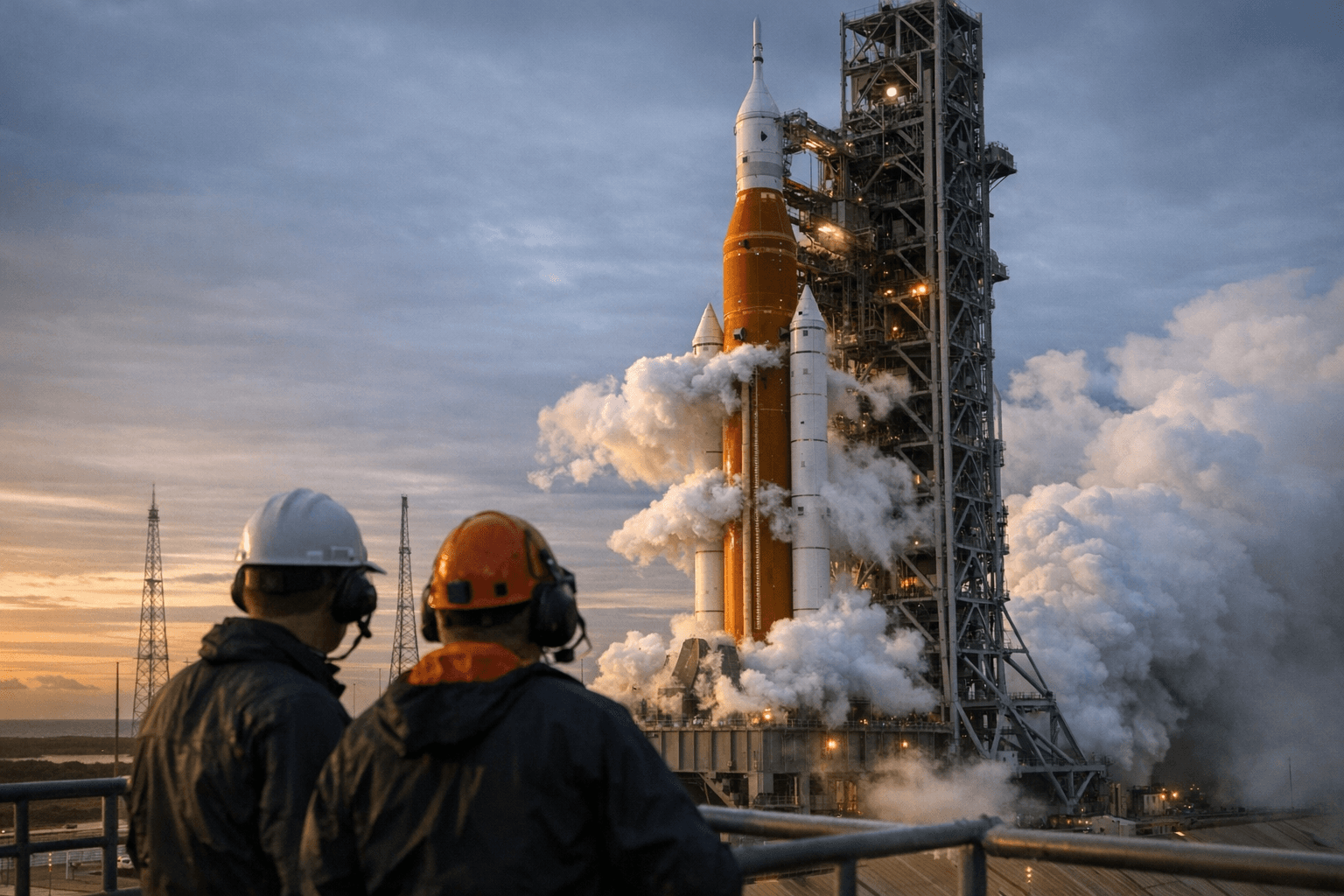
Engineers at Kennedy Space Center's Launch Complex 39B began pumping more than 700,000 gallons of cryogenic propellant into the 322-foot-tall Space Launch System rocket at 7:44 a.m. ET Wednesday, setting the stage for a 6:24 p.m. EDT liftoff that would send four astronauts on the first crewed journey toward the Moon since December 1972.
The fueling operation, which can take up to five hours, follows a precisely sequenced protocol. Engineers first initiate an air-to-gaseous nitrogen changeover inside the rocket's cavities, purging atmospheric air with inert nitrogen gas to create a stable, non-reactive environment before propellant is introduced. A slow fill phase then gradually loads liquid hydrogen fuel, conditioning the plumbing and tanks from room temperature down to -253°C (-423.4°F), the temperature at which liquid hydrogen must be stored.
The countdown clock began ticking Monday, March 30 at 4:44 p.m. EDT, a milestone itself the product of painstaking preparation. In April 2025, engineers replaced RS-25 engine E2063 with engine E2061 after a hydraulic leak was discovered in its oxygen valve, one of the final technical hurdles before the mission could move forward.
Aboard the Orion spacecraft will be Commander Reid Wiseman, Pilot Victor Glover, and Mission Specialists Christina Koch and Jeremy Hansen of the Canadian Space Agency. Koch becomes the first woman, and Glover the first person of color, to travel toward the Moon. All four will be the first astronauts ever launched aboard NASA's Space Launch System. CSA astronaut Jenni Gibbons has been named as Hansen's backup.
Artemis II is a lunar flyby, not a landing. Orion will bring the crew within approximately 6,000 miles of the lunar surface around April 6, carrying them farther from Earth than any human has ever traveled. The SLS will accelerate from zero to 500 miles per hour in just two seconds after liftoff.
The mission builds on the uncrewed Artemis I test flight in 2022 and lays the foundation for future Artemis missions expected to include a lunar landing. If Wiseman, Glover, Koch, and Hansen lift off as planned tonight, they will cross a threshold in human spaceflight that has stood for more than half a century.
Know something we missed? Have a correction or additional information?
Submit a Tip

