NASA bets on Blue Origin to meet 2028 moon landing goal
Blue Origin’s New Glenn setback has put NASA’s moon timetable under sharper strain. A grounded rocket now threatens the heavy-lift link behind Artemis and the 2028 landing push.
NASA’s moon plan just hit another schedule risk at the worst possible moment. Blue Origin’s third New Glenn flight on April 19 delivered the company’s first successful reflight of an orbital-class booster, but the upper stage malfunctioned and failed to place a customer satellite into the intended orbit, forcing the Federal Aviation Administration to investigate and ground the rocket until that probe is complete.
That matters because New Glenn is not a side project in the Artemis effort. NASA is counting on Blue Origin, founded by Jeff Bezos, to help deliver the hardware needed for a return to the Moon, and the agency has already tied its landing architecture to a narrow 2028 target. NASA’s Office of Inspector General said on March 10 that since the Human Landing System program began in 2019, NASA has obligated nearly $7 billion to lander development and expects to spend more than $18 billion through fiscal year 2030.
The watchdog’s warning was blunt: NASA is working with SpaceX and Blue Origin to accelerate lander development, but both providers have faced schedule delays, technical difficulties and integration challenges. It also said NASA would not be able to rescue astronauts stranded in space or on the lunar surface if a catastrophic failure occurred. That leaves little room for error if Blue Origin’s latest setback ripples into the cadence of launches needed to move Blue Moon hardware toward the Moon on time.
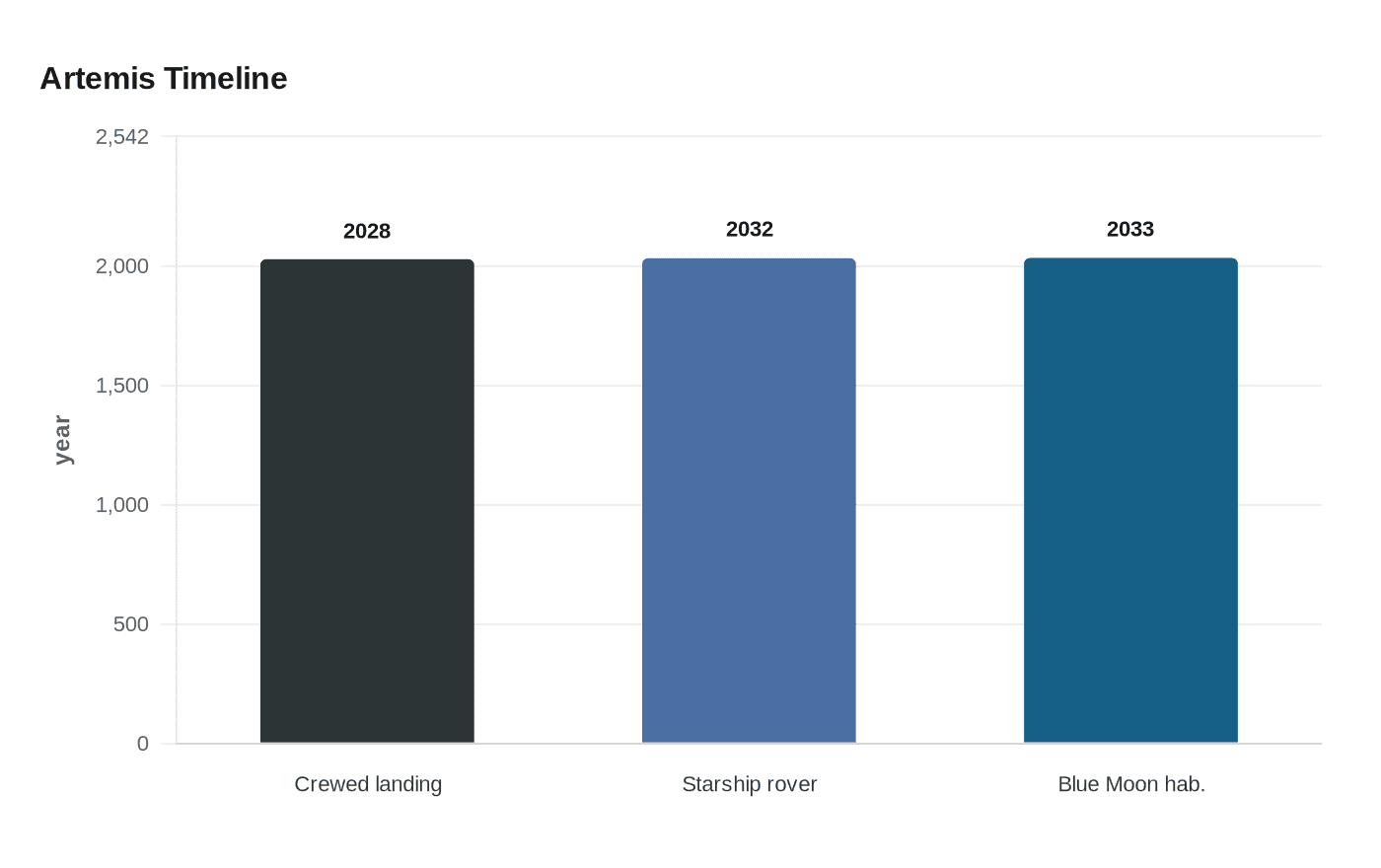
NASA’s own redesign of Artemis in February 2026 made the pressure more visible. The agency added a crewed orbital test mission before any landing attempt, pushing the first crewed lunar landing to 2028 at the earliest. Blue Origin chief executive Dave Limp responded, “We’re all in!” NASA Administrator Jared Isaacman called the revised architecture “our pathway back to the moon.” The problem is that the pathway now runs through a contractor whose core rocket has just been grounded.
The schedule also stretches far beyond the first landing. NASA has said SpaceX’s Starship is planned to deliver a pressurized rover no earlier than fiscal year 2032, while Blue Origin is expected to deliver a lunar surface habitat no earlier than fiscal year 2033. That makes the company’s reliability central not just to one landing attempt, but to the larger cadence of post-landing operations that NASA wants to build over the rest of the decade.
The United States has gone more than 50 years without a crewed lunar landing. NASA keeps revising its timeline as technical and safety concerns mount, but each delay now raises the same question: if Blue Origin slips, what credible backup does NASA actually have?
This article was produced by Prism’s automated news system from verified source data, official records, and press releases, then run through automated quality and moderation checks before publishing. The system is built and supervised by the people who set the standards it runs under. Read our full AI policy.
Did this article answer your question?