NASA Counts Down for Artemis II, Four Astronauts Prepare for Moon Flight
Four astronauts have spent three years drilling for emergencies beyond Earth's reach, launching toward the moon Wednesday aboard NASA's Orion spacecraft.
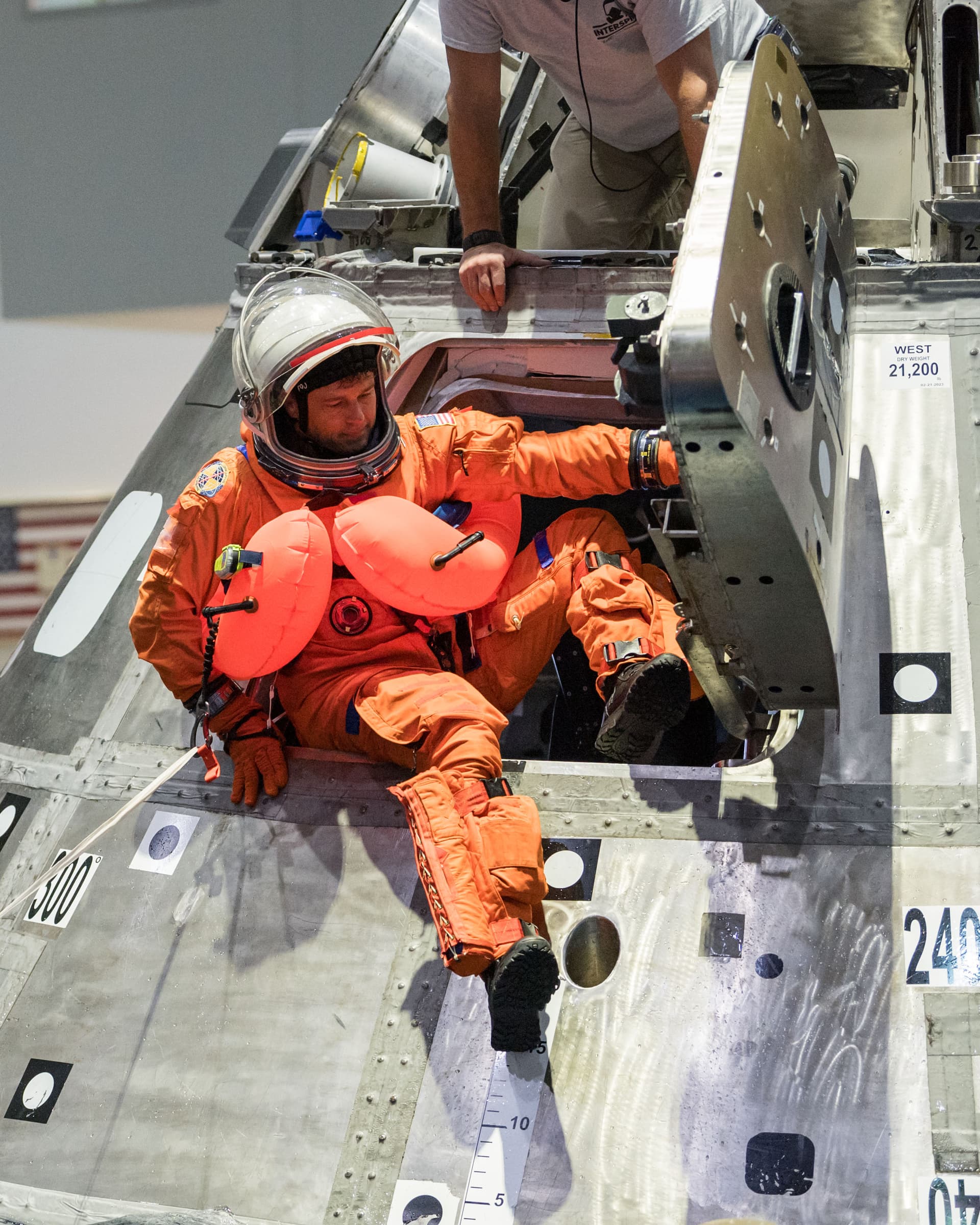
Three years of Orion simulator sessions, T-38 jet training, emergency egress drills and medical operations rehearsals at Johnson Space Center converge Wednesday evening when commander Reid Wiseman leads his crew into NASA's Orion spacecraft for liftoff at Kennedy Space Center. Artemis II is the first crewed launch of NASA's SLS (Space Launch System) rocket and Orion spacecraft. With the countdown officially underway, engineers are powering up flight hardware, checking communication links, and preparing the rocket's cryogenic systems for the precise fueling sequence needed to load hundreds of thousands of gallons of super-cooled liquid hydrogen and liquid oxygen.
The four Artemis II astronauts scheduled to launch on a trip around the moon this week stand out even in a NASA astronaut corps full of super achievers. They include three space station veterans and a Canadian rookie: a commander who is a single parent to two children; an experienced Navy pilot; a veteran spacewalker who will become the first woman to fly to the moon; and the first Canadian who will fly beyond low-Earth orbit.
What sets this crew apart is not just biography but preparation for the kind of decisions that cannot be delegated. Inside the Orion Mission Simulator at Johnson Space Center, the crew rehearsed every phase of the mission, from routine operations to emergency response. Simulations are designed to teach astronauts how to diagnose failures, manage competing priorities, and make decisions with no one nearby to help. The crew also trained in Orion Crew Survival System spacesuits for post-landing emergency egress, with the suit providing pressure, oxygen and thermal protection during launch, entry and contingency scenarios while Orion's life support systems manage cabin oxygen, water, temperature and overall crew health throughout the mission. In parallel, astronauts trained in medical operations, exercise systems, spacesuits and daily life aboard Orion. Wiseman and Koch also trained in T-38F jets at Ellington Field, keeping the crew's reflexes sharp for high-stakes, split-second environments.
Koch, Hansen, pilot Victor Glover and commander Reid Wiseman were selected with great fanfare in April 2023. They have spent the past three years training for a relatively short nine-day mission to loop around the moon, a trailblazing flight that sets the stage for planned moon landings in 2028 and the construction of a lunar base near the moon's south pole.
Mission commander Reid Wiseman, 50, was born in Baltimore and earned a degree in computer and science engineering from Rensselaer Polytechnic Institute and a master's degree in systems engineering from Johns Hopkins University. Glover, an experienced Navy pilot, flies as mission pilot. Koch carries the mission specialist designation along with a record of her own: she will become the first woman to fly to the moon. Hansen, a Canadian Space Agency astronaut described in mission materials as a "Canadian rookie," becomes the first Canadian to fly beyond low-Earth orbit.
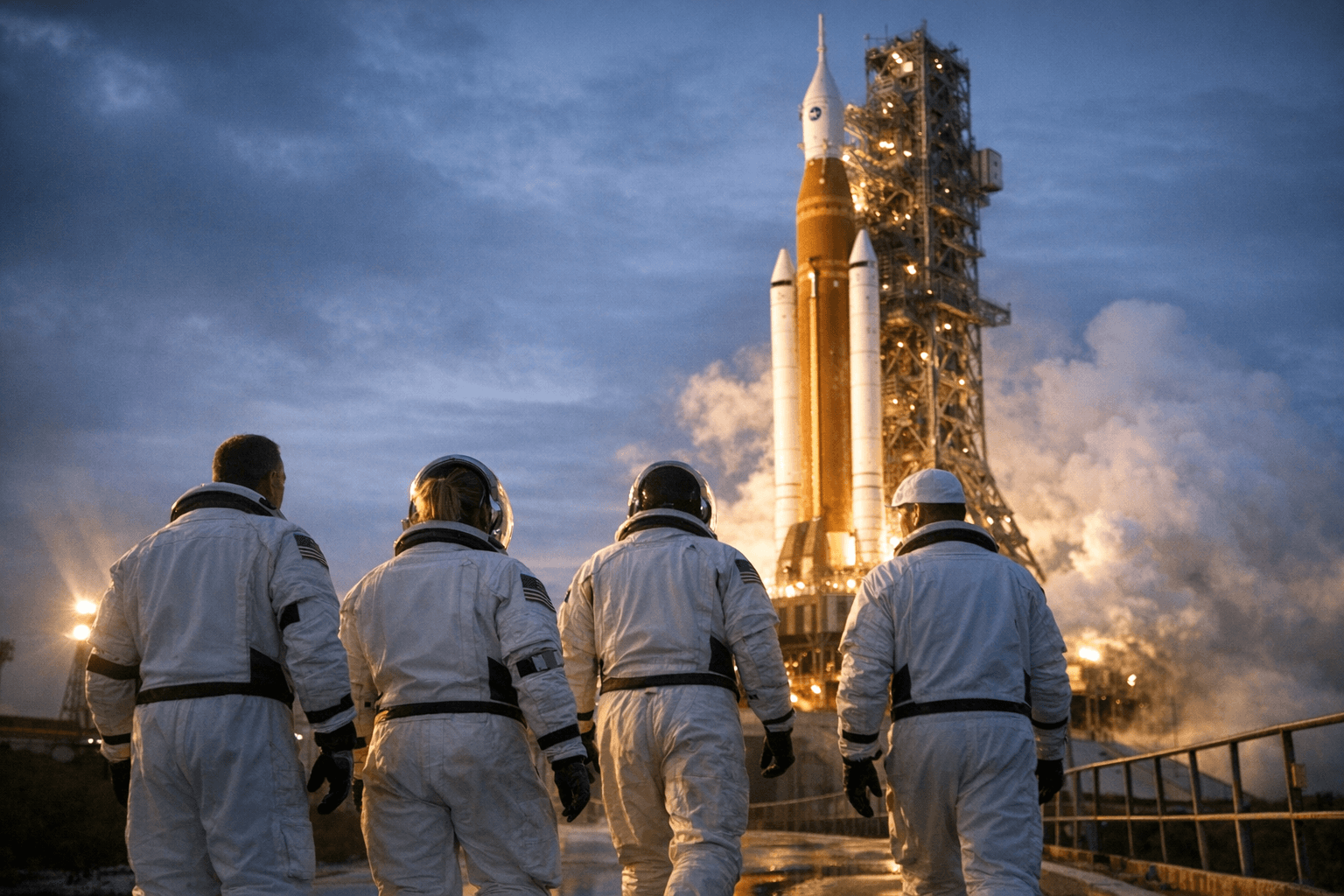
The weight of that history is not lost on the crew. "It's extraordinary as a human being to go to the far side of the moon and look back and see the Earth from the perspective of the moon," Hansen told CBS News. "Whatever that looks like, and whatever that feels like, that is an extraordinary opportunity that I'm very grateful for."
Koch framed the mission in similarly expansive terms: "It is our strong hope that this mission is the start of an era where everyone, every person on Earth, can look at the moon and think of it as also a destination."
Artemis II will be NASA's first mission with crew aboard the SLS rocket and Orion spacecraft and will confirm that all spacecraft systems operate as designed with crew aboard in the actual environment of deep space. The mission will pave the way for lunar surface missions and the establishment of long-term lunar science and exploration capabilities. Retired astronaut Terry Virts has joined the broadcast coverage as the countdown proceeds, helping contextualize for audiences what no simulation can fully replicate: the moment preparation ends and the mission begins.
This article was produced by Prism’s automated news system from verified source data, official records, and press releases, then run through automated quality and moderation checks before publishing. The system is built and supervised by the people who set the standards it runs under. Read our full AI policy.
Did this article answer your question?