NASA eyes moon mining to tap scarce helium-3 supply
Helium-3 is drawing lunar-mining hype, but the isotope is sparse in moon dust, hard to extract, and far from a commercial supply chain.
Moon mining sounds futuristic until the numbers are laid out on the table. Helium-3 is not a buried vein waiting to be tapped; it is a trace isotope sprinkled through lunar regolith in tiny amounts, and getting it back to Earth would require industrial-scale excavation, heating, transport, and a market big enough to justify all of it. NASA has studied the idea for years, but the gap between research and a real business remains enormous.
What helium-3 is and why people want it
Helium-3 is a stable isotope of helium with two protons and one neutron. On Earth, it is extremely scarce, which is why the U.S. Department of Energy treats it as a strategic material rather than a novelty gas. The agency says helium-3 is essential for cryogenics, quantum information science, fusion energy, and national security, and it has warned that U.S. supply chains are vulnerable because domestic production is limited and Russia is also a major producer.
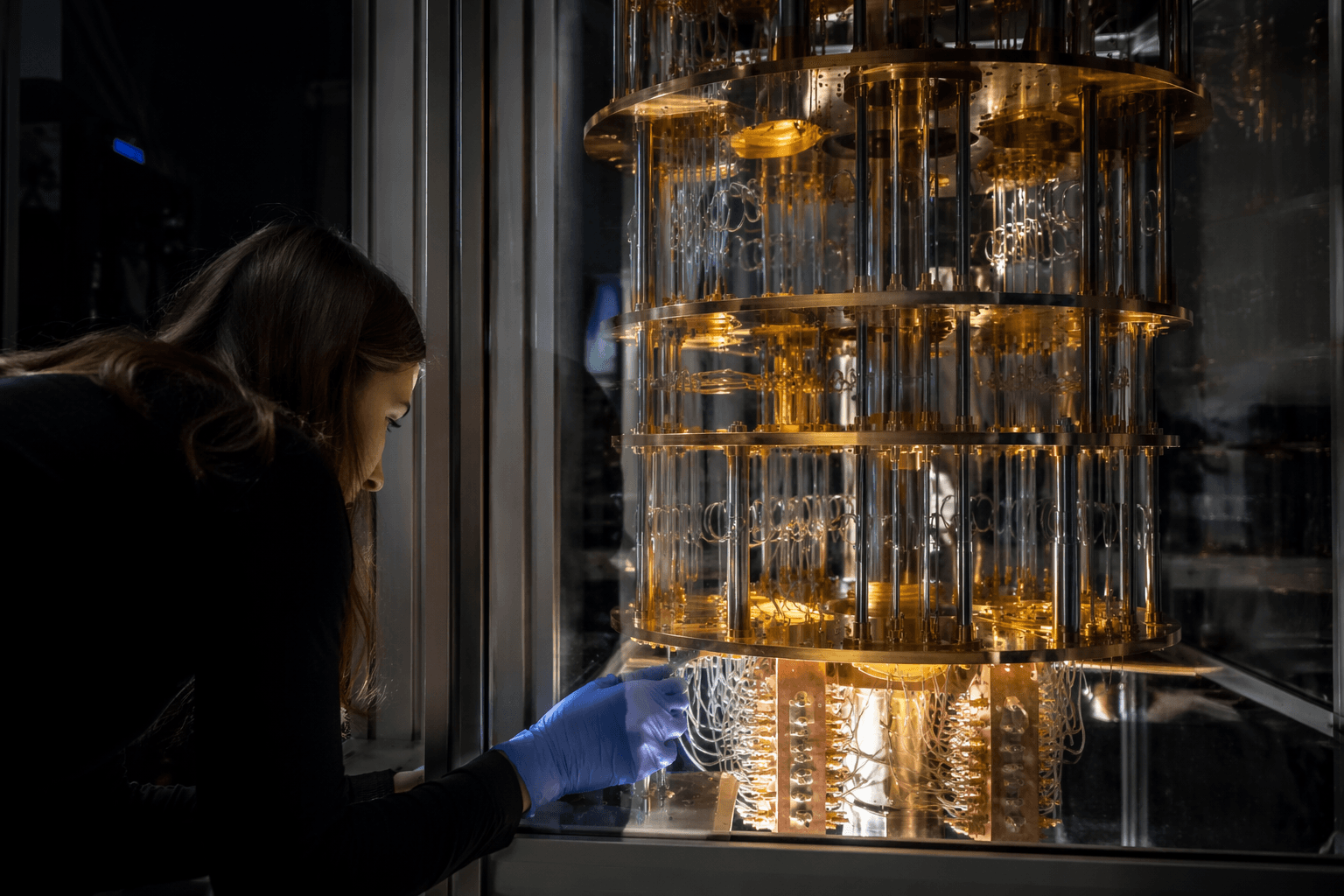
That combination of scarcity and usefulness is what makes helium-3 so attractive. Cryogenic systems need it, advanced quantum work relies on it, and researchers have long looked to it as a possible fuel or input for future fusion systems. Industry also sees possible uses in medical imaging, which gives the isotope a rare overlap between frontier physics, healthcare technology, and defense planning.
Why the moon keeps coming up
The lunar pitch rests on a simple geological idea: over billions of years, the solar wind implanted helium-3 and other volatiles into the Moon’s regolith, the dust-and-rock layer covering the surface. NASA has supported research into how those materials might be extracted, and a NASA page on lunar resource work says equipment is being built to demonstrate the extraction of helium-3 and other volatiles from regolith.
That does not mean the Moon is a ready-made gas field. The material is diluted through huge volumes of soil, and any real extraction system would have to move and heat enormous amounts of regolith just to recover a tiny quantity of gas. The economic promise comes not from abundance, but from the idea that a scarce Earth-side material might become accessible if space hardware ever becomes cheap and reliable enough.
What the samples actually show
Much of what is known about lunar helium-3 comes from Apollo and Luna samples, and those samples tell a sobering story. A SpaceNews summary cites estimates as low as 2 parts per billion and as high as 26 parts per billion, while a 2024 NASA paper reports average lunar-soil levels around 3.7 parts per billion and 7.8 parts per billion in mare regions. Those are not concentrations that suggest easy mining.
The key point is variability. Mare regions may hold somewhat higher levels than the lunar average, but even the better numbers are still extraordinarily small. That is why the Moon is not being discussed as a conventional ore deposit; it is being discussed as a difficult, low-yield chemical processing problem on a planetary scale.
What mining would actually require
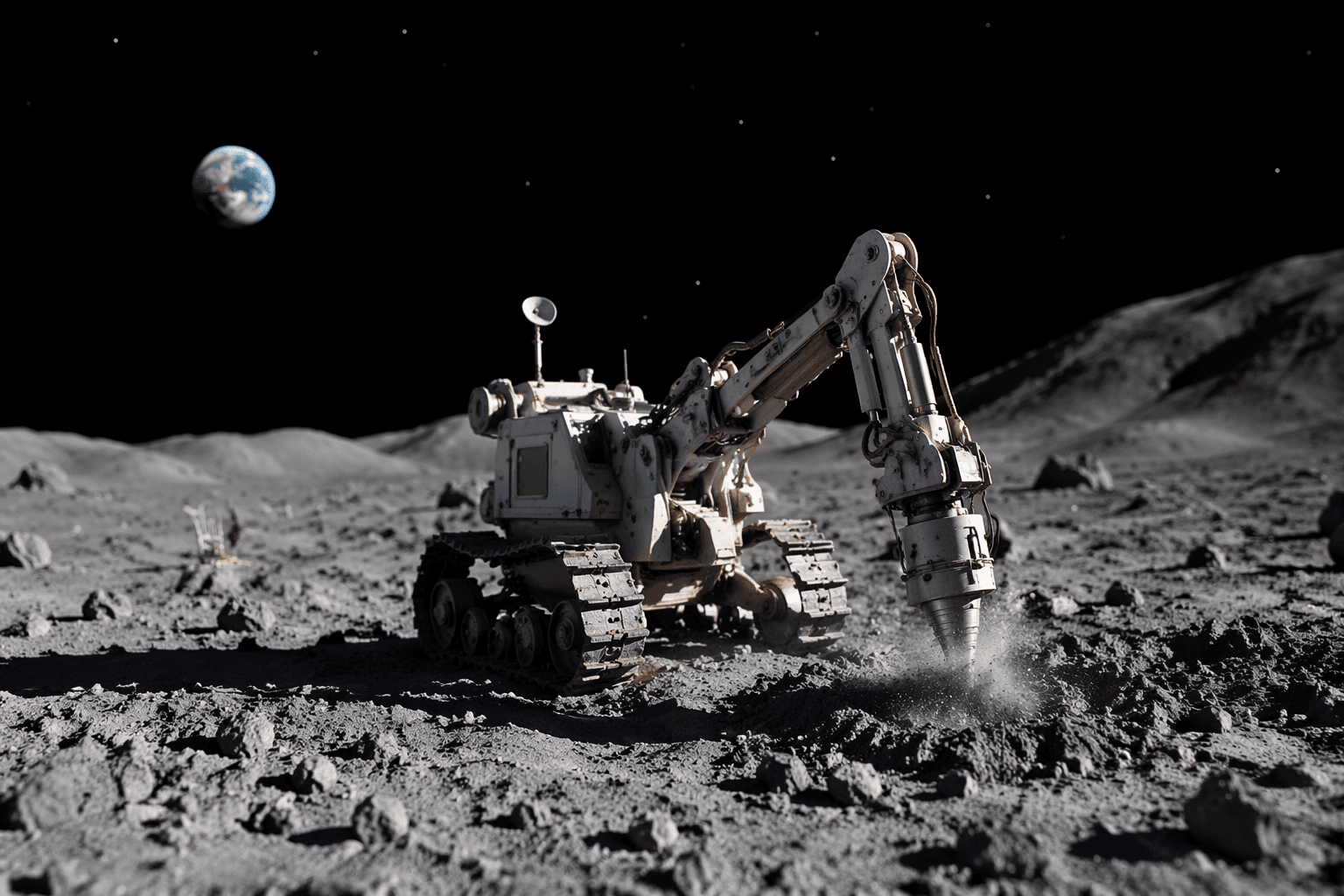
NASA technical research has laid out mining concepts that make clear how ambitious the project would be. One of the most detailed, the Mark-III miner, was completed in 2006 and was designed to excavate 1,258 tonnes of regolith per hour and process 556 tonnes per hour during lunar daylight. The concept would heat regolith to about 700°C to release implanted solar-wind volatiles.
Those numbers reveal the real challenge: not identifying helium-3, but moving and processing absurd quantities of dirt to capture trace gas. Recent experiments at NASA Kennedy Space Center’s Swamp Works and the Florida Institute of Technology tested helium release from simulated lunar soil, which is a meaningful step for materials research but still far from a working mine. The science is advancing, yet the engineering burden remains punishing.
Why the economics are still a wall
Even if the extraction machinery worked, the economics would still have to survive an unforgiving test. Any helium-3 operation would need launch systems, lunar power, excavation hardware, thermal processing, storage, return logistics, and a customer base willing to pay enough to cover all of it. On top of that, there is still no demonstrated commercial lunar helium-3 supply chain.
Fusion adds another layer of uncertainty. Supporters often imagine helium-3 as a future fusion fuel, but helium-3 fusion has not yet achieved net power output in practical reactor demonstrations. That means the biggest long-term use case for a lunar helium-3 economy is still unproven, which makes current investment look more like a speculative bet than an industrial plan.
The policy stakes are bigger than a moonshot
The Department of Energy’s isotope program says it manages federal helium-3 inventories and is working to address shortages, underscoring how tightly this material is tied to national policy. That matters because isotope shortages can ripple into labs, hospitals, and defense systems long before anyone talks about a moon base. If supply remains constrained, the impact lands hardest on institutions that need stable, affordable access to specialized materials.
A 2022 U.S. Geological Survey assessment described lunar resource exploration as an area still needing a technically rigorous status review, which is a reminder that space-resource policy is still catching up to the hype cycle. The social question is not only whether lunar mining can work, but who would control the gains if it ever did. A real helium-3 economy would likely be shaped by governments, aerospace firms, and high-end research users, not by the communities that bear the cost of resource insecurity on Earth.
For now, the most honest reading is that helium-3 has become valuable because the world wants more of what it enables, not because the Moon is ready to supply it. NASA’s work shows the idea is technically interesting; the evidence also shows it is still far from practical.
This article was produced by Prism’s automated news system from verified source data, official records, and press releases, then run through automated quality and moderation checks before publishing. The system is built and supervised by the people who set the standards it runs under. Read our full AI policy.
Know something we missed? Have a correction or additional information?
Submit a Tip