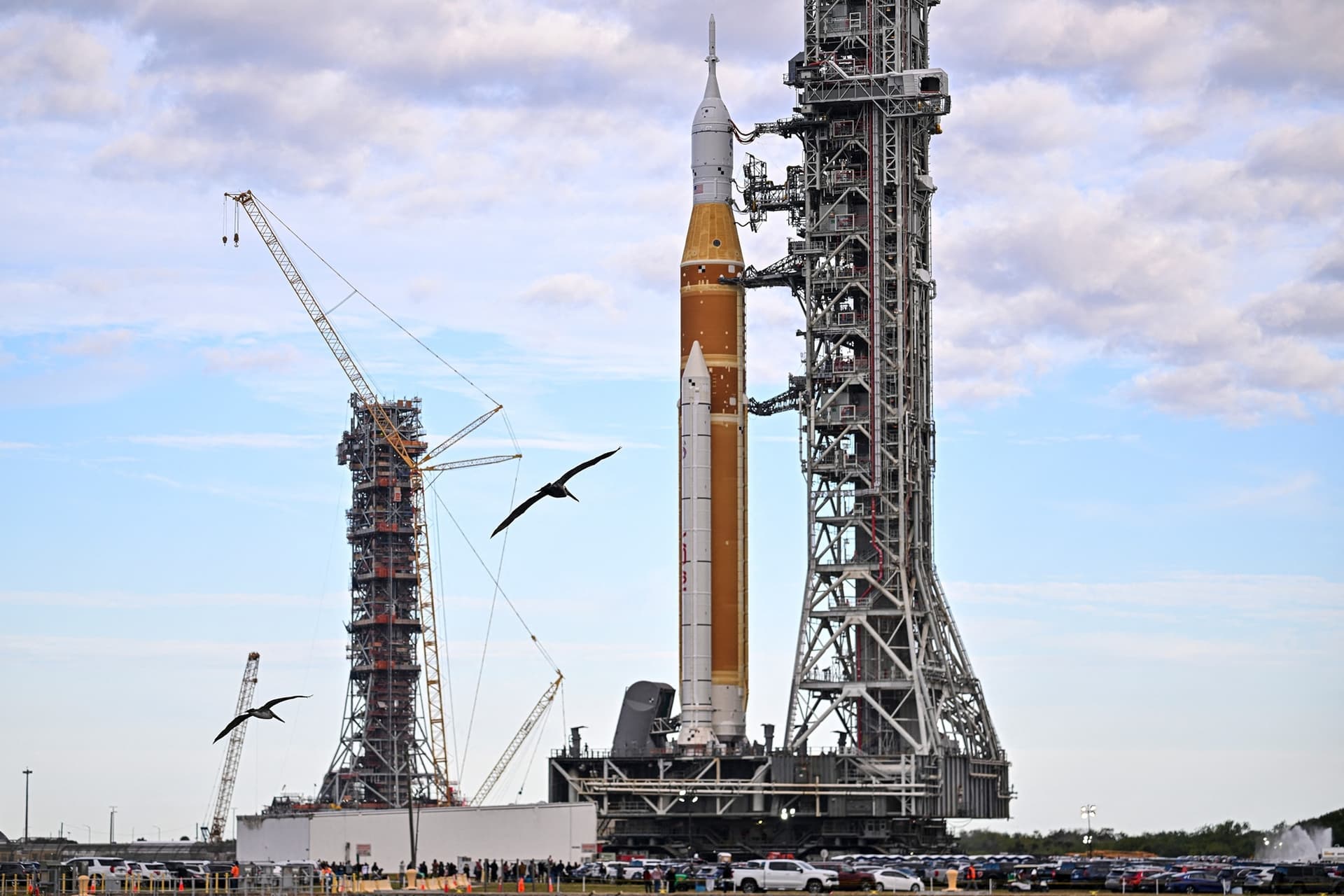
NASA Launches Artemis II, Sending Crew Toward the Moon Wednesday
Four astronauts will attempt a 685,000-mile lunar flyby Wednesday, the first crewed deep-space test flight in more than 50 years and the mandatory gateway to a US lunar landing.
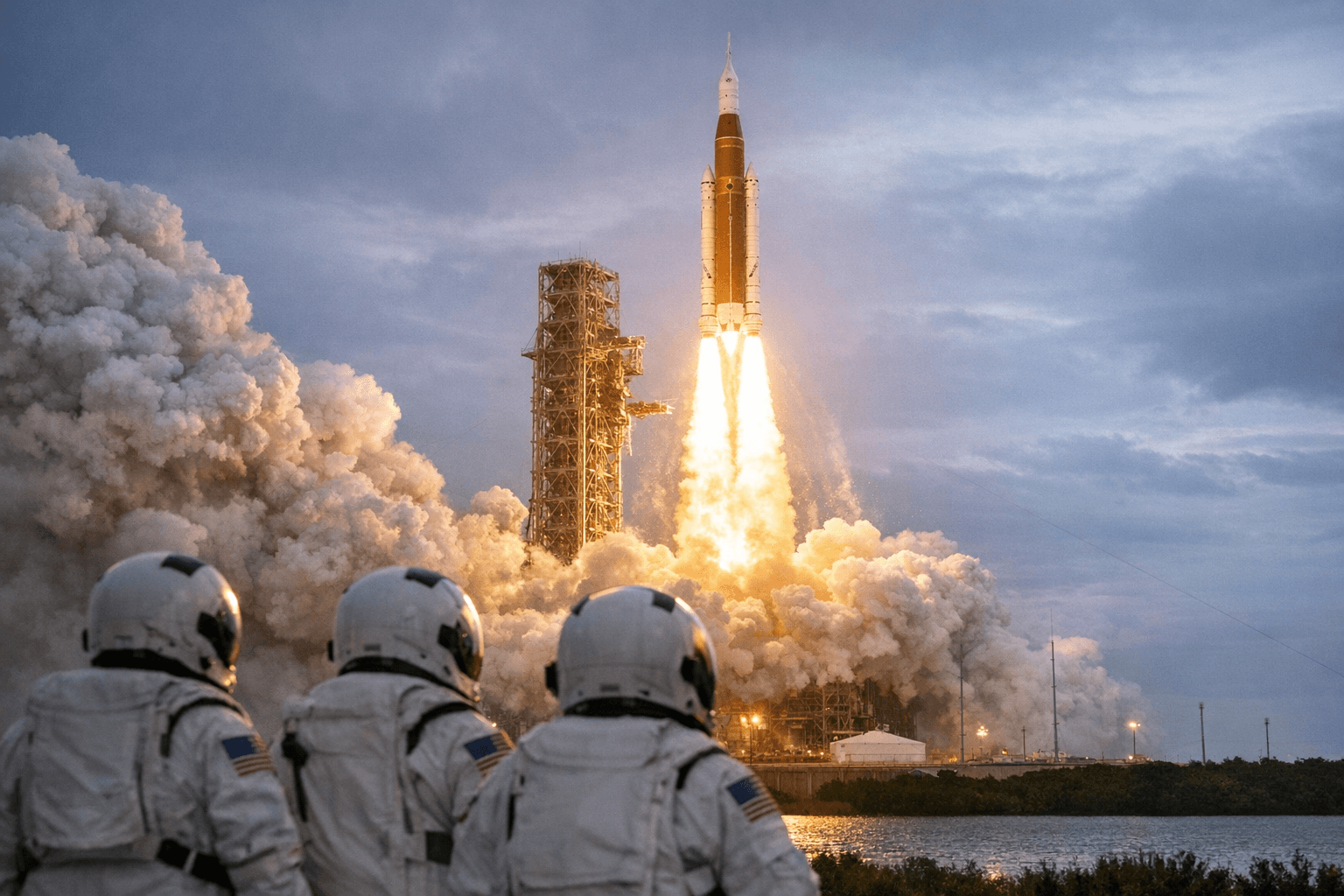
The countdown's significance runs deeper than the spectacle. At 6:24 p.m. EDT Wednesday, NASA commander Reid Wiseman, pilot Victor Glover, mission specialist Christina Koch, and Canadian Space Agency astronaut Jeremy Hansen will lift off from Kennedy Space Center's Launch Complex 39B on a 10-day, 685,000-mile journey around the Moon and back. Artemis II is not a landing mission. It is the systems certification flight that determines whether NASA can attempt one.
Every milestone in the flight profile carries that weight. The 322-foot Space Launch System rocket must generate more than 8.8 million pounds of thrust to push the Orion capsule, roughly the size of a campervan, through two low Earth orbit passes, execute a critical upper stage burn that commits the crew to high Earth orbit, and release all four astronauts on a free-return trajectory around the Moon. Life support, guidance, navigation, and the Orion heat shield will all face conditions that only deep space provides. The mission ends with a record-breaking atmospheric reentry and splashdown in the Pacific Ocean. No crewed mission has flown humans this far from Earth since the Apollo era, more than 50 years ago.
Getting to Wednesday required working through a concentrated series of setbacks this winter. A liquid hydrogen leak emerged during a February 2 wet dress rehearsal; a valve on the Orion hatch pressurization system required retorquing; and a helium flow anomaly detected February 21 triggered a full rollback, sending the SLS and Orion on a four-mile trip aboard Crawler Transporter-2 back to the Vehicle Assembly Building. A second wet dress rehearsal on February 19 had been clean. NASA Administrator Jared Isaacman cleared the crew to fly using the existing Orion heat shield in January after reviewing engineering analysis of concerns first raised in late 2024; design changes to address those issues are planned for Artemis III.
By Sunday, March 29, the board was clear. Mission Management Team chair John Honeycutt confirmed teams were tracking zero technical issues. Launch weather officer Mark Burger of the 45th Weather Squadron at Cape Canaveral Space Force Station puts favorable weather probability at 80 percent. If the attempt scrubs Wednesday, backup windows extend through April 6, with an additional opportunity on April 30.
The program context is hard to set aside. Artemis has run years behind schedule and billions over budget, drawing sustained criticism from lawmakers who argue NASA's resources should push toward Mars rather than revisit lunar ground Apollo covered half a century ago. The Gateway lunar station, once central to the sustained presence architecture, was cancelled in 2026. A successful Artemis II would not end that debate, but it would clear the mandatory path to Artemis III's planned landing at the lunar south pole.
NASA's April 1 coverage schedule opens with propellant loading at 7:45 a.m. EDT. NASA+ launch coverage begins at 12:50 p.m. EDT and continues on YouTube through Orion's solar array deployment in space. Approximately two and a half hours after liftoff, a post-launch briefing with acting Associate Administrator Lori Glaze, Orion Program manager Howard Hu, SLS deputy manager Chris Cianciola, and Exploration Ground Systems program manager Shawn Quinn will assess whether the upper stage burn to high Earth orbit executed as designed. Livestreams are available on NASA+, YouTube, and Amazon Prime.
That burn is the first of a dozen critical milestones Artemis II must clear before NASA can declare the road to a lunar landing open.
Sources:
Know something we missed? Have a correction or additional information?
Submit a Tip