NASA orders moon rovers for planned lunar base missions
NASA’s lunar base plan now turns on the unglamorous work of hauling cargo and driving rovers at the south pole. The agency tied its 2028 astronaut goal to phased missions starting later this year.
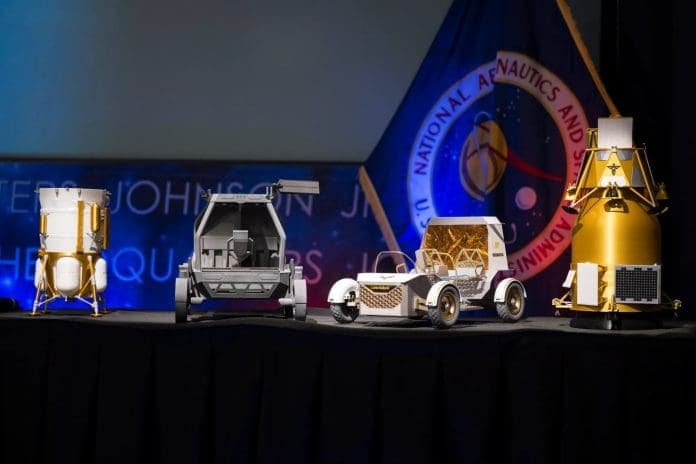
NASA’s lunar base strategy is as much about hauling, scouting and maintenance as it is about rockets and astronauts. The agency announced new contracts for moon rovers and cargo landers on May 26, betting that sustained human presence at the lunar South Pole will depend on machines that can move payloads, test terrain and keep a future base supplied.
NASA said the Moon Base program is designed to enable expanded scientific and commercial activity near the lunar south pole, with work unfolding in three phases. Phase One runs now through 2029 and begins with rapid robotic missions to scout the region, test technologies and prepare the surface. Phase Two, beginning in 2029, would add semi-permanent infrastructure and early habitation. Phase Three, starting in 2032 and beyond, would scale to sustained human presence and routine crew rotations.
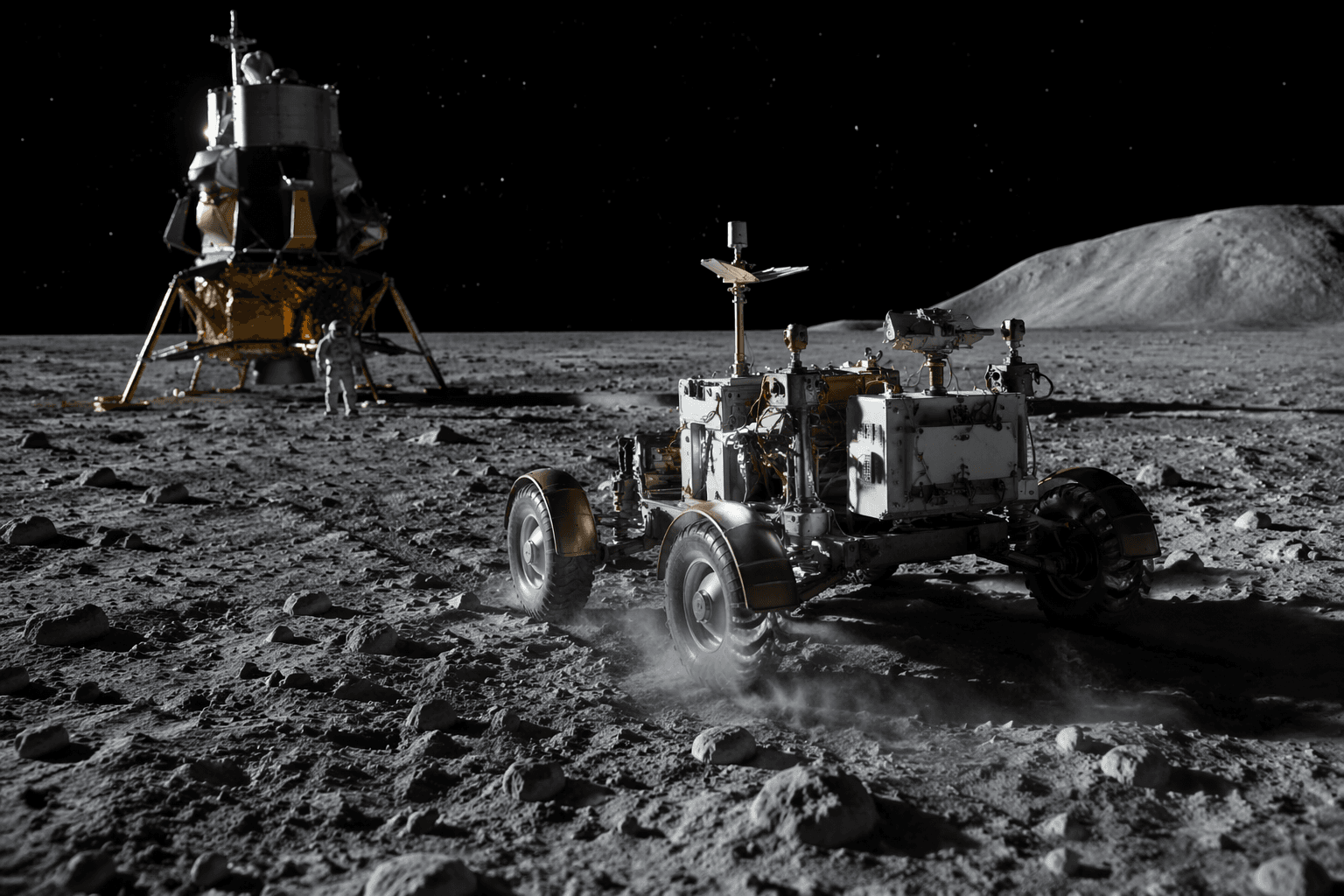
The first missions illustrate how tightly the architecture is being built around logistics. Moon Base I is targeted for launch no earlier than fall 2026 on Blue Origin’s Blue Moon Mark 1 Endurance lander, carrying NASA payloads to the Shackleton Connecting Ridge. Moon Base II is planned for later in 2026 and is expected to deliver more than 1,100 pounds of cargo on Astrobotic’s Griffin lander, including Astrolab’s FLIP rover. Moon Base III is also targeted for 2026 and will carry the first payload chosen through NASA’s Payloads and Research Investigations on the Surface of the Moon initiative.
That mobility push builds on NASA’s earlier Artemis work. In April 2024, the agency selected Intuitive Machines, Lunar Outpost and Venturi Astrolab to advance concepts for a lunar terrain vehicle, or LTV, the rover astronauts would use on the surface. NASA said the LTV program carried a combined maximum potential value of $4.6 billion across all awards and would be contracted as a service from industry rather than owned by the agency. The agency intends to begin using the vehicle for crewed operations during Artemis V.

NASA Administrator Jared Isaacman cast the program as both a technical and political marker, saying the Moon Base will be “America’s and humanity’s first outpost on another celestial world,” and that each mission would be a learning opportunity as NASA builds the infrastructure to stay on the lunar surface. The timing underscores the stakes: the new contracts came just days before Blue Origin’s New Glenn rocket suffered a launchpad explosion during a hot-fire test at Cape Canaveral Space Force Station on May 28, a failure that CBS News said could push flight plans back by months or longer and add pressure to NASA’s moon timeline.
This article was produced by Prism’s automated news system from verified source data, official records, and press releases, then run through automated quality and moderation checks before publishing. The system is built and supervised by the people who set the standards it runs under. Read our full AI policy.
Did this article answer your question?