NASA Prepares Artemis II Crewed Lunar Flyby, First in 50 Years
NASA's Artemis II rocket stood on the Kennedy Space Center pad Saturday, three days from a launch that would be the first crewed moonshot in over 50 years.
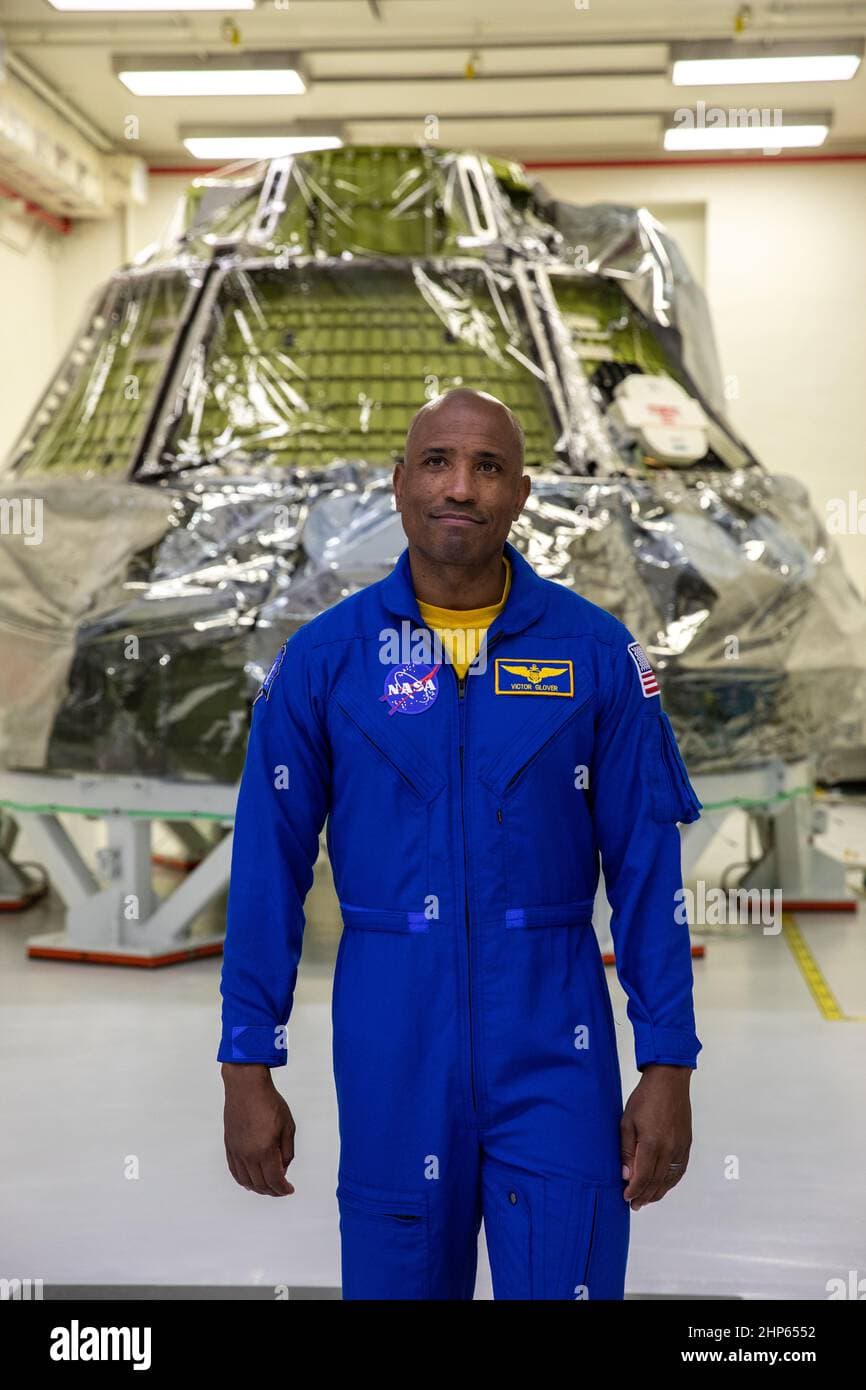
The 322-foot Space Launch System rocket assigned to Artemis II was standing on the Kennedy Space Center launchpad Saturday, positioned for a liftoff no earlier than April 1 that would send the first crew of humans toward the Moon since Apollo 17 departed Earth in December 1972.
The rocket's presence on the pad followed a January 16 Mission Overview news conference at which NASA announced the vehicle would roll out to Kennedy Space Center the following day and require up to ten hours to be positioned on the launchpad. That rollout, completed January 17, set the stage for a launch campaign that has already slipped from its original target: the mission was first aimed at February 8 before issues arose during fueling tests pushed the schedule into the spring.
Artemis II will be the second flight of the Space Launch System and the first to carry astronauts aboard the Orion spacecraft. The four-member crew consists of NASA astronauts Victor Glover, Reid Wiseman, and Christina Koch, joined by Jeremy Hansen of the Canadian Space Agency. NASA Administrator Bill Nelson announced the crew on April 3, 2023, during his "State of NASA" address at Ellington Field outside Houston, Texas. That same evening, all four appeared at NRG Stadium during the 2023 March Madness basketball championship game.
The mission, expected to last ten days, is built around a single technical mandate: validate Orion, the Space Launch System, and the operational systems needed for future lunar landings. After a three-day transit to the lunar vicinity, the crew will spend one full day observing the far side of the Moon, with some regions seen up close by humans for the first time. The spacecraft then loops back toward Earth on a trajectory that never touches the lunar surface.
That constraint is deliberate. The 2022 Artemis I mission flew Orion around the Moon without a crew, confirming propulsion and heat shield performance. Artemis II takes the same vehicle stack and adds four astronauts, stressing life support, deep-space communications, and crew systems that robotic flights cannot test. A successful flyby clears the path to Artemis III, planned as the first crewed lunar surface landing since 1972.
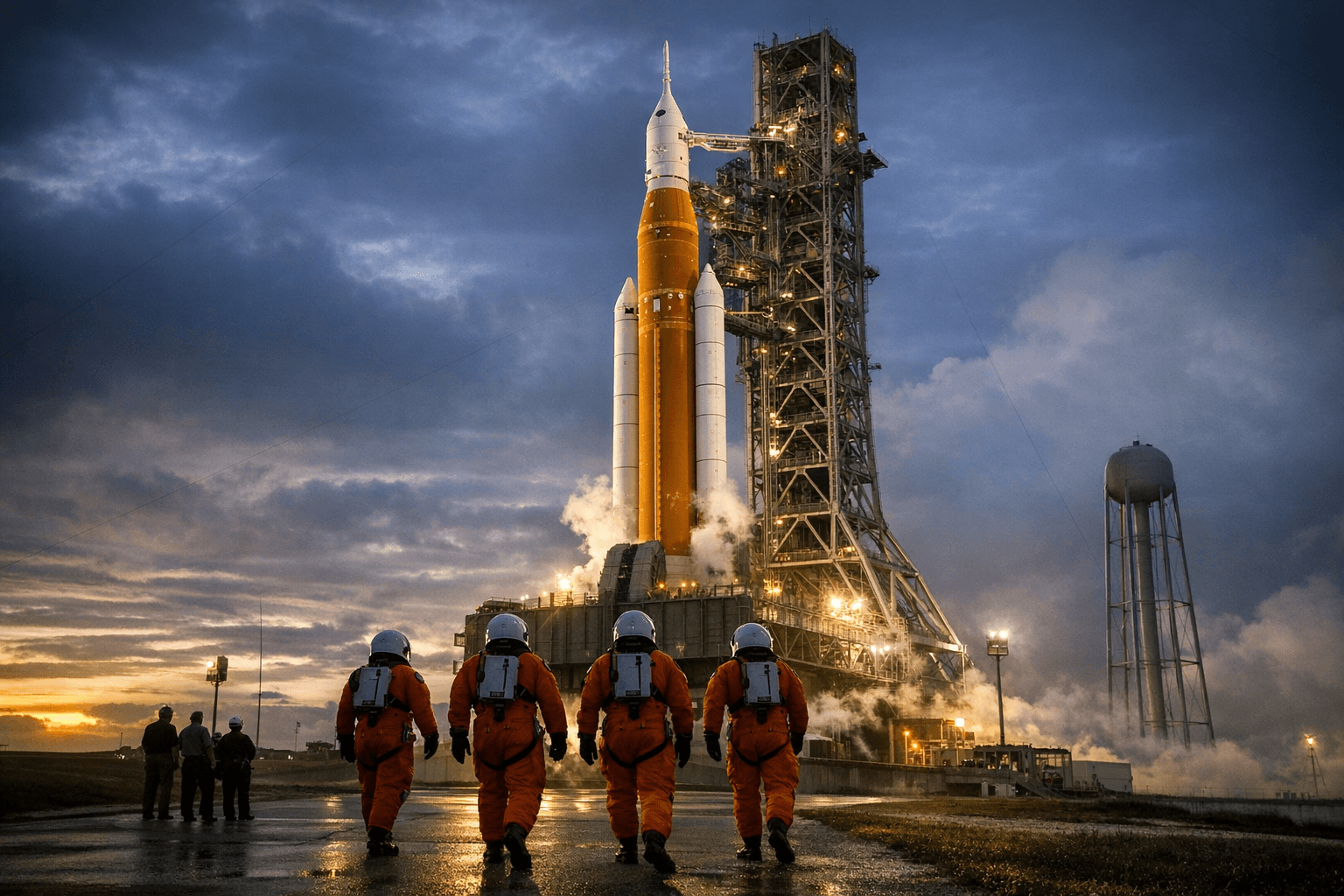
Hardware integration for Artemis II unfolded across more than a year of parallel milestones. The fully outfitted core stage arrived at Kennedy Space Center between July 16 and July 25, 2024. The adapters required to integrate the full launch vehicle reached substantial completion in June 2024 and arrived at KSC in September of that year. The Orion spacecraft and its European Service Module were still in active preparation as recently as March 2025.
Jeremy Hansen's seat on the mission carries weight beyond the flight itself. Canada's participation in the Artemis program includes a commitment to supply Canadarm3, a robotic arm for the planned Gateway space station that will orbit the Moon. Hansen's inclusion reflects that long-term agreement between NASA and the Canadian Space Agency.
With the rocket on the pad and 54 years of human lunar absence on the line, the remaining open questions center on the testing and integration milestones NASA has not fully resolved. Three days from the current launch target, the answer is close.
Know something we missed? Have a correction or additional information?
Submit a Tip