NASA selects DAPHNE mission to study space weather and Earth atmosphere
Two twin satellites will probe how Earth’s atmosphere and solar storms disrupt GPS, pilots, satellites and power systems.
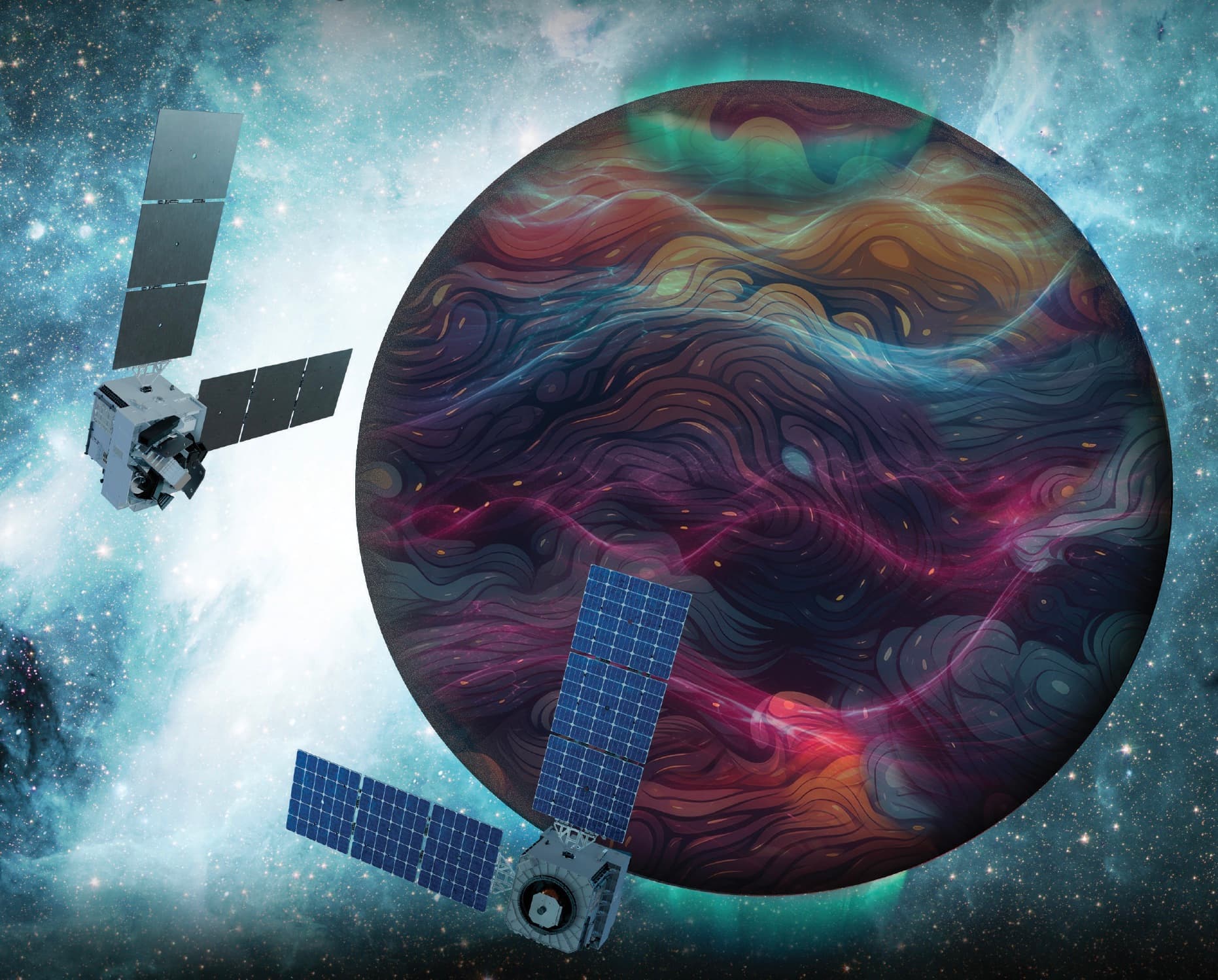
NASA has picked DAPHNE, a mission concept built to show how space weather and Earth’s lower atmosphere combine to shake the space environment around the planet. The payoff is practical: better forecasts could help protect GPS-guided tractors, aviation communications, low-Earth-orbit satellites and, by extension, the power and navigation systems people rely on every day.
The mission will move into Phase B, NASA’s design and planning stage, with Aimee Merkel of the Laboratory for Atmospheric and Space Physics at the University of Colorado Boulder leading the work. NASA said DAPHNE will use identical twin satellites to collect coordinated measurements of neutral winds, temperature and composition in the thermosphere, the region where solar activity and near-Earth conditions strongly influence the ionosphere and upper atmosphere.

That science matters because the atmosphere above us is not static. Energy rises from below while solar effects press in from above, turning space weather into a systems problem rather than a single point of failure. NASA says that understanding the connection could improve models used by satellite operators, navigation systems and mission designers who need to know when the space environment is becoming more hazardous. The agency says the same physics can affect farmers using GPS-guided tractors, pilots who depend on backup communications during disruptions, grid operators watching for blackout risk, and satellites dealing with increased atmospheric drag.
NASA set a confirmation review for 2027. If the mission clears that gate, the agency said total estimated cost, excluding launch, would not exceed $250 million in fiscal year 2023 dollars, and launch would come no earlier than 2029. Funding and oversight will run through NASA’s Solar Terrestrial Probes program at Goddard Space Flight Center in Greenbelt, Maryland.
The concept grew out of NASA’s DYNAMIC announcement of opportunity, and DYNAMIC itself was recommended by the 2013 Solar and Space Physics Decadal Survey. In 2024, NASA backed three DYNAMIC concept studies at $2 million each for nine months, underscoring how much institutional weight has gone into the problem of atmospheric coupling and forecasting. NASA also placed DAPHNE in the context of a broader science fleet meant to help planners anticipate space-weather effects as the agency prepares for missions beyond Earth’s magnetic protection to the Moon, Mars and farther out.
At the University of Colorado Boulder, officials said each spacecraft will carry three remote-sensing instruments, MIGHTI, FUVI and PLATO, to make multi-point observations in very low Earth orbit, roughly 90 to 300 kilometers above Earth. That altitude is where the neutral atmosphere gives way to charged particles, and where the tug-of-war between winds below and energy from space can determine whether vital systems stay stable or fail.
This article was produced by Prism’s automated news system from verified source data, official records, and press releases, then run through automated quality and moderation checks before publishing. The system is built and supervised by the people who set the standards it runs under. Read our full AI policy.
Did this article answer your question?