NASA's Artemis Mission Sets Sights on Putting First Woman on the Moon
Christina Koch became the first woman to journey around the Moon after Artemis II launched April 1, a milestone shaped by years of deliberate women-led management at NASA.

Christina Koch made history at the far side of the Moon just days ago, becoming the first woman to journey around Earth's nearest neighbor when Artemis II launched April 1, 2026. She flew alongside commander Reid Wiseman, pilot Victor Glover and Canadian mission specialist Jeremy Hansen, a crew that collectively traveled farther from Earth than any human beings before them.
Behind that milestone sits a deliberate institutional design, not simply a symbolic one. When Kathy Lueders was appointed to lead NASA's Human Exploration and Operations Mission Directorate, she became the first woman to head the agency's human spaceflight program, embedding women-led decision-making into everything from vehicle architecture to crew assignments. The program's name was its own declaration: Artemis, twin sister of Apollo in Greek mythology, chosen to signal a departure from the program it succeeded.
That departure was a long time coming. Apollo 17's crew last stood on the lunar surface in December 1972. No crewed mission followed for more than five decades, and in those intervening years, no woman traveled beyond low Earth orbit. The institutional shift Lueders oversaw helped close that distance, though the finish line, an actual lunar surface landing, remains a mission away.
Artemis I, an uncrewed test flight, launched November 16, 2022, and splashed down December 11, validating the Space Launch System rocket and Orion spacecraft as an integrated system. Artemis II followed with a crew carrying its own historic weight: Glover became the first Black astronaut assigned to a lunar mission.
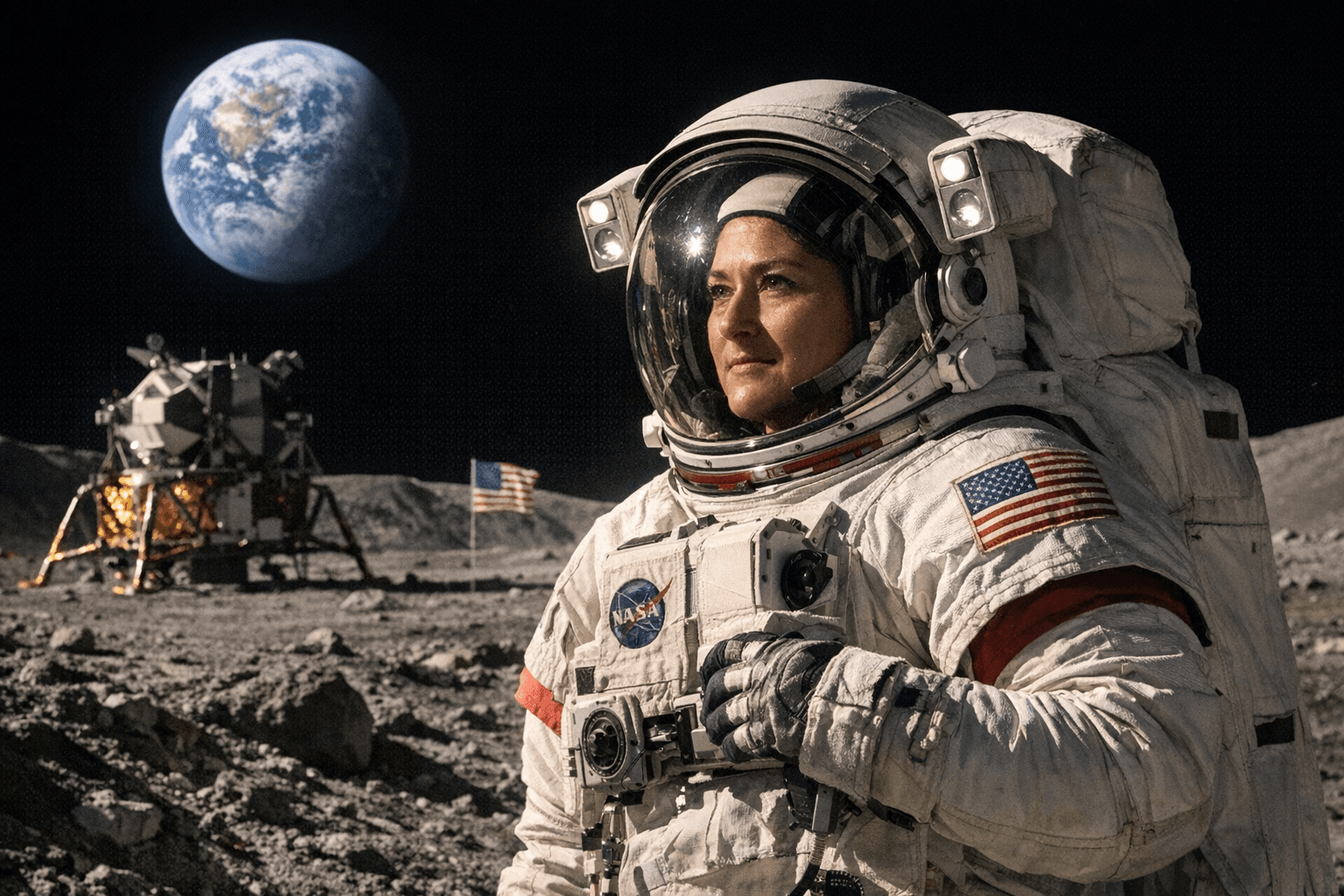
"It is so great to hear from Earth again," Koch said as Artemis II reconnected with ground control after 40 minutes traveling behind the Moon.
That reconnection is harder to sustain on the budget side. The Trump administration's fiscal year 2026 budget proposal, released in May 2025, called for canceling SLS and Orion after Artemis III, citing a per-launch cost of $4 billion. NASA had already delayed Artemis III, the planned crewed lunar landing, to no earlier than 2027 as of December 2024. The program that spent years building a women-led management bench into its institutional core now faces a funding environment openly skeptical of the hardware that would complete what that leadership set out to do.
This article was produced by Prism’s automated news system from verified source data, official records, and press releases, then run through automated quality and moderation checks before publishing. The system is built and supervised by the people who set the standards it runs under. Read our full AI policy.
Did this article answer your question?