Nasdaq rebounds as chip stocks rally, oil rises on Iran-Israel tensions
Chip stocks led a rebound as the Nasdaq gained 0.9%, even after oil spiked on Iran-Israel strikes and Brent jumped as much as 4%.

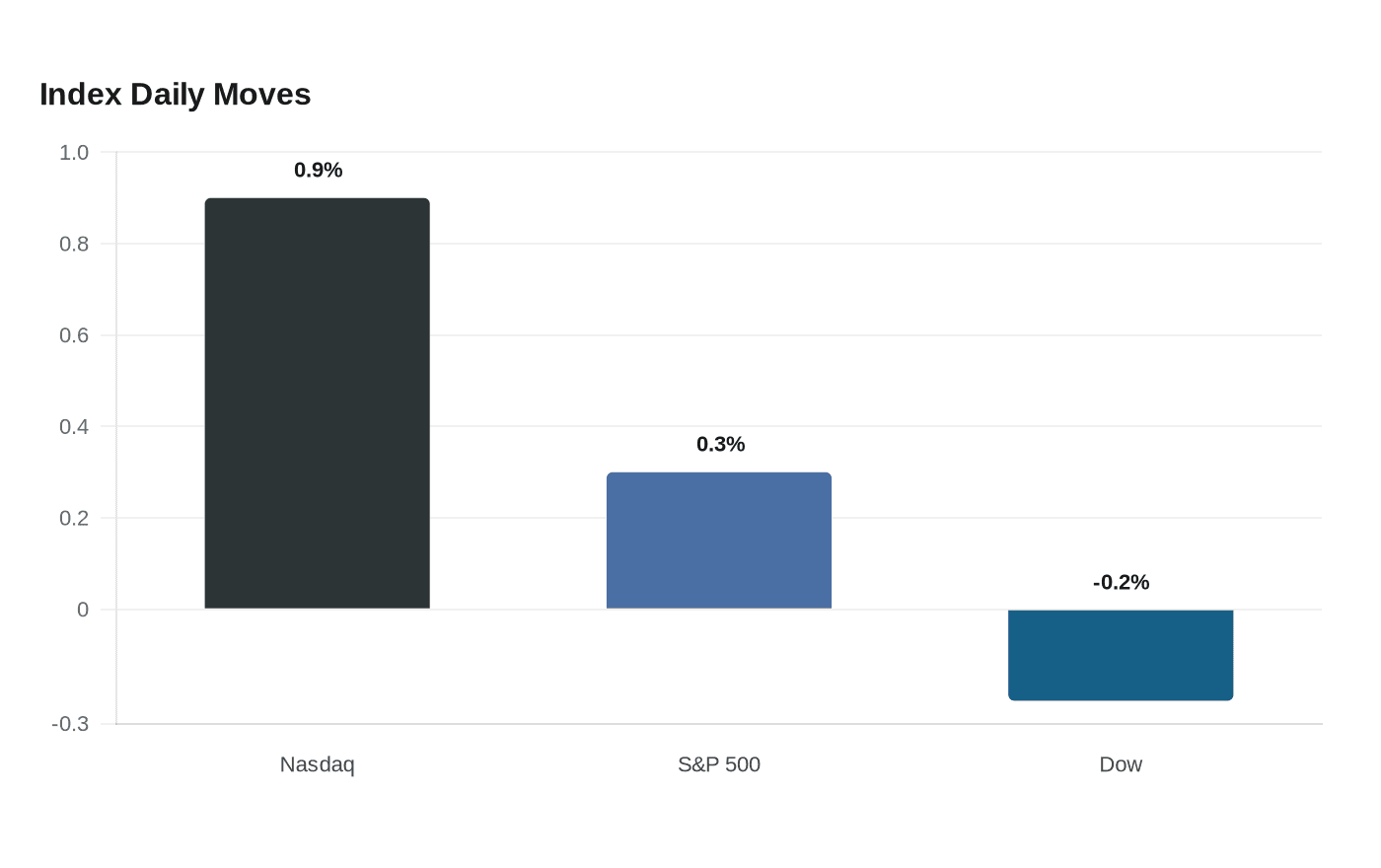
Wall Street steadied as investors bought back beaten-down chip stocks even while the Middle East sent crude prices higher. The Nasdaq Composite rose 0.9%, the S&P 500 added 0.3%, and the Dow slipped 80 points, or 0.2%, as traders weighed a calmer tone in equities against another burst of geopolitical risk.
Micron Technology led the bounce with a 9.9% jump after tumbling 13.3% on Friday. Marvell Technology climbed 9.6% after S&P Dow Jones Indices said it would be added to the S&P 500, giving semiconductor traders another reason to step back into a sector that had been among the market’s sharpest winners before last week’s selloff. The rebound mattered because semiconductor shares had already surged nearly 85% year to date through Thursday, a sign that Monday’s gains looked more like a reset in an overheated AI trade than the start of a new advance.
That resilience in stocks coexisted with a sharp but contained oil move. Brent crude climbed as much as 4% after Israel and Iran exchanged strikes, while West Texas Intermediate rose 0.8% to settle near $91 a barrel after earlier jumping as much as 5.5%. Traders responded to the violence first, then pared some of the panic after Donald Trump said Israel and Iran were “looking to do an immediate ceasefire,” and Iran’s foreign ministry said its military had ended operations against Israel.
The market’s split reaction reflects a simple tension: equity investors can look through a geopolitical shock if they believe the conflict will stay limited, while oil traders immediately price the risk that supply lines, shipping lanes, or regional production could be disrupted. That is why stocks can rally even as energy costs climb. The damage from a higher crude price usually arrives with a lag, through more expensive gasoline, freight, airline fuel, plastics, and other petroleum-based inputs. Those costs can squeeze household budgets, pressure corporate margins, and keep headline inflation sticky.
Monday’s move also showed how much risk appetite had been rebuilt around megacap technology, even after Friday’s tech-led selloff. Morgan Stanley strategist Michael Wilson called that drop a healthy correction and kept his S&P 500 target at 8,000, a level that implies more than 8% upside from the prior week’s close of 7,383.74. Outside the U.S., South Korea’s Kospi fell 8.3% early in the session before recovering later in the global trading day, underscoring how quickly fear can spread before markets settle back into their preferred story: resilient growth, strong chip demand, and the hope that geopolitics will not turn into something larger.
This article was produced by Prism’s automated news system from verified source data, official records, and press releases, then run through automated quality and moderation checks before publishing. The system is built and supervised by the people who set the standards it runs under. Read our full AI policy.
Did this article answer your question?