National Guard ordered to form 23,000+ quick reaction troops for unrest
Memos signed by Major Gen. Ronald Burkett direct Guard units to create "quick reaction forces" across states, raising legal and budget questions and a Jan. 1, 2026 deadline.
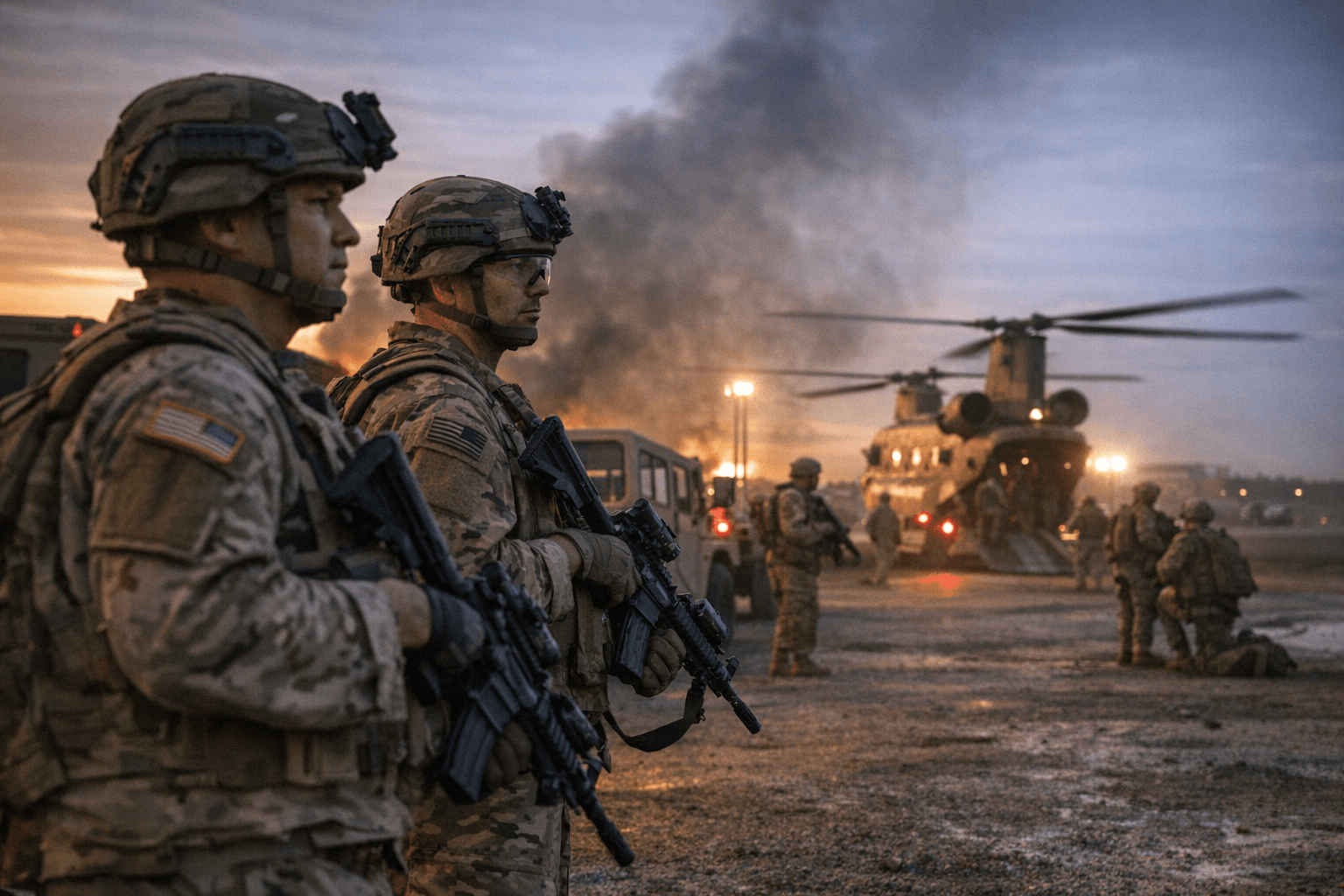
Military leaders have ordered National Guard units in each state and U.S. territory to establish "quick reaction forces" trained to respond to civil disturbances and able to deploy on hours' notice, according to memos signed by Major Gen. Ronald Burkett and reviewed by The Associated Press, Military.com and KRCGTV. The directives, circulated this month, call for varying troop levels by jurisdiction, often about 500 soldiers per state, that sum to "more than 23,000" personnel, with a separate Washington, D.C. requirement for a "specialized" 50-soldier military police battalion on active duty orders.
The memos mandate the QRFs be operational by Jan. 1, 2026, and specify training in the "proper use of batons, body shields, stun guns and pepper spray." The National Guard Bureau is directed to provide each unit with 100 sets of crowd-control equipment and two full-time trainers to help meet the deadline, the reporting says. Units are to be capable of responding to riots and civil disturbances on hours' notice.
The push comes amid broader White House policy priorities that outlets characterized as pressing "forward with President Donald Trump's broader vision for a muscular role for the U.S. military in targeting illegal immigration and crime." At a congressional hearing tied to the same reporting, SecDef nominee Elbridge Colby deferred to answer questions about the reported plan, according to the briefing material provided to reporters.
Legal obstacles are already shadowing implementation. Reporting notes the administration is blocked from sending troops into the Chicago area until at least the latter half of November under a U.S. Supreme Court order calling on the parties to file additional briefs, and a federal trial seeking to block a deployment in Portland, Oregon, "got underway this week." Those cases illustrate the contested legal terrain surrounding large-scale domestic troop deployments, and they raise questions about how often and under what authorities the QRFs could be activated.
The directives carry immediate fiscal and market implications despite the memos' silence on funding. The memos name National Guard Bureau support for equipment and trainers but do not specify budgetary sources or long-term funding. State governors and adjutants general will face decisions on staffing, training schedules and potential overtime or mobilization costs. Defense and security suppliers that make crowd-control gear could see increased demand if federal purchases follow, but the lack of procurement details means market effects are uncertain.

Policymakers and municipal leaders will also confront constitutional and civil liberties concerns. Past deployments of the Guard to cities including Los Angeles and Washington, D.C. provoked clashes with local officials and litigation; legal experts say those precedents, and the pending Chicago and Portland actions, will help shape courts' interpretation of statutory limits on domestic military use.
Journalists and officials seeking to verify implementation should obtain the full memos for dates and state-by-state troop assignments, and ask the National Guard Bureau, Major Gen. Burkett, the Department of Defense and SecDef nominee Colby for clarifications on legal authorities, funding and rules of engagement. The memos and their Jan. 1, 2026 timeline create an operational and political test for how much the U.S. military will be employed on domestic soil in the coming year.
This article was produced by Prism’s automated news system from verified source data, official records, and press releases, then run through automated quality and moderation checks before publishing. The system is built and supervised by the people who set the standards it runs under. Read our full AI policy.
Did this article answer your question?

