Natural England warns coastal path faces closures from erosion and storm damage
Erosion, storm damage and ferry failures are already breaking up Britain’s newest coastal route, despite its official launch in Sussex last month.
Britain’s newest national walking route is already being tested by the coast it was built to celebrate. Natural England says keeping the King Charles III England Coast Path fully open will be challenging in places, as erosion, storm damage, landowner objections and infrastructure failures force diversions and closures along a route meant to showcase uninterrupted public access to England’s shoreline.
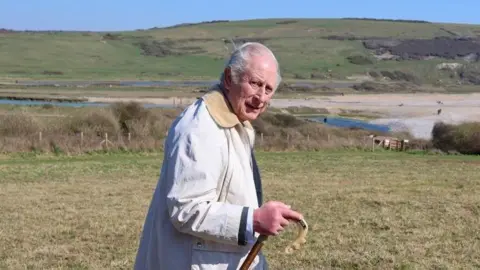
The path was officially launched at Seven Sisters in Sussex on 19 March 2026, when King Charles III walked a 2-kilometre stretch with Natural England chair Tony Juniper and Environment Secretary Emma Reynolds. Government describes the route as about 2,700 miles long, making it the longest managed coastal walking route in the world. The plan is to create about 1,000 miles of new path and improve about 1,700 miles of existing access.
The scale of the project has matched the ambition. Work began in 2010, and the first section opened at Weymouth to help people watch the 2012 Olympic sailing events from nearby cliffs and beaches. Neil Constable, who has worked on the project since 2010, said more than 200 staff have now worked on the route over 16 years, with the aim of opening up unprecedented access to the coastline and supporting visitor economies in coastal communities.
Yet the path’s latest problems show how fragile that promise can be. Somerset Council says the route has been closed along the full length of Minehead Golf Course because of storm damage and erosion. It also says diversions are in place at Chilton Trinity, Express Park in Bridgwater and Brickyard Clyce in Pawlett because of construction work on the Bridgwater Tidal Barrier. In other parts of Somerset, sections of the coastal margin are not open because of temporary or permanent wildlife restrictions.

Elsewhere, Natural England has been managing changes to the approved line of the route at Titchwell in Norfolk. A variation report was submitted on 18 February 2026, the consultation closed at midnight on 15 April 2026, and any objections will go to an independent planning inspector before a final ministerial decision by the Secretary of State for Environment, Food and Rural Affairs.
The practical limits of a continuous coast path also became clear in Southampton after the Hythe and Southampton Ferry Company went into voluntary liquidation on 9 April 2026. Walkers were told they would need to take a bus or walk about ten miles along a dual carriageway to stay on route. For a path designed as a national statement of access, the message is blunt: the coast is moving, and the infrastructure around it has to move with it.
This article was produced by Prism’s automated news system from verified source data, official records, and press releases, then run through automated quality and moderation checks before publishing. The system is built and supervised by the people who set the standards it runs under. Read our full AI policy.
Did this article answer your question?