Navigating 100+ German Tiny House Builders: Practical Selection Steps for Buyers
A practical buyer’s roadmap was published to help navigate more than 100 German tiny house builders, clarifying mobility, budget, permits, and long-term costs so buyers avoid costly mistakes.

Facing a market with more than 100 tiny house providers in Germany, prospective buyers need a clear, stepwise approach to choose the right builder and avoid surprises on delivery day. The new guidance lays out a buyer-focused selection process that starts with requirements and ends with matching builder expertise to siting and regulatory realities.
Begin by clarifying fundamentals: decide whether you need mobility or a stationary unit, set a realistic budget that includes transport and permit costs, and list equipment priorities such as insulation levels, sanitation systems, and renewable energy options. These decisions shape the rest of the search because a tiny house on wheels brings different regulatory and logistical demands than a foundation-built tiny house.
Once requirements are clear, narrow providers by delivery model. Some firms offer turnkey builds ready to move in, others supply shells or DIY kits that reduce upfront costs but shift time and technical risk to the buyer. Compare full-service offers against shell options on total cost of ownership, not just sticker price. Transport, crane hire, road permits, and site hook-ups add up and often exceed initial construction savings.
Permitting and site rules vary widely across municipalities. Account for local building-permit realities early in conversations with builders. A company experienced with foundation set-downs on rural plots may have little practice handling municipal approvals for THOWs in urban parks, and vice versa. Prioritize builders who can demonstrate work completed under the permitting conditions you will face, and ask for references from recent customers with similar siting.
Communication and references are practical, community-tested filters. Request timelines, detailed scopes, and client contacts. Visit completed builds where possible. Look for consistent aftercare policies and warranty terms covering structural elements, moisture barriers, and transport damage. A good builder will explain compliance steps for electrical, water, and sewage connections and outline what they will handle versus what you must arrange.
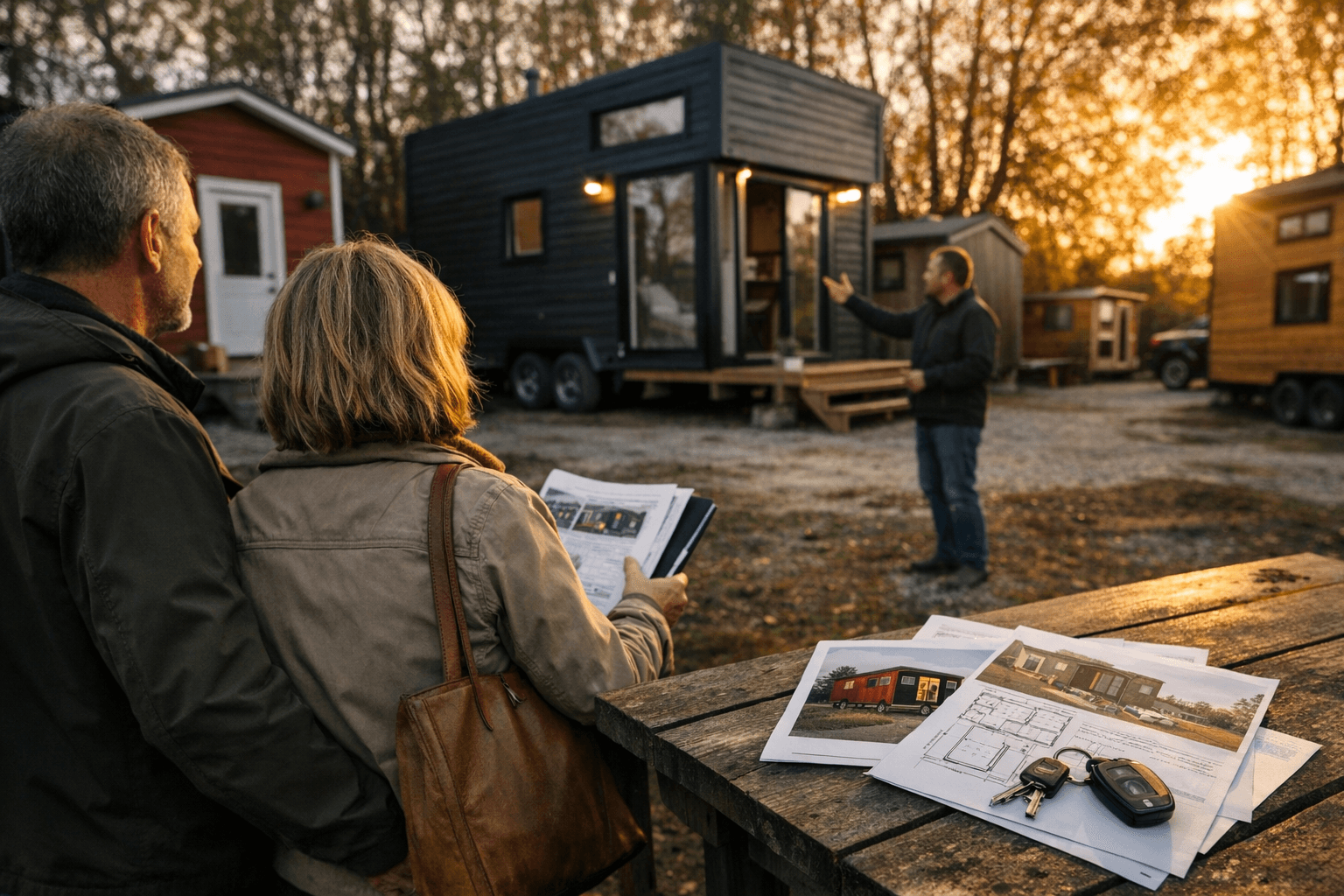
Understand foundation versus wheels tradeoffs beyond legality. Foundation builds tend to reduce transport and setup complexity and can improve thermal performance and resale value. Wheels preserve mobility and reduce site commitment but incur ongoing transport costs and stricter road and weight compliance. Factor long-term costs such as insurance, transport, and utility connections into comparisons.
This practical checklist is especially useful in the run-up to exhibition and buyer events where dozens of builders showcase models and options. Use trade-show visits to cross-check claims, measure workmanship, and test living layouts in person.
For buyers, the takeaway is clear: clarify your needs, budget for the full set of costs, choose builders with proven experience for your siting, and verify communication and references before signing. Following this structured approach will turn a crowded market into a manageable shortlist and keep your tiny-house project on budget and on site.
Sources:
Know something we missed? Have a correction or additional information?
Submit a Tip