Tiny House Design Primer: Smart Zones, Storage, Systems, and Light
This primer lays out practical design tactics for tiny houses, focusing on zones, storage, systems, and light. It matters because small footprints need efficient, adaptable solutions.
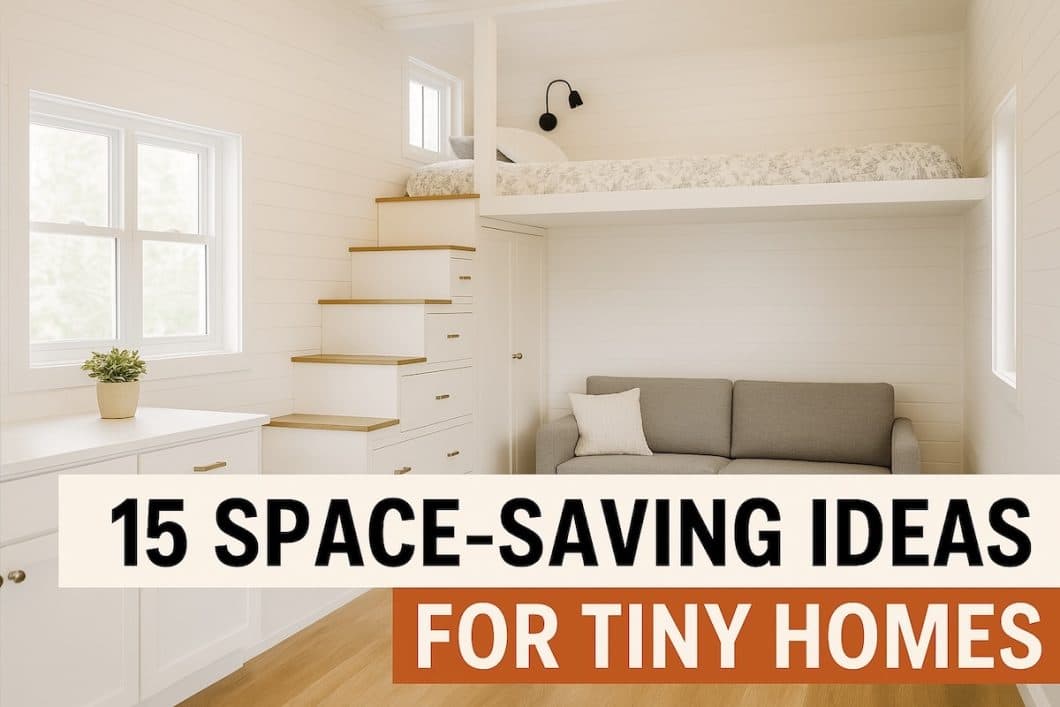
Tiny-house design succeeds when every decision stretches usable space, simplifies systems, and preserves daylight. Plan by activity zones instead of traditional rooms to keep a small footprint flexible: combine cooking, dining, and workspace in a single zone that shifts use by time of day. An open galley that converts into a dining and work area, or a convertible living/dining room for a small family, makes square footage do double duty.
Invest in built-in, multi-function furniture. Fold-down tables, Murphy beds, integrated seating with storage, and stair-storage that doubles as cabinetry are high-value moves. Stair-storage is a crowd favorite for turning circulation into cupboards; alternating tread stairs or guarded staircases make lofted sleeping areas safer while saving space. Prioritize vertical gains with tall cabinets and wall-hung utilities to free floor area for living.
Consolidate systems to minimize plumbing and electrical runs and to keep mechanical rooms compact. Stack washer/dryer combos, single-wall kitchens, and clustered service walls reduce material runs and simplify installation. For off-grid or low-energy setups, choose efficient HVAC and right-sized solutions: mini-split heat pumps, heat-recovery ventilation, and appropriately sized solar plus battery systems limit energy waste and keep equipment footprints small.
Lighting and finishes are practical levers for perceived space. Light-reflective surfaces, a mix of task and ambient fixtures, continuous sightlines, and consistent floor material help a tiny interior read as larger. Place task lighting over prep and work zones; use glass dividers or curtain panels to retain privacy without cutting light. A micro-pantry near the entry speeds grocery unloads and prevents clutter from migrating into living zones.
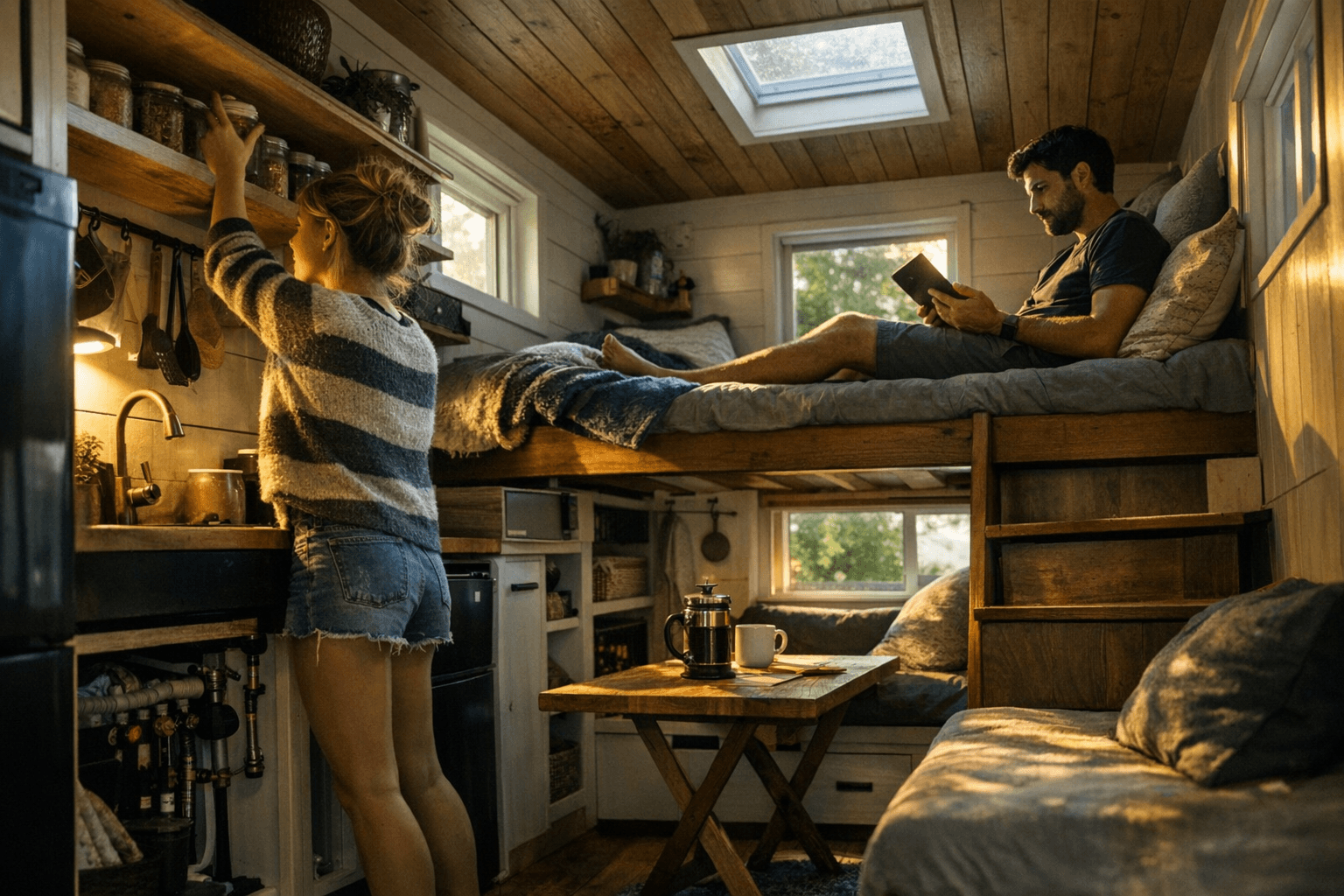
Storage hierarchy matters: keep daily-use items within easy reach, tuck seasonal gear up high or under benches and stairs, and assign secure personal storage for each adult to avoid communal clutter. For families and multi-occupant homes, prioritize private sleeping niches where possible and make communal zones proportionally larger than sleeping areas so shared life happens in roomy, usable spaces.
Quick layout examples that work across trailer lengths from 16' to 36'+ include a single adult or couple plan with open galley, loft bed, fold table, and a dedicated workspace; and a small family plan with rear bedroom clustering, convertible living/dining, and bathroom space for a stack washer. These options keep plumbing compact and allow modular upgrades.
Practical next steps: sketch zone maps rather than room plans, right-size systems to your climate and energy goals, and lock in built-ins that solve multiple needs. With thoughtful zones, layered storage, and bright, continuous interiors, tiny houses become roomy in function even when they stay small in footprint.
Know something we missed? Have a correction or additional information?
Submit a Tip
