Navigating San Francisco's Permitting System: Departments, Common Pitfalls, Practical Tips
Whether you’re building an ADU, renovating a storefront, or converting retail to office, San Francisco’s permitting system centers on DBI and the Permit Center at 49 South Van Ness — prepare and know which agencies to visit.

Whether you’re adding an accessory dwelling unit (ADU), renovating a storefront, converting a retail space to office, or starting construction for a new office building, obtaining the correct permits in San Francisco is one of the most consequential administrative steps you will face. The system is concentrated around two city institutions—the Department of Building Inspection (DBI) and SF Planning’s Permit Center—but successful projects require understanding multiple departments, a handful of state agencies, and practical prep that cuts delays.
Why permits matter Permitting is the checkpoint that certifies plans meet San Francisco building codes and local land‑use rules. Projects large and small—single‑family renovations, commercial tenant improvements, wireless telecom installations, and multi‑unit housing—move only after a mix of building permits and, in some cases, Planning approvals. Failing to identify which approvals apply can stall timelines and add costs; conversely, directing a clear package to the right counters speeds reviews.
What requires a building permit San Francisco requires a building permit for any construction work or major renovation project that develops land or alters existing structures. Explicit examples across city guidance include adding an ADU, renovating a storefront, converting retail to office use, and starting construction for a new office building. The rule of thumb in city materials: if you’re changing structure, footprint, plumbing, electrical systems, or the use of a space, plan on a permit and on confirming whether additional land‑use approvals are necessary.
Who runs permits and what each agency does The San Francisco Department of Building Inspection (DBI) oversees issuing building permits and enforces code compliance; DBI is the primary permitting authority named across city resources. SF Planning operates the Permit Center counter and handles land‑use review and Planning approvals when projects trigger zoning or use changes. Other city agencies that frequently play roles include the Department of Public Works, the Fire Department, and the Department of Public Health; state review can involve the California Department of Alcoholic Beverage Control for projects that affect on‑site alcohol service. For small businesses, SF Planning highlights the Office of Small Business as a resource for permitting support and referrals.
The Permit Center: where to go and how it operates SF Planning locates the Permit Center “on the 2nd floor at 49 South Van Ness Avenue.” It positions the Permit Center as “the centralized hub for all your permitting needs,” offering services for construction permits, special events permits, and business permits, plus in‑person consultations. SF Planning instructs applicants to “Start here to find information and resources to begin your project,” and notes that “Appointments are not required; services are provided on a first‑come, first‑served basis.” For follow‑up questions the Permit Center provides a single email contact: pic@sfgov.org. Use that counter as your first stop when you need guidance on which departments to queue and how to track an application.
Instant online permits and contractor registration Not all permits require lengthy reviews. Registered contractors can instantly obtain electrical, plumbing, reroofing, kitchen and bath, and solar permits online. Permitflow emphasizes this operational pathway and adds that “Contractors seeking approval for instant online permits can register with the city as a licensed contractor.” If your project is focused on those specific trades, registering as a licensed contractor and using the instant‑permit workflow is one of the clearest ways to shorten turnaround and avoid counter visits.
Planning approvals and project categories SF Planning distinguishes project types that routinely need additional approvals. Large projects—new multi‑unit residential or commercial developments—require Planning Approval in addition to building permits. Small business changes, including new or renovated business operations or changes in a business type at an existing location, may also require Planning Approval or permits. Wireless telecommunication work frequently triggers one or more land‑use approvals beyond building permits. These categorical distinctions matter because they determine whether your application goes to a single permitting counter or to a multi‑department review.
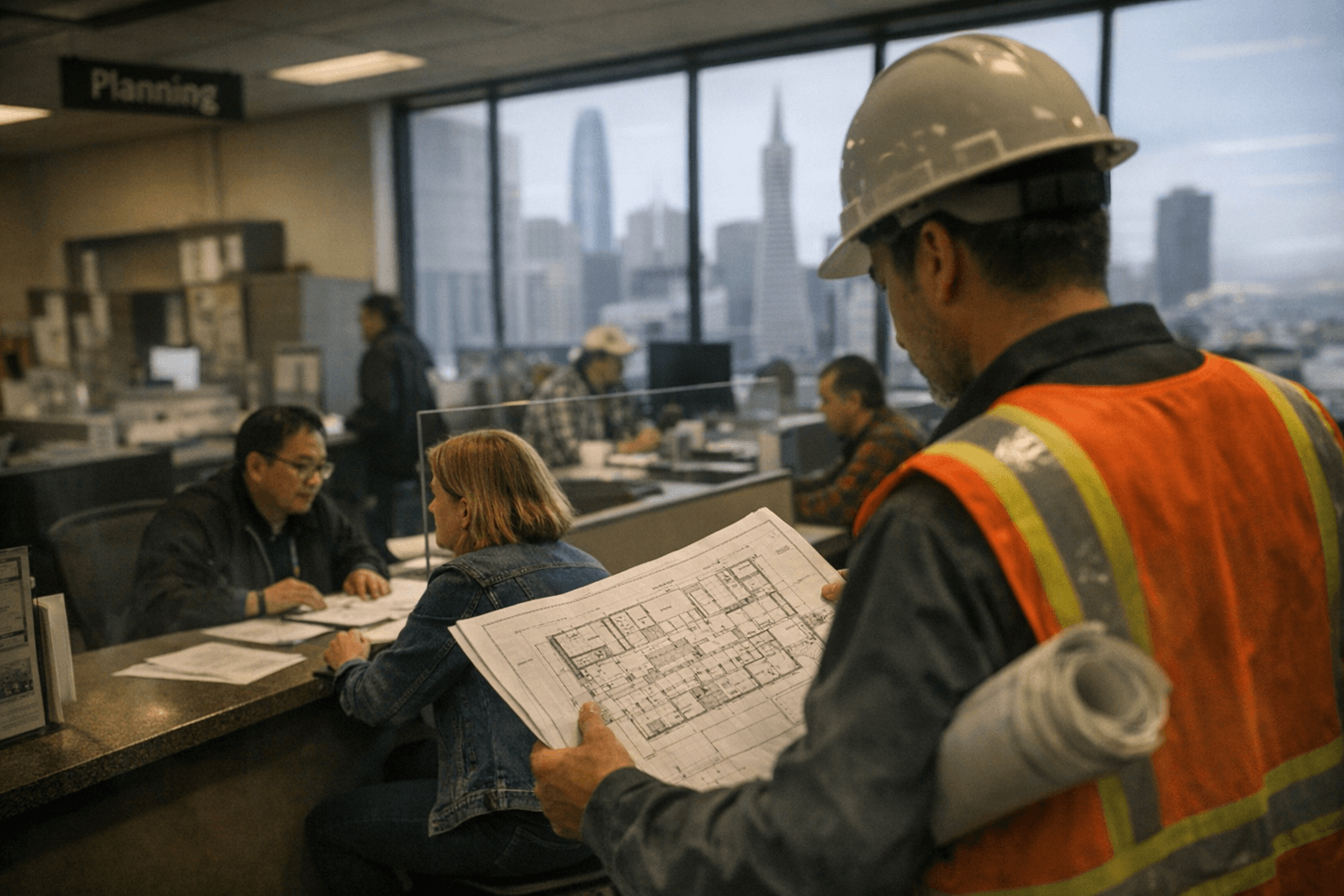
Resources, workshops, and community support San Francisco offers a web of support beyond the counters. The Permit Center provides guidance on building permit requirements, zoning regulations, and application procedures and assists with submitting and tracking permit applications. Workshops, training sessions, and SF Planning consultations are available to help builders understand the San Francisco building code and best practices for obtaining permits. As one resource summary puts it under the heading “Resources Available for Builders,” community organizations and workshops can offer insights into neighborhood concerns and outreach strategies; “Often these groups can help with community outreach in your district.” If your project requires community notification or neighborhood outreach, attending these workshops can identify issues before you submit.
- Clarify the scope up front: ADU, storefront renovation, retail‑to‑office conversion, or new commercial build.
- If your work is trade‑specific (electrical, plumbing, reroofing, kitchen and bath, solar), consider registering as a licensed contractor to use instant online permits.
- Use the Permit Center at 49 South Van Ness, 2nd floor, for intake and to confirm which other city agencies to engage.
- Attend workshops and community sessions tied to your district to surface neighborhood issues early.
Practical preparation tips
Preparation reduces friction and risk of re‑submittals. Permitflow’s pithy advice is worth repeating: “get your ducks in a row and study up on the unique policies and building codes that govern construction projects in this California hotspot.” SF Planning adds a practical intake prompt: know the basic outline of your project so staff can best assist you—are you doing exterior work, adding units, or changing business uses? Practical steps to prioritize:
What the official sources do not provide (and what to ask next) City materials collected here do not include numeric fee schedules, concrete processing‑time metrics, counter phone numbers, or a complete step‑by‑step document checklist for common projects. Topics flagged for follow‑up with DBI and SF Planning include: specific permit fees for ADUs and storefront renovations, average review timelines and resubmittal rates, which permits are strictly over‑the‑counter versus those that require full plan review, and the names and schedules of community organizations that run the workshops mentioned. Journalistic accountability requires those details before promising exact costs or timelines to an applicant.
Where to go next Begin at the Permit Center (49 South Van Ness Avenue, 2nd floor) and use pic@sfgov.org for questions about intake and departmental routing. If your work involves trade permits, confirm contractor registration requirements before applying for instant online permits. For land‑use or Planning questions, ask SF Planning whether your project requires Planning Approval; for building code and inspection questions, direct inquiries to DBI. Finally, leverage workshops and community organizations to prepare outreach materials and to flag neighborhood issues that may otherwise delay approval.
Permit navigation is less about circumventing rules and more about sequencing: identify what approvals you need, assemble a clear project outline, use the Permit Center early, and register as a contractor if your work fits the instant‑permit categories. When city agencies publish fees and timelines more transparently, applicants will have stronger leverage to schedule work and budgets; until then, disciplined preparation and early engagement remain the most reliable tools to keep projects moving.
Know something we missed? Have a correction or additional information?
Submit a Tip