Nazi-looted painting reappears in Dutch family’s hidden wartime legacy
A Toon Kelder portrait hidden for decades in a Dutch family home has been linked to Jacques Goudstikker’s looted collection, exposing restitution’s limits.

A painting that sat unnoticed in a Dutch family home for decades has reopened one of Europe’s most consequential Nazi-looted art cases. The work, Portrait of a Young Woman by Toon Kelder, was identified by a label on the back of the frame as part of the collection seized from Jewish dealer Jacques Goudstikker, whose losses remain a touchstone in restitution battles across the Netherlands and beyond.
The painting surfaced in the home of a granddaughter of Hendrik Alexander Seyffardt, the Dutch general who led the Netherlands Volunteer Legion and collaborated with the Nazi regime. The family connection had been hidden so thoroughly that the descendant who brought the painting forward did not know until recently that he was related to Seyffardt. Dutch reporting says the family had never discussed that wartime history. Arthur Brand, the Dutch art detective who served as the intermediary, said the painting had likely been hanging in the house for years.
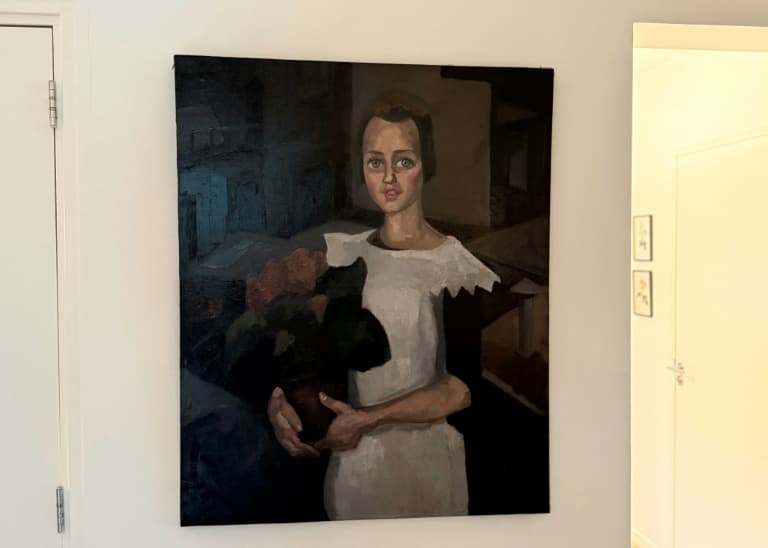
The current owner said she did not know the work was looted art and was considering returning it. That decision now sits at the center of a system built to resolve wartime theft long after the thieves and victims are gone, but still constrained by legal deadlines, incomplete records and private ownership. Brand said the case was unusual even by restitution standards. Dutch reporting says police cannot confiscate the work because the statute of limitations has expired, leaving voluntary surrender or a separate legal path as the practical options.
The Goudstikker case remains one of the most important in European restitution because of the scale of the original loss. Goudstikker, born on 30 August 1897 and killed on 16 May 1940 while fleeing the German invasion, left behind a prewar stock described as more than 1,100 works, with some accounts putting it at about 1,400. Hermann Göring acquired the collection through a forced purchase, turning a private gallery into a symbol of Nazi-era plunder.

The Dutch Restitutions Committee, based in The Hague, has advised on Nazi-looted art cases since 2001. In its Goudstikker recommendation, it said 227 claimed objects were determined to have been Goudstikker property in May 1940. Another account says the Dutch government returned 202 paintings to heirs in 2006, including work reclaimed through a major postwar restitution decision that shaped later claims. The latest discovery shows how fragile that process still is: looted works can survive in private hands, family histories can stay buried for generations, and recovery can still depend on chance, disclosure and willingness to return what was stolen.
The case also echoes a 2025 Goudstikker-related find in Argentina that was later surrendered, a reminder that Nazi-looted art is still turning up far from the archives meant to account for it.
This article was produced by Prism’s automated news system from verified source data, official records, and press releases, then run through automated quality and moderation checks before publishing. The system is built and supervised by the people who set the standards it runs under. Read our full AI policy.
Did this article answer your question?