Nearly 50 Million Americans Face Dangerous Fire Weather Warnings This Weekend
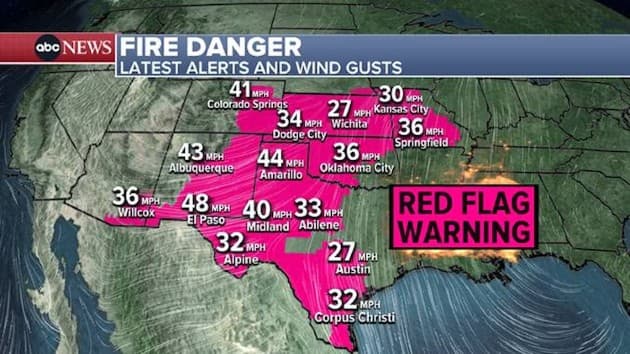
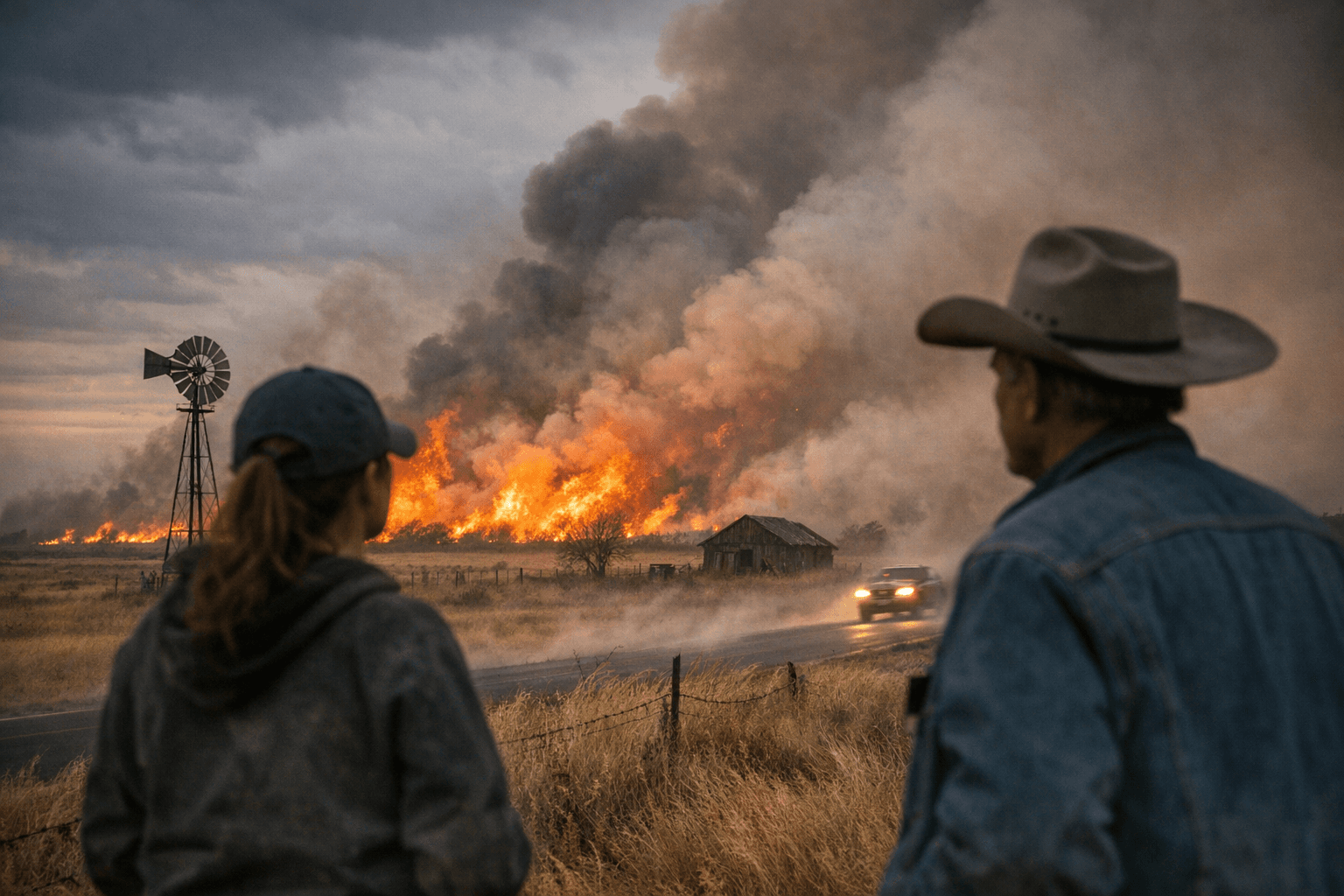
Fire weather warnings blanketed the Great Plains and Southeast on Saturday, with wind gusts up to 60 mph threatening to ignite drought-dried landscapes across 18 states.
An area in Arizona shattered the national temperature record for March last Thursday, reaching 110 degrees Fahrenheit. The record survived less than 24 hours. By Friday, parts of California and Arizona had climbed to 112 degrees, just one degree below April's all-time heat record, according to climate researchers tracking the data.
That relentless heat set the stage for a dangerous Saturday across much of the nation. The National Weather Service issued red flag warnings for more than 46 million Americans stretching from the Great Plains to the Southeast, as a cold front that had extended for thousands of miles ushered in a large dome of high pressure that dried the air and kicked up winds. Wind gusts in the Plains reached 30 to 60 mph, and gusty, dry conditions spread from the Gulf Coast inland through cities including Lake Charles, Louisiana; Jackson, Mississippi; Birmingham, Alabama; Tallahassee, Florida; Charleston, South Carolina; and Asheville, North Carolina. The high winds, combined with drought-parched ground fuels, created conditions the National Weather Service warned could produce rapid wildfire growth and spread should a fire ignite.
In Minnesota alone, red flag warnings covered 72 counties as warm, windy and dry conditions swept the upper Midwest.
The fire danger compounded a broader heat emergency that had been building across the country for weeks. Since March 1, more than 1,100 daily temperature records had been broken or tied across the nation, according to the National Weather Service. Between March 15 and March 26 alone, more than 100 monthly records and 700 daily records fell.
Friday's numbers illustrated the scope of the anomaly. Phoenix hit 102 degrees, Death Valley climbed to 101 degrees, and Tucson reached 98 degrees. On the other side of the country, Savannah, Georgia, logged 89 degrees on March 27, breaking its daily record, while Columbia, South Carolina, hit 88 degrees the same day. Las Vegas and Phoenix were forecast to challenge daily record highs again over the weekend.
The contrast was jarring in the Midwest and Northeast, where a cooldown had settled in. Chicago and New York City both ran noticeably cooler on Saturday, in some areas 10 to 20 degrees below Friday's readings, though forecasters expected temperatures to rebound to seasonable levels by early the following week.
Much of the fire-prone corridor was also contending with drought, which had left ground fuels critically dry. "Drought conditions worsened or developed for much of the Great Plains, Lower Mississippi Valley, and south-east US due to warmer and drier than normal conditions this winter," said Jon Gottschalck, chief of the Operational Prediction Branch at NOAA's Climate Prediction Center. The agency said drought is expected to persist and expand across the West.
March high temperature records had already fallen in at least 14 states before the weekend, and scientists analyzing the broader pattern were unambiguous about its origins. An analysis by World Weather Attribution, an international consortium of climate researchers, found that the heat gripping the region would be impossible without the climate crisis. "These findings leave no room for doubt. Climate change is pushing weather into extremes that would have been unthinkable in a pre-industrial world," said Friederike Otto, a climate science professor at Imperial College London.
Climate scientist Swain offered a sobering forecast for those waiting for relief: "We are still going to be experiencing record warmth and dryness next week, at least for the next seven to 10 days.
Know something we missed? Have a correction or additional information?
Submit a Tip