Nearly half of U.S. children fall short of recommended sleep, NSF poll finds
The National Sleep Foundation reports 44% of U.S. children do not consistently get recommended sleep, raising concerns for learning, mental health, and family wellbeing.
Nearly half of U.S. children (44%) do not consistently get the recommended amount of sleep for their age, the National Sleep Foundation said in its 2026 Sleep in America Poll released March 5 as Sleep Awareness Week begins. The finding, the foundation said, frames children’s sleep as central to family health and public health alike.
"These findings reveal a gap between the sleep children need and what those closest to them say they actually get," Joseph Dzierzewski, PhD, senior vice president of research and scientific affairs at the National Sleep Foundation, said in the release. "When nearly half of U.S. children aren't getting the sleep they need, and at the same time many parents aren't championing evidence-based recommendations, we're facing a knowledge gap that challenges public health. Poor sleep in childhood is linked to impaired learning, emotional dysregulation, and long-term health consequences. Closing this gap starts with education, and it starts at home."
The 2026 poll, presented under the foundation’s "A Focus on America’s Youngest Sleepers: Understanding Children’s Sleep in the Context of Family Sleep Health," highlights how children’s nightly rest affects caregivers and siblings. NSF materials say the sleep of one family member can disrupt the sleep of others, compounding stress and daytime impairment across households.
The new figure builds on decades of NSF research showing persistent shortfalls. A 2006 Sleep in America poll found only one in five adolescents got an optimal nine hours of sleep on school nights and that nearly half slept less than eight hours. That survey reported a steep decline in sleep through the teen years: an average 6th grader logged about 8.4 hours on school nights while a typical high school senior averaged 6.9 hours. The 2006 poll also found electronics are ubiquitous in bedrooms, with 97 percent of adolescents reporting at least one device in their room and television the most common pre-bed activity.
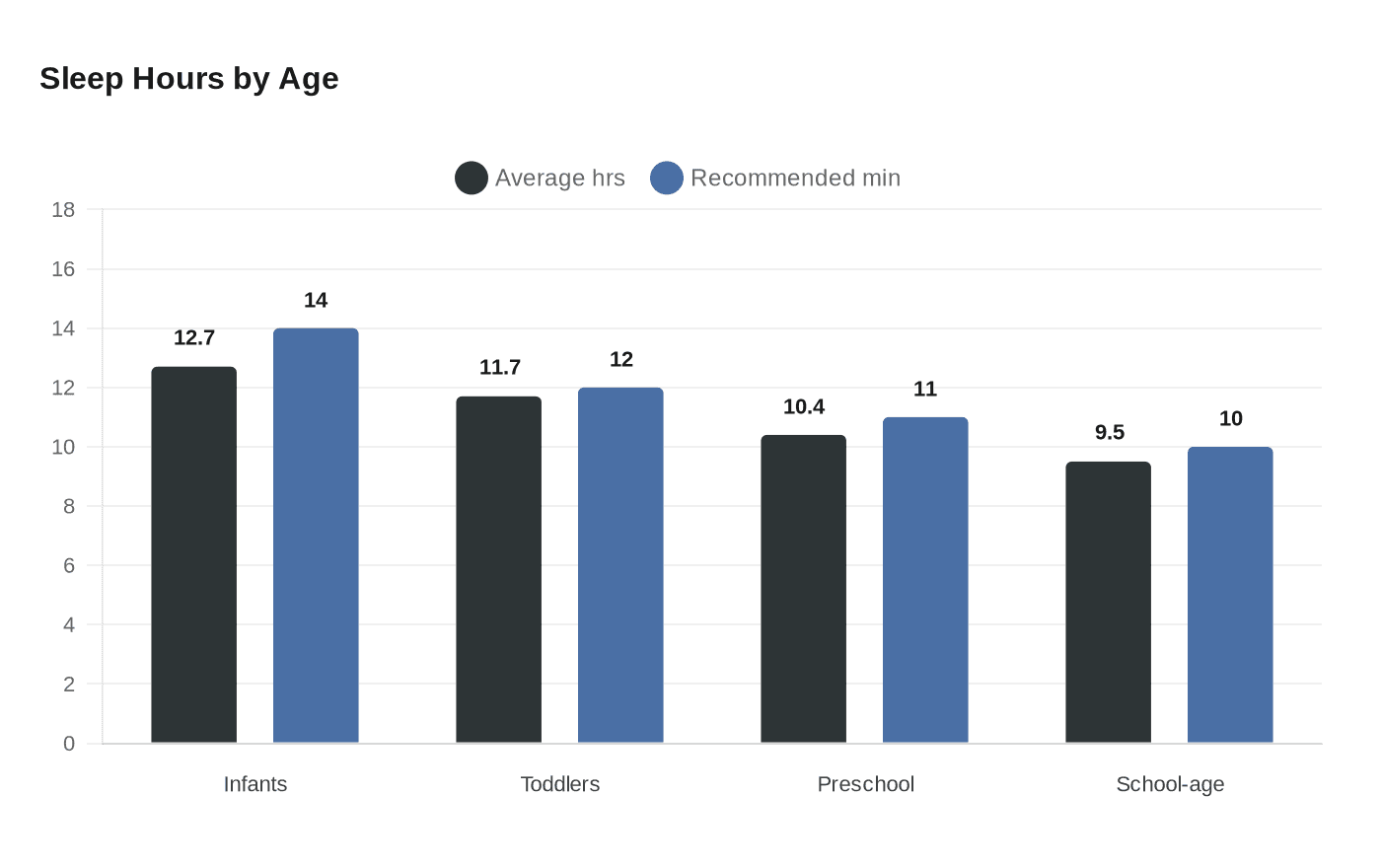
Earlier child-focused NSF material documents age-specific shortfalls. One NSF summary showed infants averaged 12.7 hours when experts recommend 14 to 15 hours for 3 to 11 month olds; toddlers averaged 11.7 hours versus recommended 12 to 14; preschoolers averaged 10.4 hours against a 11 to 13 hour recommendation; and school-aged children averaged 9.5 hours compared with a 10 to 11 hour guideline. That research noted WB&A Market Research was commissioned to survey adults with a child age 10 or younger.
The foundation’s Sleep Health Index, first used with teens in 2024, also underscores inequities. At 76 on a 0-100 scale the index was rated a C, with 15 percent of teens earning an F. Teens in households earning less than $50,000 were more likely to receive an F than those in households earning $100,000 or more, 44 versus 32 percent. Racial and gender gaps appeared as well: 16 percent of Black teens scored an A on the SST compared with 10 percent of Hispanic teens and 8 percent of White teens, and girls were more likely than boys to score an F, 40 versus 32 percent. The 2024 material tied insufficient sleep to higher rates of loneliness and depressive symptoms and noted that seven in 10 teens must be present for school activities before the foundation’s recommended 8:30 a.m. start.
Public health experts say the pattern has implications beyond fatigue. In addition to learning and mood problems, chronic childhood sleep loss is linked to metabolic and cardiovascular risk, worsened caregiver mental health, and educational disparities. Jodi A. Mindell, PhD, urged parental education: "We need to help parents to become better educated about positive sleep practices so that their children can get the sleep they need to be able to function at their best during the day." Mary A. Carskadon, PhD, warned that electronic media in bedrooms may be part of the problem: "Shorter sleep time is associated with more TV watching... it does raise a red flag about TV sets in bedrooms."
The NSF poll and earlier findings together point to policy levers, parent education, school start times, and targeted supports for low-income communities, as critical to closing the gap and reducing health inequities tied to sleep.
This article was produced by Prism’s automated news system from verified source data, official records, and press releases, then run through automated quality and moderation checks before publishing. The system is built and supervised by the people who set the standards it runs under. Read our full AI policy.
Did this article answer your question?

