Nebraska's $628M plan for winter South Platte diversions threatens northeast Colorado
Nebraska has set aside $628 million to build the Perkins County Canal to divert winter South Platte flows from Colorado, a move that Nebraska says offsets a loss of up to 1.3 million acre-feet but that Sterling and Logan County fear will bypass northeast Colorado.
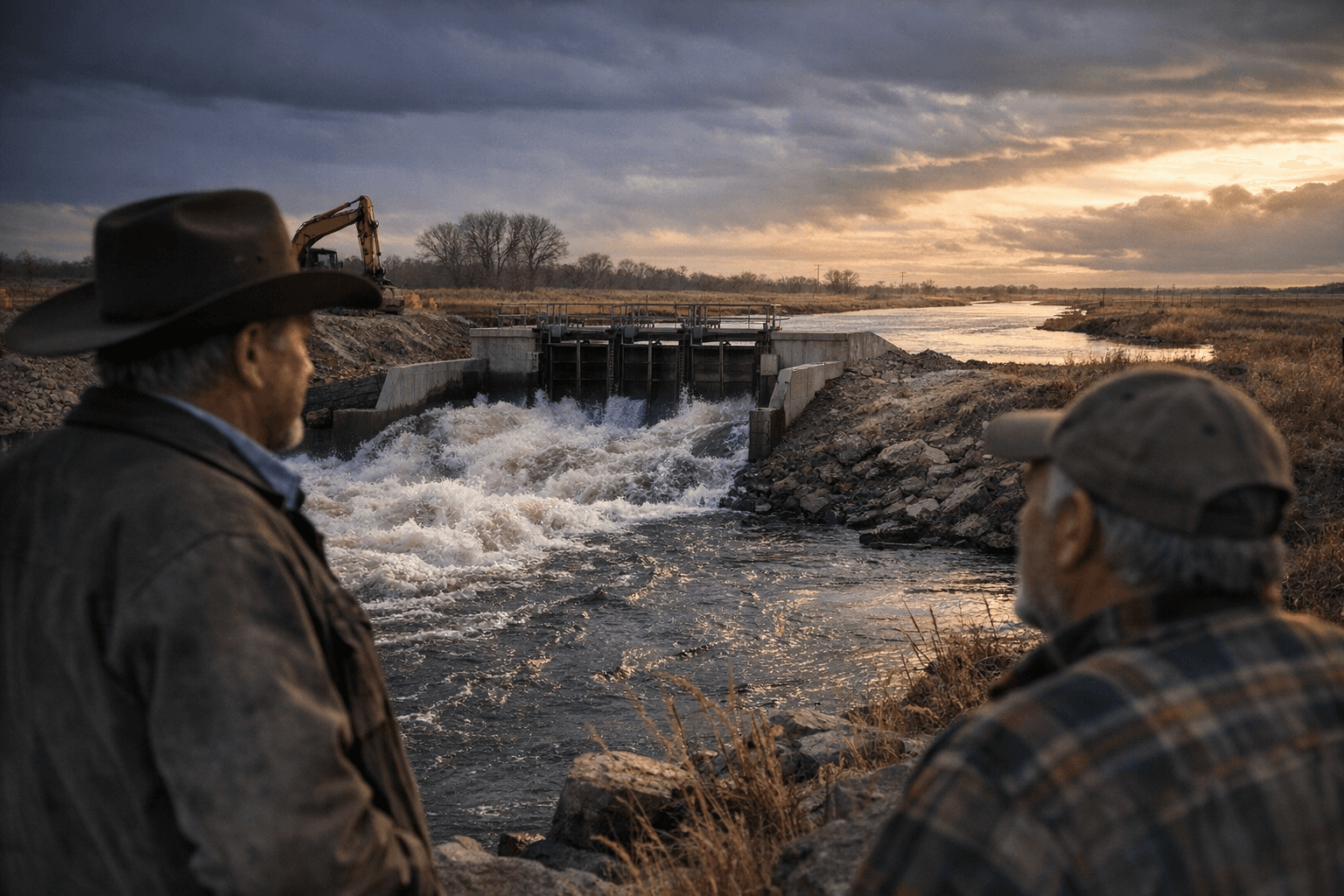
Nebraska has asked the U.S. Supreme Court to resolve a dispute that could reshape water delivery across the South Platte basin and put Logan County communities like Sterling on the defensive. The state has set aside $628 million to build the Perkins County Canal, also called the South Divide Canal Project, a conduit Nebraska says would bring South Platte River water from Colorado to western Nebraska and enable winter diversions to sustain municipal and agricultural supplies.
In a formal Bill of Complaint filed with the court, Nebraska framed South Platte water as a critical asset: “Water from the South Platte River is one of Nebraska’s most valuable resources. To ensure access to this resource in perpetuity, Nebraska entered into an agreement over a century ago with Colorado: The South Platte River Compact. Pub. L. No. 69-37, 44 Stat. 195 (1926) (signed April 27, 1923).” The complaint alleges Colorado has breached that Compact and has “deprived Nebraska of as much as 1.3 million acre-feet of water, more than ten times what D.C. Water pumps for its 700,000 Washington, D.C.-based residents in an entire year.”
Nebraska’s filing says the Western Irrigation District, a major beneficiary of Compact rights, “was recently forced to shut off the majority of its surface water irrigation due to lack of supply from the South Platte River.” The filing adds that affected Nebraska users “have been forced to pivot to alternative supplies, when and where available, including finite supplies of groundwater, as well as surface water stored in projects on the North Platte River and the mainstem Platte River.” Nebraska’s attorney general, Mike Hilgers, has said he wants the Supreme Court to rule on how Nebraska may exercise condemnation authority under the Compact to secure land needed for the canal.
State officials in Colorado have pushed back forcefully. Colorado Attorney General Phil Weiser warned that “Nebraska has now set in motion what is likely to be decades of litigation,” and said, “if, after decades of litigation, the court allows Nebraska to move forward with its wasteful project, Nebraska’s actions will force Colorado water users to build additional new projects to lessen the impact of the proposed Perkins County Canal.” Colorado officials argue the canal would sidestep Northeast Colorado communities and require Colorado water users to respond with costly new infrastructure.
Local concern is already evident in Sterling, Logan County’s largest city and Eastern Plains gateway. Sterling “faces concerns over Nebraska’s attempt to reroute South Platte River water, bypassing Northeast Colorado. State officials are fighting back, with congressional candidate pledging support,” according to local reporting; the candidate was not named in the material provided to this reporter.
Nebraska’s Department of Natural Resources commissioned a reconnaissance-level analysis from ERA Economics that frames the project as developing “additional storage and conveyance off the South Platte to meet current and future water supply needs in Nebraska” and cites Article VI of the Compact as authorizing construction. The internal draft cautions that Colorado’s additional potential depletions could reduce average South Platte flow entering Nebraska before 2050 and beyond, and notes recent drought signals in Figure 7 showing U.S. Drought Monitor conditions for Nebraska from 2000 to 2021, including the 2012 drought and drought conditions in 2020-2021.
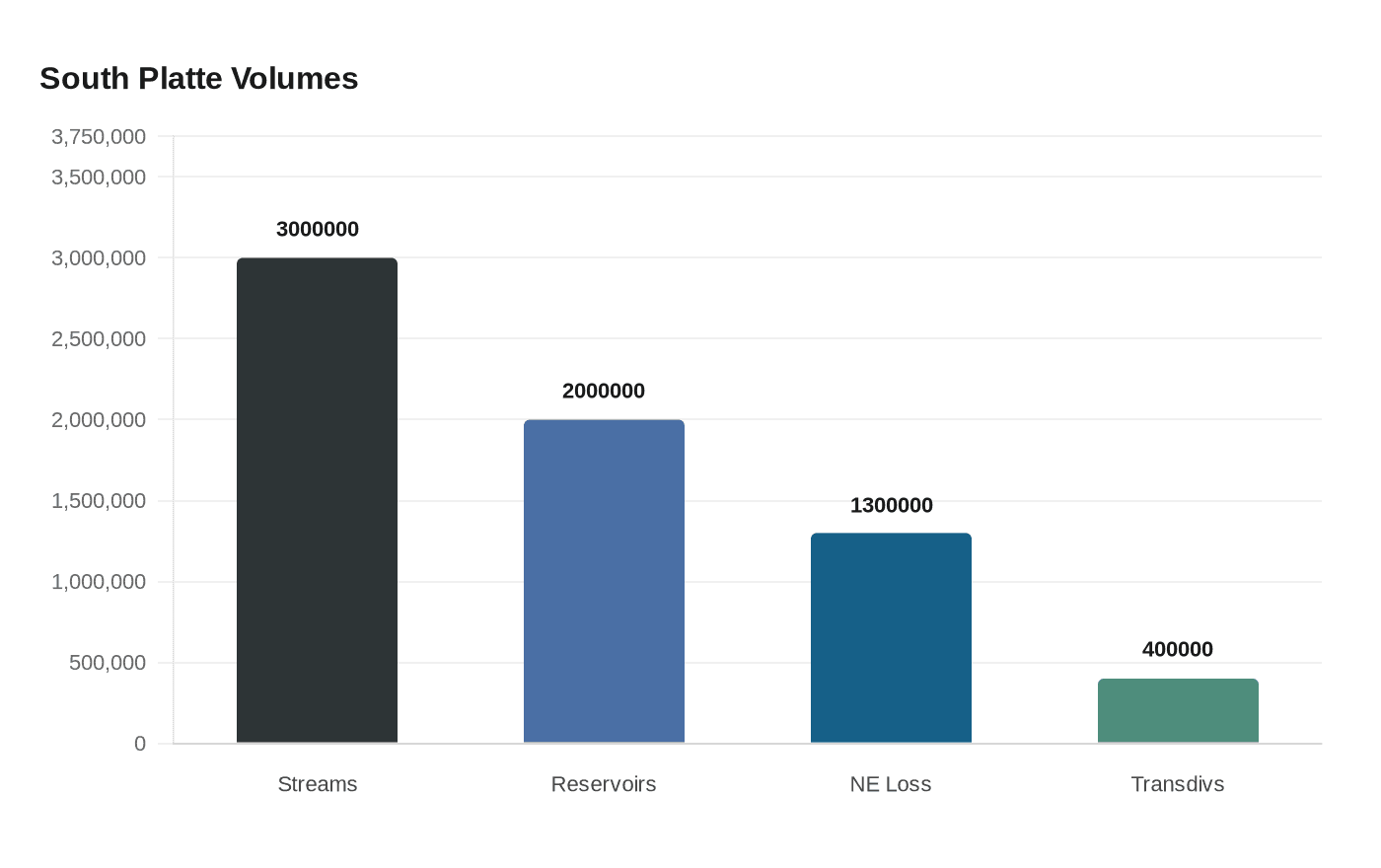
Longer-term basin context shows the scale at stake. A U.S. Geological Survey study of the South Platte basin documented that hundreds of structures withdraw more than 3 million acre-feet from streams annually, dozens of reservoirs store more than 2 million acre-feet, and 12 transmountain diversions import about 400,000 acre-feet into the basin each year. Nebraska officials say the Perkins County Canal would be complete by 2032, a timeline Governor Jim Pillen tied to the state’s push to “secure our water for future generations,” saying the lawsuit comes, “only after we made every reasonable effort to resolve our differences with Colorado. Ultimately, Nebraska must push forward to secure our water for future generations. Although we hoped to avoid a lawsuit, we are confident we remain on schedule to complete the Perkins County Canal by 2032.”
The dispute now centers on the Supreme Court’s interpretation of Article VI and on competing technical claims about diversions, depletions, and who bears the economic and infrastructure costs. With $628 million earmarked for construction and allegations involving as much as 1.3 million acre-feet, the case will determine whether Nebraska can proceed with a canal that proponents call essential to sustain irrigation and municipal supplies and opponents call a project that would bypass Logan County and force new Colorado projects to protect local water users.
Sources:
Know something we missed? Have a correction or additional information?
Submit a Tip