Necropsy: Wolf #2305, King Mountain Pack Breeding Male, Died From Capture-Related Complications
Necropsy found King Mountain breeding male #2305 died Jan. 28 from acute cardiogenic shock after capture; handlers recorded his body temperature at 105.8°F during the collaring operation.
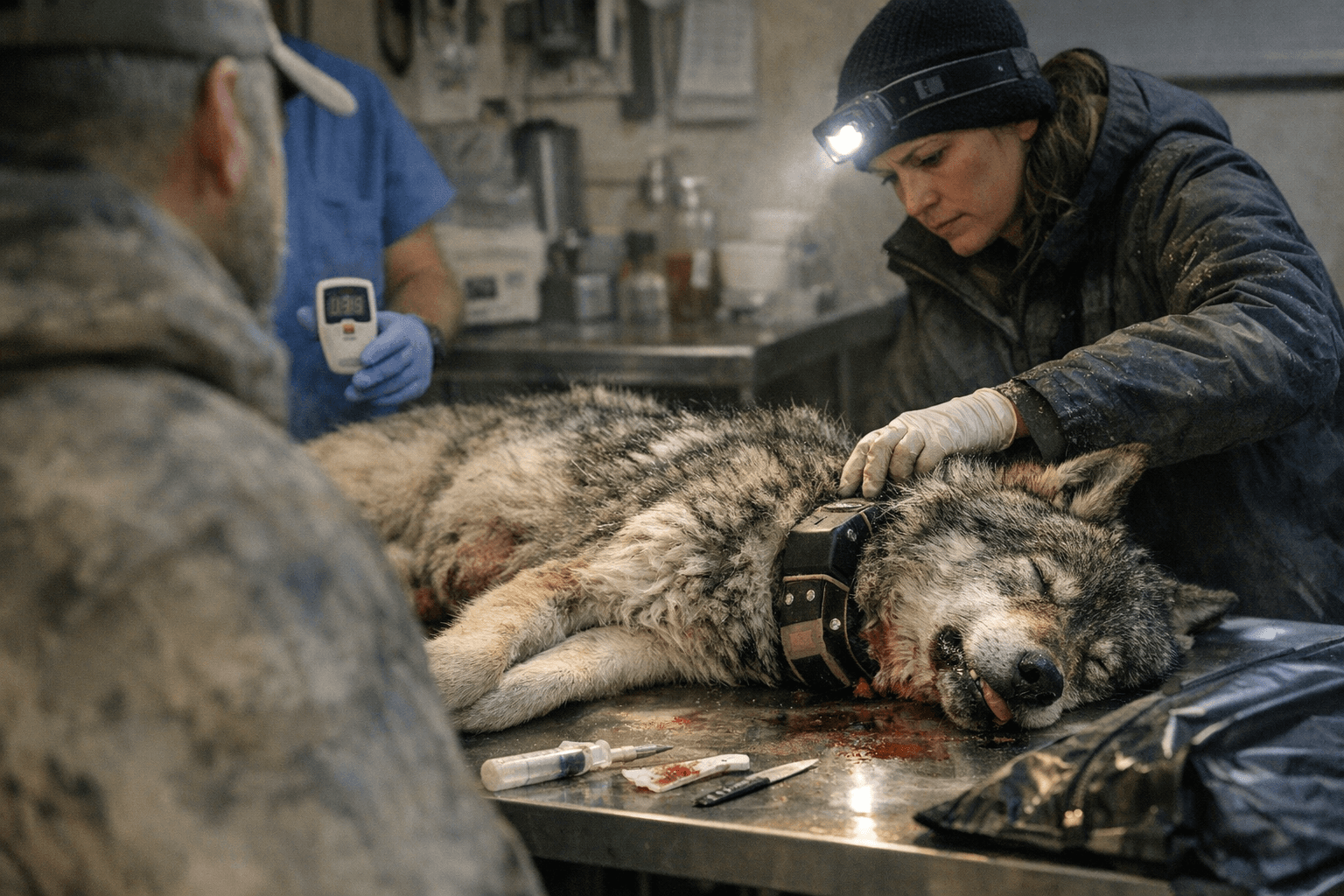
A necropsy released by Colorado Parks and Wildlife on Feb. 27 found gray wolf #2305, a three-year-old breeding male of the King Mountain Pack, died Jan. 28 from capture-related complications that resulted in acute cardiogenic shock. The report lists hyperthermia, exertional/capture myopathy, respiratory distress and a possible drug reaction as potential contributing factors, and an independent third-party veterinary pathologist attended the exam and confirmed all results.
The capture operation took place on public lands in South Routt County as CPW crews replaced low batteries on GPS collars; CPW aims to change collars every two to three years. CPW and news reports say one of the pack pups was captured first, then the adults. Sources report the adult male was pursued for about three minutes before capture, while CPW said the entire capture effort lasted 24 minutes. The male was darted in the upper left hind leg.
When the animals were delivered to CPW’s initial handling crew, staff recorded a rectal temperature of 105.8°F for wolf #2305 and 101.4°F for the breeding female. Handling crews described the male as “very hot” and immediately attempted to lower his body temperature. Crew members checked for respiration and a pulse and found neither, and they began revival attempts on scene.
About 20 minutes after delivery to the initial handling crew, a secondary crew that included CPW’s wildlife veterinarian arrived and confirmed respiratory and cardiac arrest. Emergency drugs intended to increase heart rate were administered while CPR was performed. When no pulse or respirations could be detected and a lack of corneal and pupillary reflex was confirmed, CPR was ceased and the animal was pronounced dead.
The necropsy report identifies acute cardiogenic shock as the cause of death and lists several possible exacerbating conditions. Reports describe exertional or capture myopathy as “a disease that causes severe muscle damage in wild animals after extreme exertion or stress.” CPW stated those conditions - plus hyperthermia, respiratory distress or a drug reaction - could have contributed to the animal’s collapse.
CPW Director Laura Clellan addressed the mortality in statements included with the release, saying, “As we said shortly after this mortality occurred, all wildlife capture operations come with a risk, and while we meticulously prepare and take every precaution to ensure a positive outcome, there is always the possibility, even if small, that the worst happens.” Clellan added that “the evidence and facts within the reports still don’t definitively point to a specific reason why the male wolf experienced such a high level of distress,” and that “the capture process was ‘not abnormal nor suggestive of this level of stress response from the animal.’”
Wolf #2305 was one of the 10 wolves translocated from Oregon to Colorado in December 2023 and served as the patriarch of the King Mountain Pack, which formed in spring 2025 in Routt County. CPW monitoring data show the breeding female and the pup involved in the Jan. 28 operation continue to travel together on GPS collars. The necropsy released Feb. 27 concludes the immediate medical review of #2305’s death while confirming that capture operations carry inherent risks even under routine protocols.
Know something we missed? Have a correction or additional information?
Submit a Tip