Neglected Imja Lake flood warning system alarms Nepal’s Everest region
A $3.5 million warning system above Everest rusted after 2016, leaving Sherpa communities exposed as Imja Lake keeps swelling in a warming Himalaya.
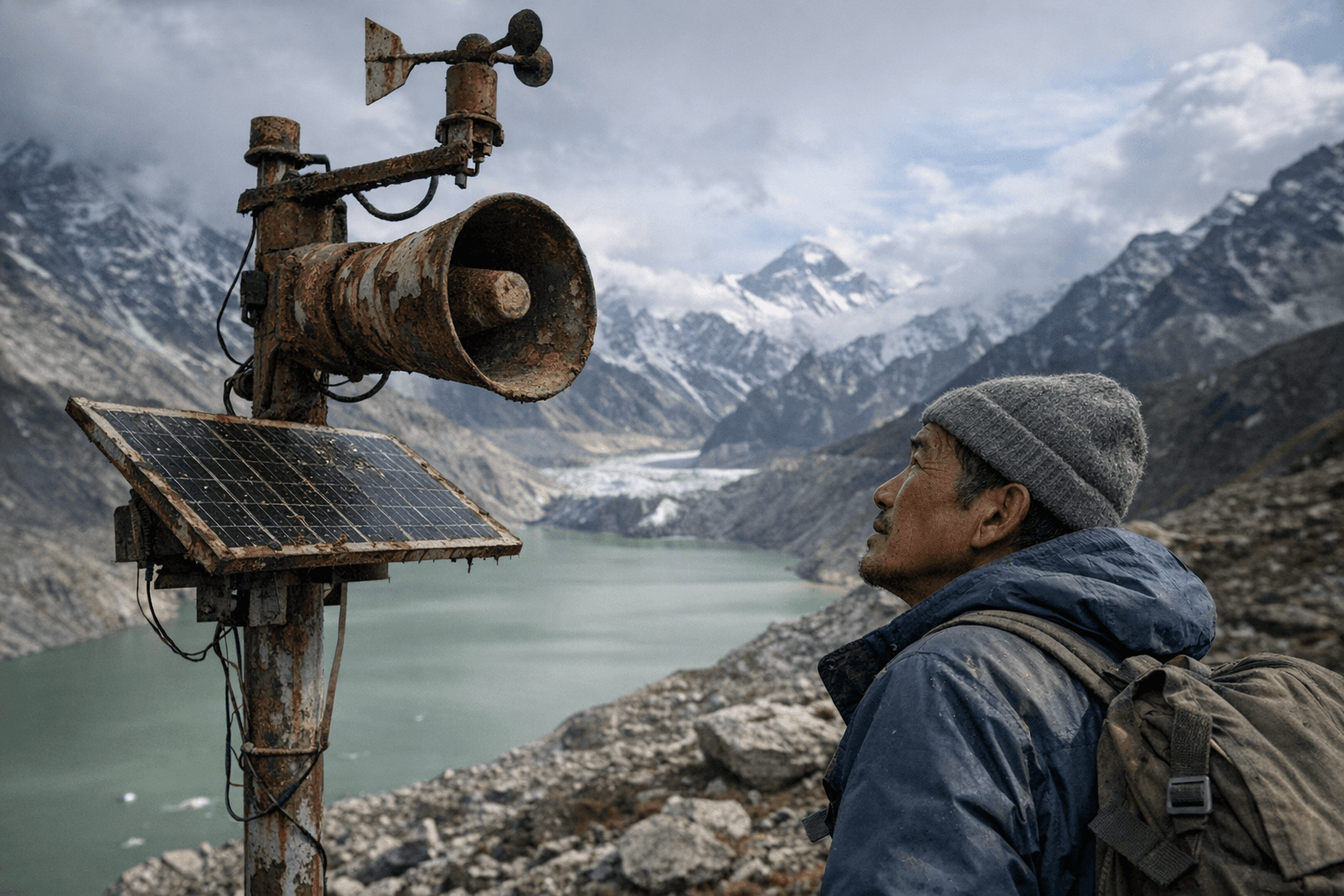
A $3.5 million warning system meant to protect Nepal’s Everest region from an Imja glacial lake outburst has decayed into rusted siren towers, stolen batteries and unreliable data, leaving downstream Sherpa settlements exposed to one of the Himalaya’s most feared climate risks.
Imja glacial lake sits a little over 5,000 meters above sea level, about 10 kilometers south of Mount Everest, in a landscape where glacier melt has accelerated as the Hindu Kush Himalaya warms. The lake was partially drained in 2016 as part of a risk-reduction project that lowered the water level by about 3.5 meters, when it was almost 150 meters deep in places. The aim was not just to shave back the lake’s edge, but to reduce glacial lake outburst flood risk through a controlled drainage system and a community-based early warning network.
Villagers in Chhukung and other Sherpa communities say the promise of that adaptation effort has frayed since then. Jangbu Sherpa and other locals said they were told officials would inspect the siren system every year, but that routine upkeep never came. Instead, they described towers left to rust and some batteries stolen, while Nepal’s Department of Hydrology and Meteorology said the satellite data reception used to transmit lake water-level information had been unreliable.
The lapse matters because Imja is not an isolated mountain lake. Earlier project reporting said the system installed automated sirens in six downstream settlements and 18 community-based early warning systems along 50 kilometers of the Dudh Koshi River basin, a corridor that threads through settlements, trekking routes and bridges below the lake. If the lake were to burst, the damage would not stop at high altitude. It would race through the Khumbu, where even a single flood can sever access, destroy infrastructure and endanger lives.
Nepal has seen that danger before. The 1985 Dig Tsho glacial lake outburst flood in the Khumbu flooded a hydropower station, 30 houses and 14 bridges, a disaster that helped drive later investment in glacial flood risk reduction. Scientists now warn that the stakes are rising again as glacier ice loss speeds up and Himalayan lakes expand. That makes the breakdown at Imja more than a maintenance failure. It is a test of whether climate adaptation in one of the world’s most vulnerable mountain regions will be sustained after the ribbon-cutting, or allowed to slowly fail above the communities it was meant to protect.
This article was produced by Prism’s automated news system from verified source data, official records, and press releases, then run through automated quality and moderation checks before publishing. The system is built and supervised by the people who set the standards it runs under. Read our full AI policy.
Did this article answer your question?