Netanyahu says Iran war not over until enriched uranium is removed
Netanyahu said the war with Iran remains open until enriched uranium leaves Iran, putting diplomacy, inspections and force on a collision course.

Benjamin Netanyahu has turned Iran’s enriched uranium into the measure of whether the war is really over. In an interview on CBS News’ 60 Minutes that aired May 10, 2026, the Israeli prime minister said the conflict was “not over” because highly enriched uranium remained in Iran and had to be removed from the country.
Netanyahu said the war had “accomplished a great deal” but that there was still “work to be done.” He also said that if there is an agreement, taking the uranium out that way would be “the best way.” That framing pushes the issue beyond rhetoric and toward a hard endgame question: if the goal is to remove Iran’s enriched uranium, what path is actually realistic besides war?
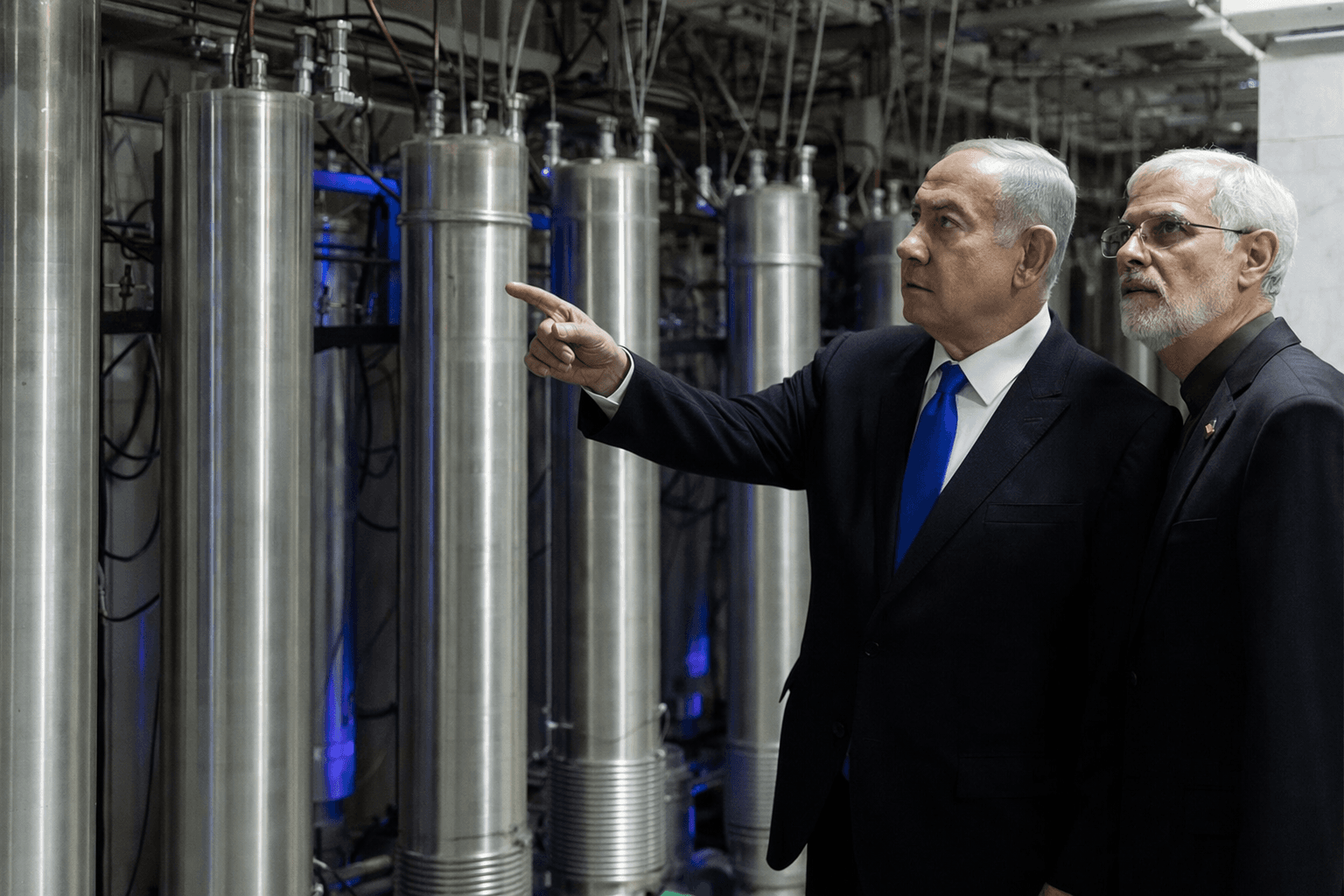
The least risky answer is negotiation backed by inspection. Oman’s foreign minister, Badr al-Busaidi, said in February 2026 that indirect U.S.-Iran talks had advanced substantially and that Iran had agreed to “zero stockpiling” of nuclear material as part of a possible deal. That kind of arrangement, paired with International Atomic Energy Agency monitoring, is the clearest nonmilitary route to getting material out of Iran or at least under verifiable control.
The IAEA’s own warnings explain why verification matters. The agency said Iran’s total enriched uranium stockpile stood at 9,247.6 kilograms as of May 17, 2025, and separately reported that inspectors had verified more than 400 kilograms of uranium enriched to 60% shortly before the June 2025 conflict. Rafael Grossi has said 60%-enriched uranium is a short technical step from weapons-grade levels, and he has warned that inspectors need to get back into Iran to verify the inventory and location of the material. On July 2, 2025, Iran’s president signed a law suspending cooperation with the agency, making that work far harder.
Military removal is the least believable option. Grossi has said the majority of Iran’s highly enriched uranium is likely still at the Isfahan nuclear complex, which was hit in air attacks, but experts have warned that physically seizing enriched uranium would be complex, risky and potentially dangerous because of radiation, chemical hazards and the challenge of securing material scattered across fortified sites. The IAEA has said inspectors were still in Iran during the conflict and were ready to resume work, but access remained limited.
That is where retired Navy Vice Adm. Robert Murrett’s perspective matters. His presence in the debate points to a practical conclusion that often gets lost in wartime messaging: if the objective is removal, the most feasible path is a monitored deal, not a unilateral grab. Netanyahu’s remarks keep the uranium stockpile at the center of the crisis, but the options remain unequal. Negotiation and inspection are workable; force is the gamble.
This article was produced by Prism’s automated news system from verified source data, official records, and press releases, then run through automated quality and moderation checks before publishing. The system is built and supervised by the people who set the standards it runs under. Read our full AI policy.
Did this article answer your question?