Rwandan-backed rebels retreat in eastern Congo after military, U.S. pressure
Rebels fell back from Kabunambo to Luvungi as U.S. sanctions and military pressure intensified, but the move may be another tactical pause.
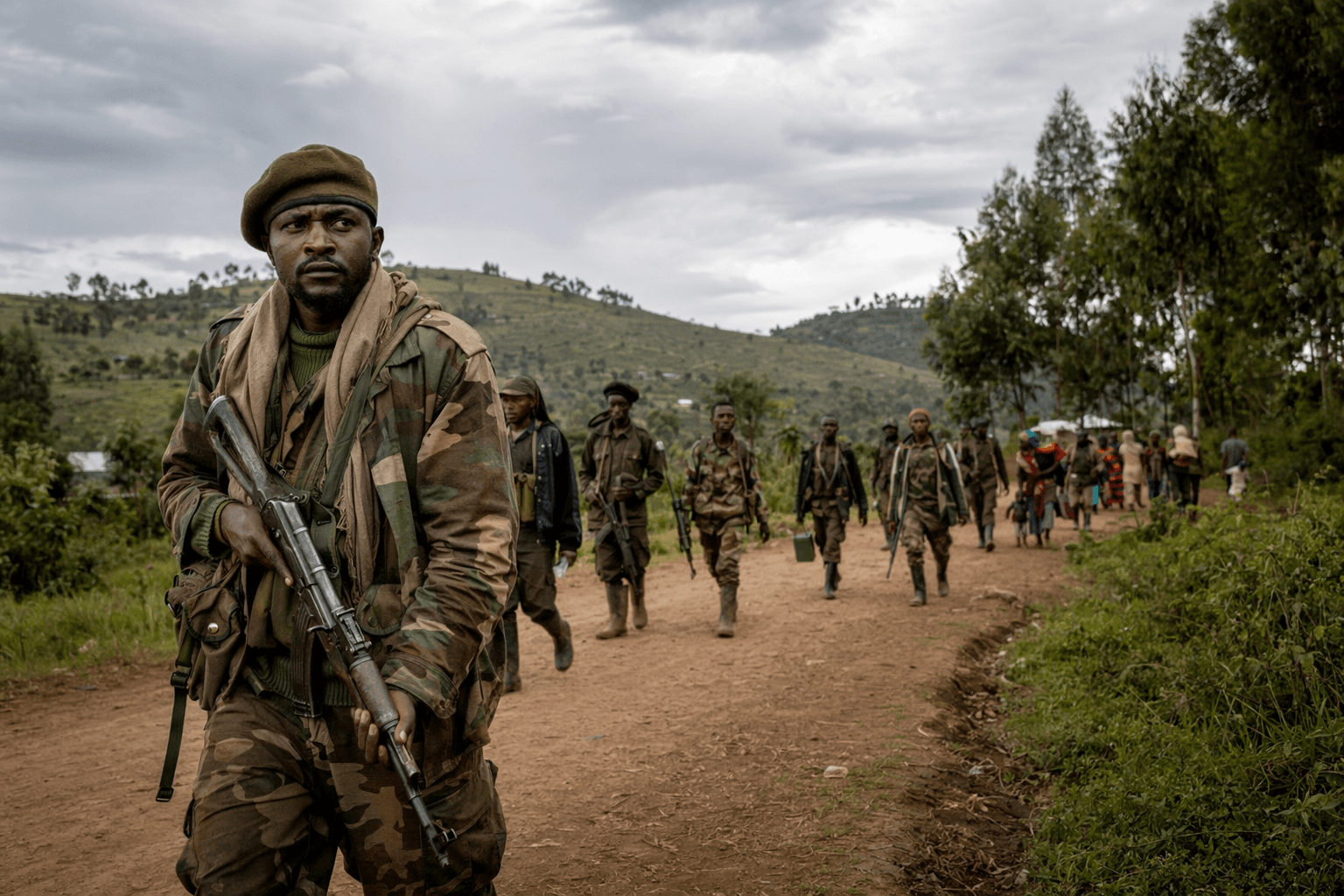
The Rwandan-backed AFC/M23 rebels pulled back from several key positions in South Kivu over the weekend, retreating from Kabunambo, about 35 kilometers north of Uvira, to Luvungi, roughly 30 kilometers farther north toward Bukavu. The Congolese army and a rebel official both confirmed the movement, and a military spokesperson said the withdrawal followed pressure from Congolese forces and diplomatic pressure from Washington.
The shift is the first significant battlefield move in months, but it does not yet look like a clean break from the pattern that has defined eastern Congo’s war. Uvira was briefly seized by the rebels in December 2025 before they withdrew under U.S. pressure, and the latest repositioning suggests AFC/M23 may again be trading ground under fire and diplomacy rather than surrendering momentum altogether.
Washington has tried to sharpen that pressure. On April 30, the U.S. sanctioned former president Joseph Kabila, accusing him of providing material support to armed groups destabilizing eastern Congo. Treasury said Kabila was linked to M23 and the Congo River Alliance, while the State Department said he had supported armed groups in the east. The sanctions added weight to an already crowded peace process that has included the June 27, 2025 agreement signed by the Democratic Republic of the Congo and Rwanda in Washington, and a joint oversight committee meeting on April 23 to assess implementation.
The battlefield moves are rippling into civilian life. UNHCR said on March 24 that more than 33,000 Congolese refugees had spontaneously returned from Burundi to eastern Congo within a month after the border reopened on February 23, with most crossing through the Kavimvira border post near Uvira. That return flow shows how even limited rebel withdrawals can change the calculations of families who fled last year’s violence, but it also raises the stakes for whether the latest pullback holds.

For diplomats and displaced civilians to treat this as meaningful progress, the test will be on the ground: sustained quiet around Uvira, no rapid reoccupation of vacated positions, and a ceasefire that can be verified rather than announced. A UN report said MONUSCO and the International Conference on the Great Lakes Region deployed an exploratory mission to Uvira from February 24 to 27, but also warned that an actual ceasefire had yet to take hold in North and South Kivu. That warning still hangs over the latest rebel retreat, especially after Corneille Nangaa accused the U.S. in a May 7 letter of lacking credibility following a minerals partnership deal with Kinshasa.
This article was produced by Prism’s automated news system from verified source data, official records, and press releases, then run through automated quality and moderation checks before publishing. The system is built and supervised by the people who set the standards it runs under. Read our full AI policy.
Did this article answer your question?