Netflix Insists Warner Bros Films Will Continue Playing in Theaters
Netflix co chief Ted Sarandos told investors the company expects Warner Bros films to continue opening in cinemas if a reported $82.7 billion acquisition closes, seeking to calm alarm among theater owners and talent. The declaration foregrounds a deeper battle over distribution windows, industry consolidation, and the future economics of going to the movies.

Ted Sarandos told investors and the press on Friday that Netflix had no “opposition to movies in theaters” and that the streaming giant “expects” Warner Bros films to be released theatrically if the companies complete their reported $82.7 billion deal for the studio and HBO Max. The comments aimed to reassure exhibitors and creators unsettled by Netflix's history of prioritizing streaming and offering shortened theatrical runs.
Sarandos noted that Netflix had already released 30 films in cinemas in 2025, though he acknowledged that “most of those films have had a far shorter theatrical run than those from a typical studio.” He sought to frame any change as evolutionary rather than radical, saying “I wouldn’t look at this as a change in approach for Netflix movies or for Warner movies,” and predicting that “over time, the windows will evolve to be much more consumer friendly, to be able to meet the audience where they are quicker.” He added, “I’d say right now, you should count on everything that is planned on going to the theater through Warner Bros. will continue to go to the theaters through Warner Bros., and Netflix movies will take the same strides they have, which is, some of them do have a short [theatrical run].”
Executives pressed that a combined company would be oriented toward viewers and creators. In a letter filed with the Securities and Exchange Commission, co chiefs Greg Peters and Ted Sarandos described the proposed combination as “pro-consumer, pro-innovation, pro-worker, pro-creator, and pro-growth,” signaling the messaging Netflix plans to use as it seeks regulatory and stakeholder buy in.
Still, the remarks did not erase alarm across the exhibition sector. Michael O’Leary, president and chief executive of Cinema United, warned the deal “poses an unprecedented threat to the global exhibition business,” language that captures how theater owners fear a blockbuster pipeline routed primarily to streaming could imperil everything from multiplex chains to single screen cinemas in small towns. The anxiety pushed Sarandos to assert in public that planned Warner releases “will be released as normal, and for the same duration,” and that “these movies will be released on Netflix through theatres the way Warner Bros did it before, but with the Warner Bros operating entity.”
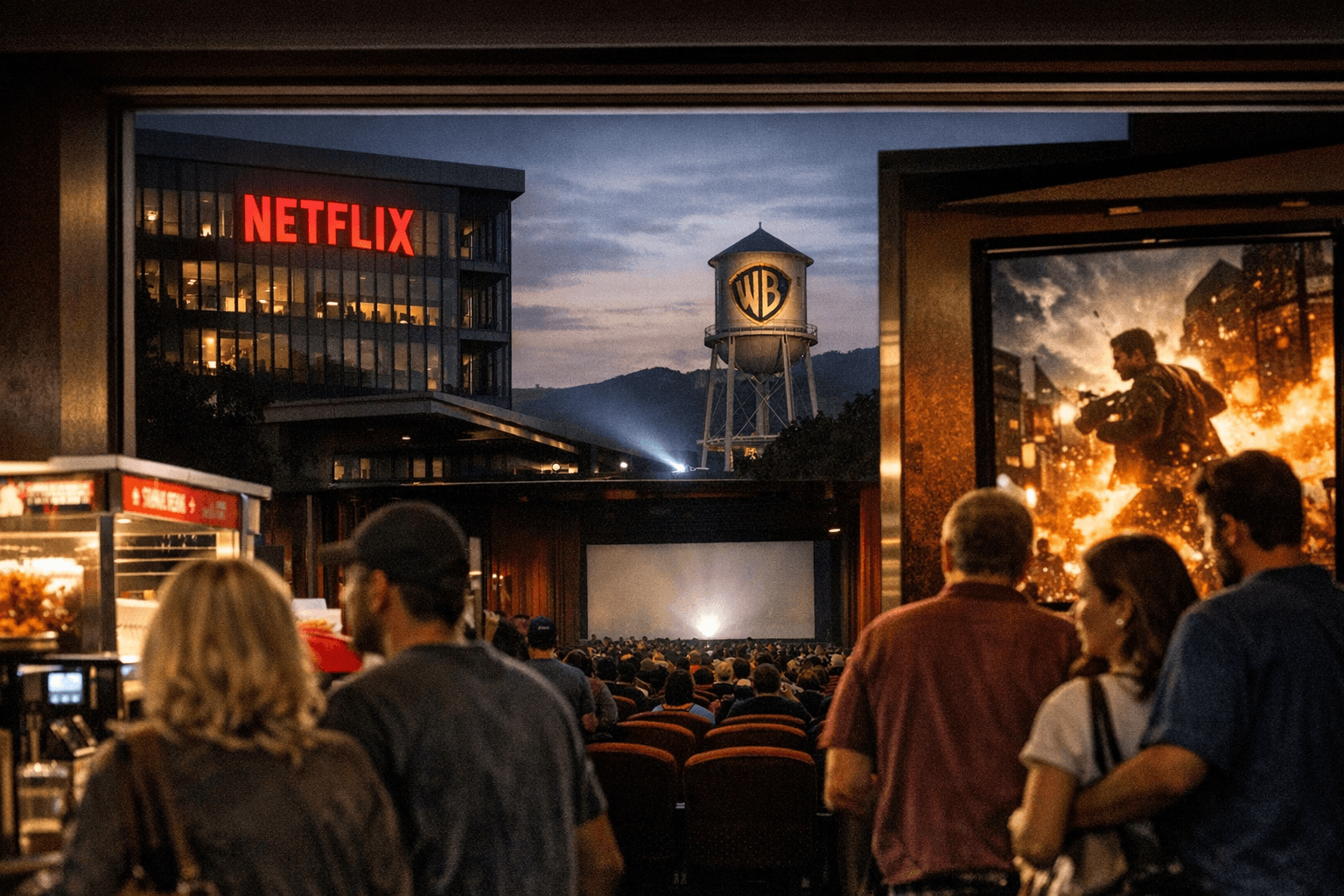
Beyond public relations, the clash is shaping a contest over regulatory arguments and competing bids. Rival suitors have framed their offers as less likely to concentrate streaming power, and antitrust review will be central to whether a transaction moves forward. Sarandos offered broad principles about windows and consumer choice, but he did not provide firm contractual guarantees about the length of theatrical exclusives, leaving a key variable unresolved.
The stakes extend beyond corporate balance sheets. Cinemas are cultural spaces that sustain communal filmgoing and local economies. A major studio folded into a streaming behemoth would accelerate a shift in how films earn revenue, how talent negotiates pay and back end, and how audiences experience releases. Whether the industry will adapt with negotiated compromise or fracture along distribution lines remains the central question as regulators, exhibitors, studios and rival bidders weigh the repercussions of a potentially transformative deal.
This article was produced by Prism’s automated news system from verified source data, official records, and press releases, then run through automated quality and moderation checks before publishing. The system is built and supervised by the people who set the standards it runs under. Read our full AI policy.
Did this article answer your question?