Netflix’s Winnie Mandela documentary revisits legacy through granddaughters’ eyes
Winnie Madikizela-Mandela’s granddaughters put her legacy on trial again, reopening a fight over memory, accountability and who controls South Africa’s revolution.
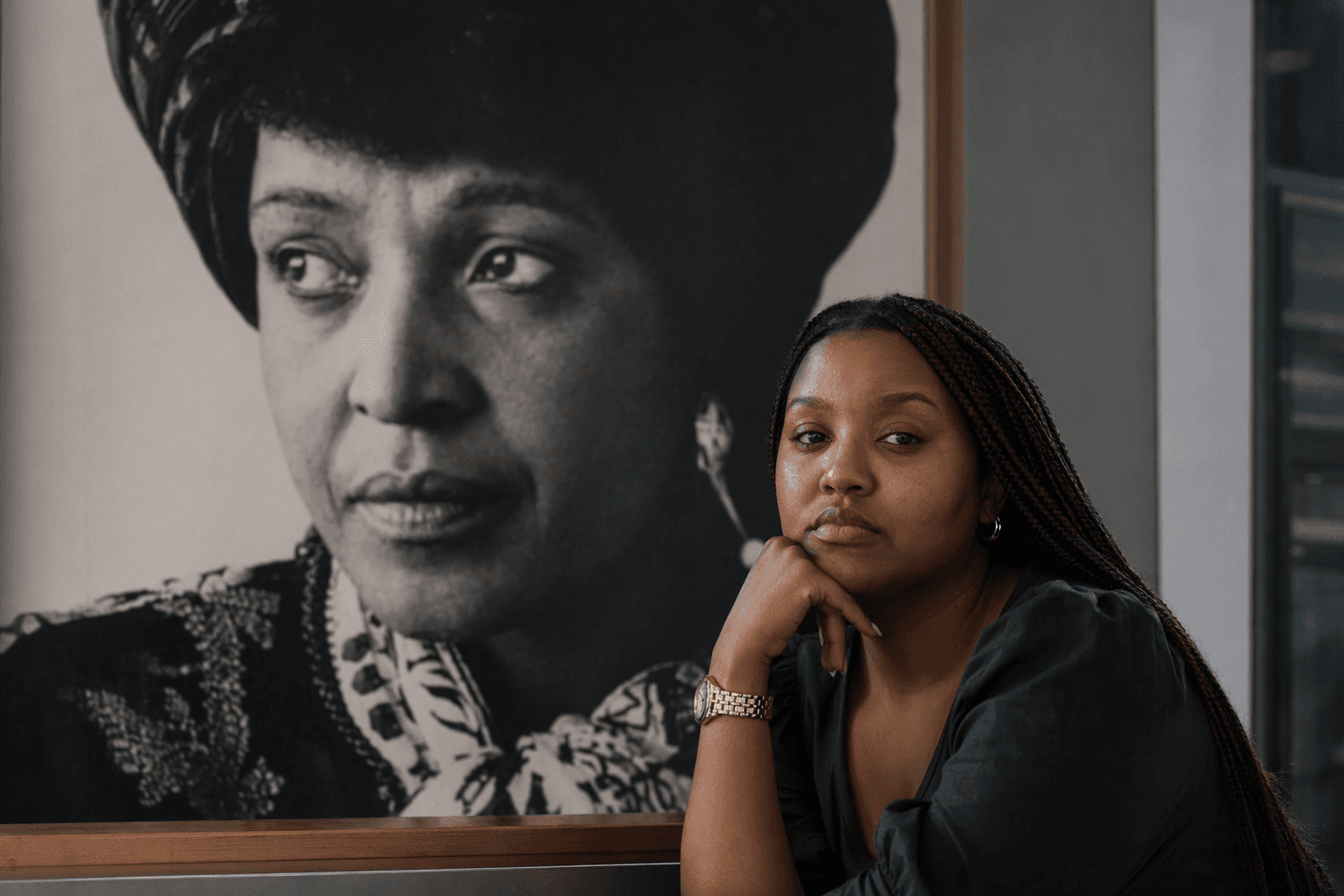
Winnie Madikizela-Mandela’s legacy has never belonged to one history, and Netflix’s new seven-part documentary places that struggle at the center. Told through her granddaughters, Princess Zaziwe Manaway and Princess Swati Mandela-Dlamini, The Trials of Winnie Mandela treats her not simply as a liberation symbol, but as a figure still contested across South Africa, where memory, gender and political power remain fiercely intertwined.
Netflix released the official trailer on April 2, 2026, the eighth anniversary of Madikizela-Mandela’s death, and premiered the series on April 23. The streamer describes the project as an examination of her life as a freedom fighter, mother, wife and enigma, while the family framing gives the series its sharpest tension: two granddaughters confronting the meaning of a woman revered by many as the “Mother of the Nation” and condemned by others for violence and abuse of power.
That contradiction defined Madikizela-Mandela’s public life. Born on September 26, 1936, in Bizana in the Eastern Cape, she became an anti-apartheid activist and social worker, and married Nelson Mandela in 1958. The couple separated in 1992, and their divorce was finalized in 1996. After South Africa’s democratic transition, she returned to Parliament and served from 1994 to 2003, then again from 2009 until her death.
Her political stature never erased the allegations that shadowed her. The Truth and Reconciliation Commission found her politically and morally accountable for gross human-rights violations committed by the Mandela United Football Club, and testimony before the commission linked her to abuses in the late 1980s. She was also convicted in 1991 of kidnapping and assault in connection with the death of the 14-year-old activist Stompie Seipei, and convicted again in 2003 of theft and fraud. Those facts are central to any honest account of her life, and they help explain why any new portrait of her is also a fight over what revolutionary leadership can excuse, and what it cannot.
The series, directed by the late Mandy Jacobson, a two-time Emmy Award-winning documentary filmmaker, arrives with that burden intact. Public reaction has split along familiar lines, with some praising the granddaughters’ personal approach and others criticizing the reported absence of Zindzi Mandela from the on-screen narrative. That argument reaches beyond one family. It goes to the heart of who gets to define liberation history now, and whether South Africa can hold on to its heroes without sanding away the violence, contradiction and cost that came with them.
Madikizela-Mandela died on April 2, 2018, at Netcare Milpark Hospital in Johannesburg at age 81. South Africa marked her death with national days of mourning from April 3 to April 14, 2018, and gave her a Special Official Funeral at Orlando Stadium in Soweto on April 14. The new documentary reopens that national farewell, and asks whether the country has ever really agreed on what it was mourning.
This article was produced by Prism’s automated news system from verified source data, official records, and press releases, then run through automated quality and moderation checks before publishing. The system is built and supervised by the people who set the standards it runs under. Read our full AI policy.
Did this article answer your question?