New fantasy CRPG Esoteric Ebb mixes mystery, dice rolls, and dialogue
Esoteric Ebb turns dice, dialogue, and hidden branches into a stress test for modern CRPG agency. Its 700,000-word script and tabletop-style design aim to make every run feel improvised.

Esoteric Ebb’s real ambition
Esoteric Ebb is not trying to be a safer, smaller version of a prestige narrative RPG. It is trying to answer a harder question: can a modern CRPG still feel like a sharp, improvisational tabletop session, where the dungeon master reacts to your choices instead of merely routing you through prewritten scenes? Christoffer Bodegård’s fantasy project leans on that question from the first image, with a cleric waking in a morgue after a tea shop explosion, surrounded by corpses, a zombie, and rotting apples in a town that is already on edge before a historic election.
That setup gives the game a strong identity immediately. You are not simply solving a mystery in a generic fantasy market square. You are stepping into a bizarre post-Arcanepunk world built around political tension, social friction, and the kind of surreal mess that can only happen when a writer wants every conversation to feel like a live improvisation rather than a fixed exchange. The result is a CRPG that treats agency as its central feature, not a side benefit.
What you play, and why that matters
At the center of the game is The Cleric, a protagonist described by Raw Fury as an expert in esoteric events and a glorified government goon. That blunt characterization matters because it sets the tone for the entire experience. This is not a blank slate hero, and it is not a power fantasy built around clean moral categories. The Cleric exists inside a compromised system, which makes every interaction feel more unstable and more interesting.
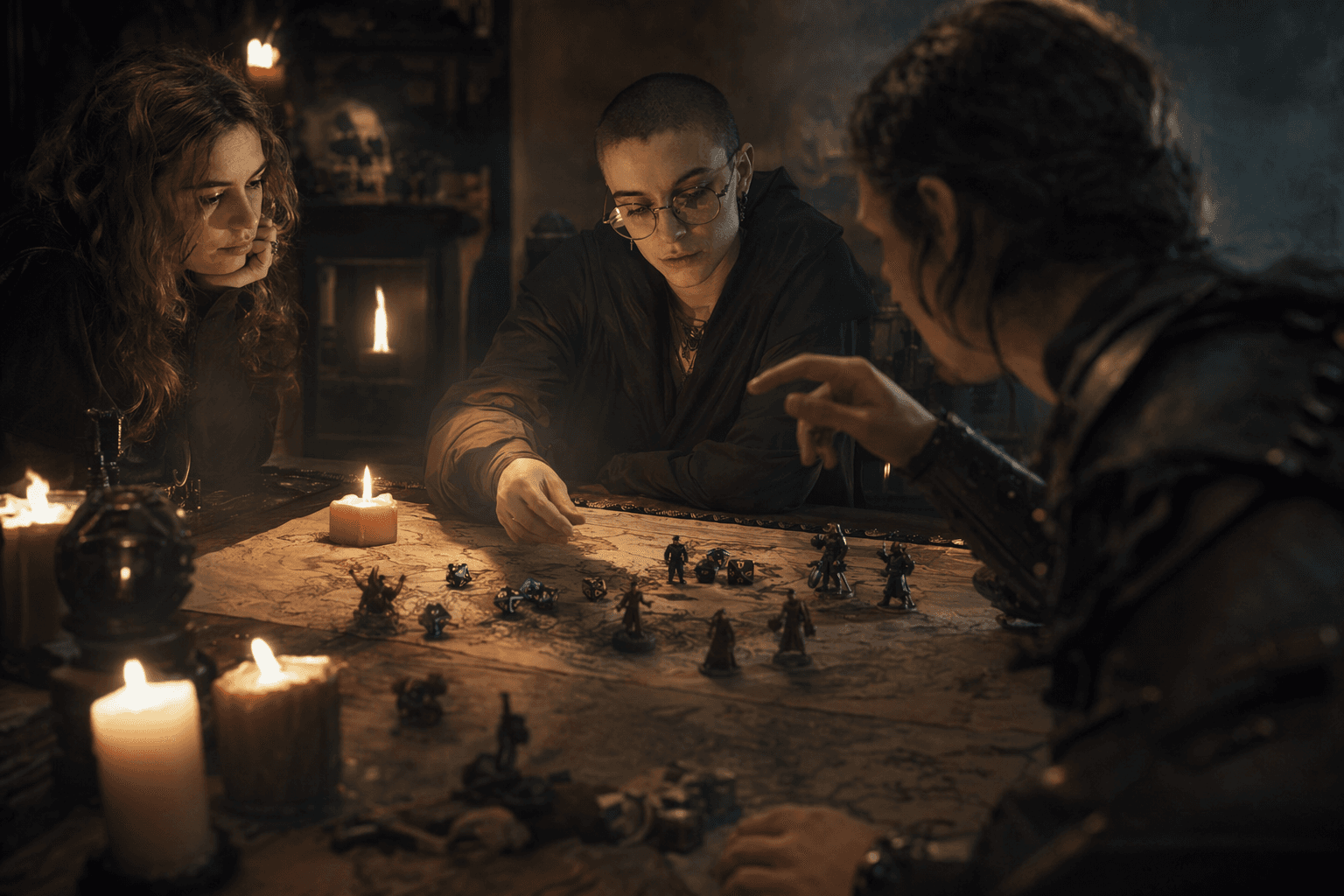
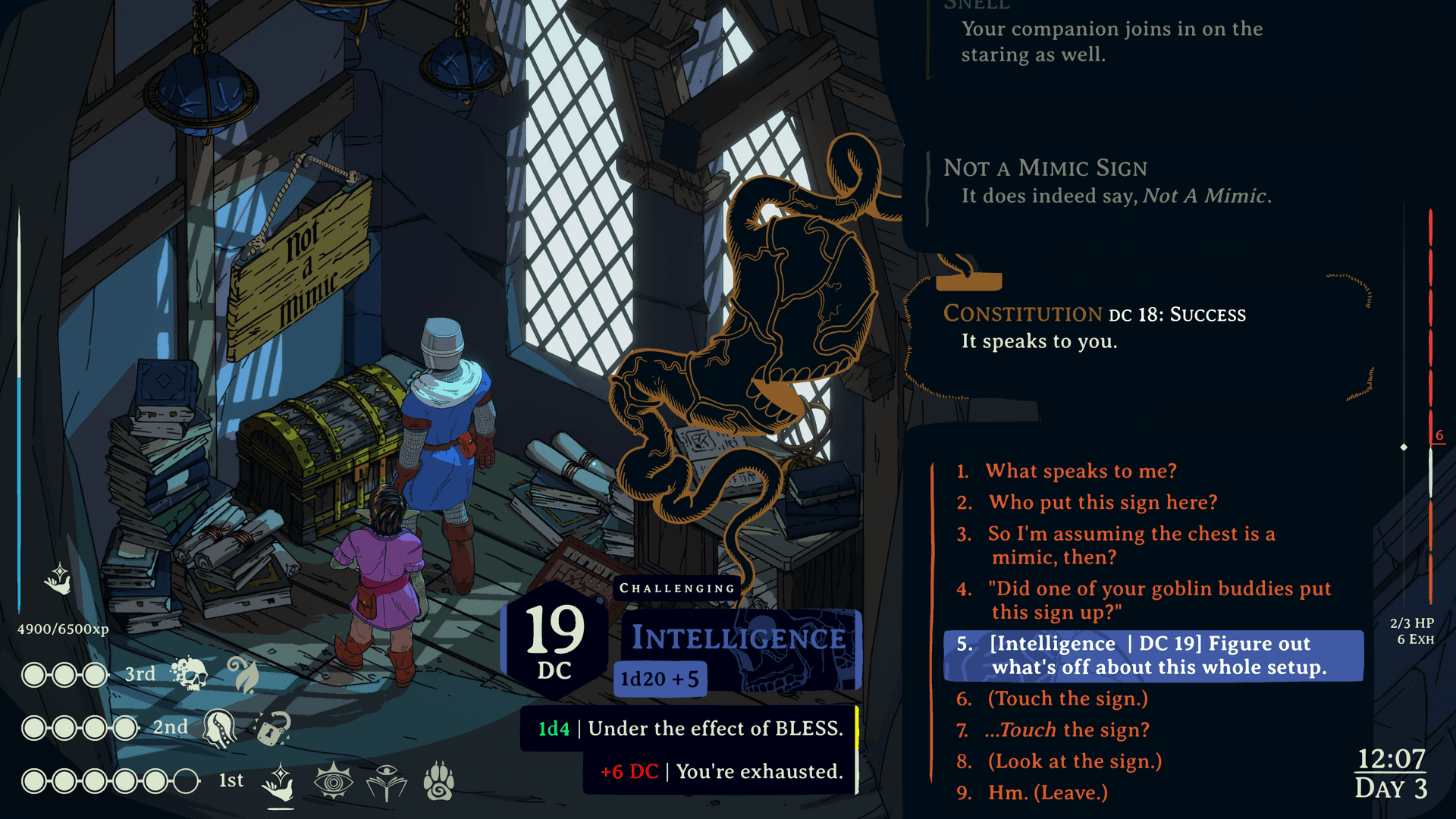
The game is single-player and isometric, but its real engine is dialogue. Branching conversations, investigations, and combat all rely on TTRPG-style dice rolls, so the same scene can resolve in several different ways depending on your build, your choices, and your luck. That structure is closer to a tabletop campaign than to a conventional CRPG where dialogue trees often funnel back into the same outcome. Here, the point is to let the system push back.
That is also why the setting does so much work. A tea shop explosion five days before a historic election is not just flavor text. It tells you the game wants to connect personal absurdity to public instability, so the mystery is always moving through a larger political context. The more the world leans toward chaos, the more the dice, and your willingness to live with their results, become part of the story.
How the game builds player agency
Esoteric Ebb’s most important design promise is that it wants your run to feel singular. Steam describes it as a single-player CRPG inspired by tabletop adventures, and that inspiration shows up in the way it treats failed checks, branching dialogue, and hidden content. In a game built like this, agency is not about always getting what you want. It is about feeling that the world has genuinely changed shape because of how you approached a problem.
That is reinforced by the scale of the script. Bodegård has said he writes around 700,000 words for the game, and expects most of them not to appear in a normal playthrough. That is not just a number meant to impress. It signals a design philosophy where replayability is not an add-on, but the whole structure. The game invites you to miss things, to discover alternate routes, and to accept that another run may reveal a different version of the same scene.
A demo was available on Steam before launch, and Steam said demo progress could carry over to the full game. That matters in a project built on momentum and exploration, because it encourages you to treat the opening as part of the eventual long-form experience rather than as a throwaway teaser. It also suggests confidence in the opening stretch, which is essential for a game that asks you to trust its systems before the larger mystery has fully opened.
From prototype to publisher
The road to release is part of the story here. Bodegård said the project began in 2018, long before Disco Elysium reshaped expectations for narrative RPGs. He first showed it publicly in 2022, then released a first real playable Steam version in February 2023 with about 50,000 words of dialogue. He has also said he created new prototypes every year, which helps explain why the game has had time to evolve from an experiment into something much larger.
That evolution was not linear. Early feedback said the project was too similar to Disco Elysium, forcing Bodegård to rethink parts of the design. That pressure is easy to understand in context. Once the market starts chasing deeper, stranger dialogue RPGs, anything in that orbit risks being compared to the genre’s most influential recent success. Esoteric Ebb seems to have answered that challenge by doubling down on its own fantasy absurdity, its cleric protagonist, and its more explicitly tabletop-style approach.
The community around the project also mattered. Sweden Game Arena said the game grew out of a prototype and was supported by Sweden Game Startup and the local game-development community. Bodegård, who is based in Motala, studied Game Writing at the University of Skövde and graduated in 2017 before later founding Sudden Snail. That path matters because Esoteric Ebb looks like the kind of game that depends on a tight development network, not just one isolated creative burst.
Why this launch is being watched so closely
The turning point came in spring 2024, when PC Gamer coverage helped drive the game’s wishlist from 8,000 to 25,000 in a single week. That spike helped bring Raw Fury on as publisher, turning a promising prototype into a properly supported release. When a game centered on branching dialogue and hidden narrative paths gets that kind of attention, it becomes more than a niche curiosity. It becomes a test case for whether the market still rewards depth, eccentricity, and systems that resist easy summary.
That is why the early response has been so notable. Raw Fury’s store page frames the game around tabletop freedom, and The Sixth Axis called it an achievement in storytelling and an immersive roleplaying experience. Those reactions align with what the project is trying to do: create a CRPG where the feeling of conversation matters as much as combat, and where the pleasure comes from watching the game keep up with your choices.
At $24.99, Esoteric Ebb is entering the market with a clear pitch and a strong identity. It is not just another fantasy mystery, and it is not just another attempt to chase the shadow of Disco Elysium. It is a direct challenge to the idea that deep narrative RPGs must be rigid underneath their complexity. If it works, it will show that the best modern CRPGs can still feel like they are being invented with you, one dice roll and one unexpected branch at a time.
This article was produced by Prism’s automated news system from verified source data, official records, and press releases, then run through automated quality and moderation checks before publishing. The system is built and supervised by the people who set the standards it runs under. Read our full AI policy.
Did this article answer your question?