NEU urges smaller classes as England pupil numbers fall
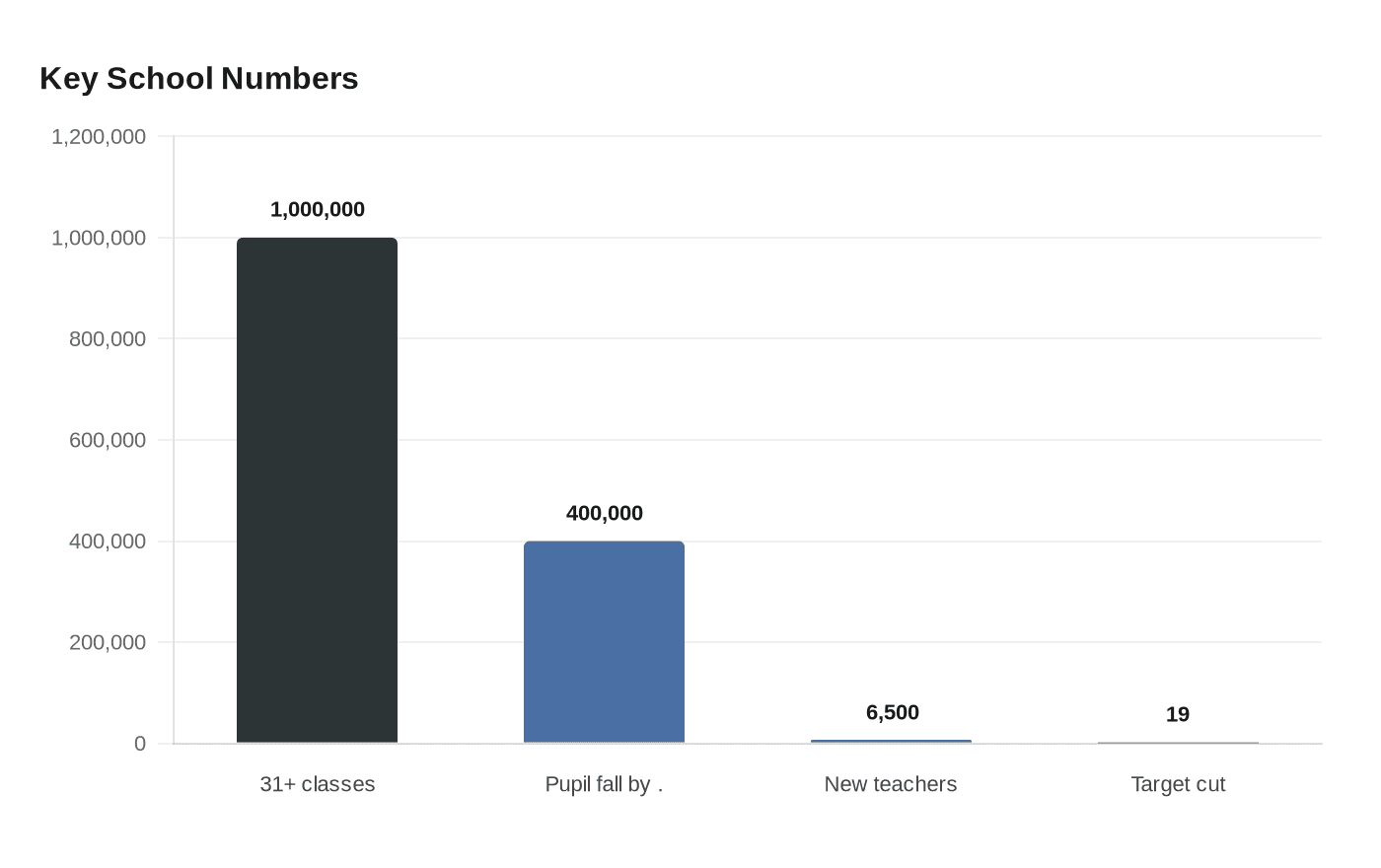
England’s falling pupil rolls could shrink budgets or shrink class sizes. NEU says more than a million children are already in classes of 31 or more.

Falling pupil numbers have opened a direct political choice for England’s schools: use the demographic dip to cut class sizes, or let it flow through to smaller budgets, fewer teachers and fewer places. The National Education Union is pressing ministers to choose the first option, arguing that lower rolls should mean better classrooms rather than recruitment cuts.
The union says England has more than one million pupils in classes of 31 or more, the highest figure this century. It also says England has the highest primary class sizes in Europe and the second highest secondary class sizes in Europe. In the union’s view, smaller classes would give pupils more access to teachers, especially disadvantaged pupils and those with special educational needs and disabilities, while easing workload and improving retention.
The Department for Education’s 2025 pupil projections sharpen the stakes. They show England’s state-school population is expected to fall by nearly 400,000 by 2030, with primary and nursery numbers dropping faster than previously projected. The model behind those forecasts draws on Office for National Statistics population estimates and projections, birth registrations and school census data.
That decline does not automatically create savings. The Institute for Fiscal Studies has said that the government’s current decision to protect total schools spending in real terms up to 2029 would raise per-pupil funding in real terms, but future policymakers will still have to decide whether that remains the right approach as pupil numbers keep falling. In practice, that means choosing between keeping money in the system to improve staffing and class sizes, or banking the demographic shift as a fiscal saving.

The workforce picture remains tight. The government has pledged to recruit 6,500 additional teachers across schools and colleges during this parliament, yet parliamentary committees and the National Audit Office have warned that shortages persist, particularly in some subjects, disadvantaged areas and further education colleges. The Department for Education also cut postgraduate initial teacher training recruitment targets by 19% in 2024, with the reduction linked mainly to falling pupil numbers and improved retention forecasts.
Regional pressures are uneven. Recent analysis says pupil numbers are falling fastest in London and some coastal areas, where school leaders are already merging classes or cutting staff. The National Foundation for Educational Research says primary teacher numbers are declining as pupil rolls fall, while secondary teacher numbers may start to ease in the next few years. For ministers, the choice is becoming clearer: treat fewer children as a chance to thin out the system, or use the moment to make England’s classrooms smaller and its teaching force stronger.
This article was produced by Prism’s automated news system from verified source data, official records, and press releases, then run through automated quality and moderation checks before publishing. The system is built and supervised by the people who set the standards it runs under. Read our full AI policy.
Know something we missed? Have a correction or additional information?
Submit a Tip