New Evidence Shows U.S. Missiles Hit Iranian Civilian Areas, Killing 21
New images and video from the Feb. 28 strike on Lamerd confirm PrSM missiles hit a crowded volleyball hall and residential areas, killing 21 people including four children.
The playground outside a sports hall in Lamerd, Fars province, was peppered with hundreds of uniform, tightly clustered holes: the signature left when a warhead disperses tungsten pellets from above. That fragmentation pattern, visible in additional images and video released this week, became the sharpest piece of evidence yet in the contested attribution of a February 28 strike that killed 21 people, including four children, and wounded 100 more.
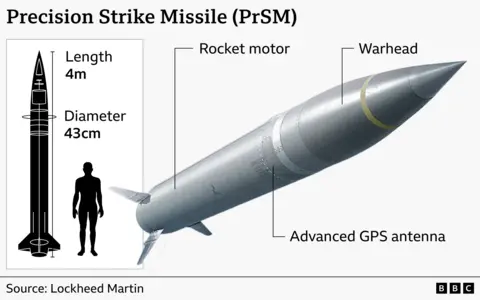
Two Precision Strike Missiles, known as PrSMs, struck the facility while a women's volleyball team practiced inside. A second strike landed in a residential area roughly 275 meters away. An adjacent elementary school was also damaged. Together, the strikes represent what independent weapons analysts say was the combat debut of one of the U.S. Army's newest weapons, a Lockheed Martin-built short-range ballistic missile deployed during Operation Epic Fury that had completed prototype testing only the previous year.
Six experts who reviewed footage of the strikes independently attributed the weapon to the PrSM, citing a set of physical signatures: canard fins visible in flight footage, an airburst detonation above the hall consistent with the PrSM's warhead design, and the dense field of small-caliber impact marks on surrounding walls and the playground below. Jeffrey Lewis, a nuclear nonproliferation expert at Middlebury College, said after examining the videos and photographs: "While we knew PrSM was fired, this is the first look we've gotten at the business end of the system." A McKenzie Intelligence analyst concluded that "the warhead behaviour and effect from the Lamerd strike displays a level of technical sophistication that we have not observed, so far, from any Iranian cruise or ballistic missile." Trevor Ball of Bellingcat found the missile's length "much more consistent with the PrSM" than any Iranian alternative, noting the Hoveyzeh cruise missile carries wings and a visible external engine absent from the Lamerd footage. A U.S. official who confirmed the weapon's identity spoke anonymously, saying they were not authorized to comment publicly.
U.S. Central Command rejected those conclusions. Spokesperson Navy Capt. Tim Hawkins said the U.S. "did not launch any strikes at any time into the city of Lamerd or anywhere within 30 miles during the opening day of Operation Epic Fury," and argued the munition in the footage appeared roughly twice the length of a PrSM, making it more consistent with an Iranian Hoveyzeh. Defense Secretary Pete Hegseth separately maintained that U.S. forces "never target civilian targets." That denial sits uneasily alongside a separate CENTCOM acknowledgment that PrSMs were indeed fired from an unnamed Gulf country against Iran in the conflict's opening phase, a fact Joint Chiefs Chairman Dan Caine highlighted at a March 13 press conference, where he said the military had "made history" and acted with "precision and determination."
The laws of armed conflict require belligerents to distinguish between combatants and civilian objects, apply proportionality in targeting, and take feasible precautions to minimize harm. Legal analysts have argued the PrSM's first combat deployment obligated the Pentagon to conduct a formal legal review of the weapon before using it near populated areas. No such review has been made public. Iranian Foreign Ministry spokesperson Esmaeil Baqaei described the weapon's airburst design as intended "to maximize human casualties" and called the strike "a despicable war crime."
Congressional pressure is growing, with members of both chambers pressing for classified briefings on civilian casualty assessments from Operation Epic Fury's opening strikes. Whether those briefings address Lamerd, and whether any Pentagon legal review of the PrSM's use exists at all, remain the unanswered questions at the center of a body of evidence that keeps expanding.
This article was produced by Prism’s automated news system from verified source data, official records, and press releases, then run through automated quality and moderation checks before publishing. The system is built and supervised by the people who set the standards it runs under. Read our full AI policy.
Did this article answer your question?


