Vance, Iran's Qalibaf Head to Islamabad for Highest-Level Talks in Decades
Vice President Vance and Iranian Parliament Speaker Qalibaf met in Islamabad for the highest-level U.S.-Iran talks since the 1979 Islamic Revolution.
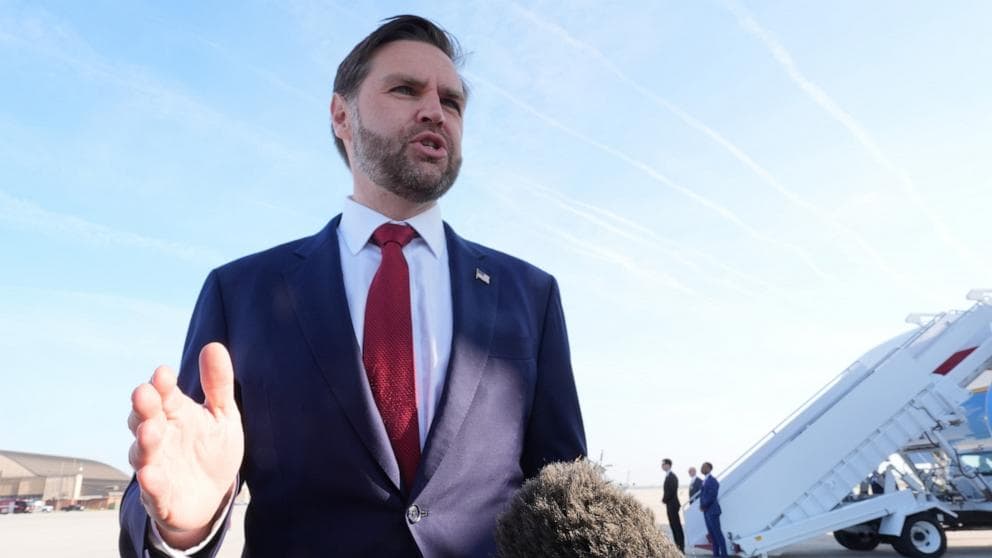
Vice President JD Vance and Iranian Parliament Speaker Mohammad Baqer Qalibaf met in Islamabad for the highest-level direct talks between Washington and Tehran since Iran's 1979 Islamic Revolution, a meeting convened under the shadow of a two-week ceasefire agreed just hours before President Trump's deadline threatening to destroy what he called "a whole civilization."
The summit, hosted by Pakistani Prime Minister Shehbaz Sharif, arrived six weeks after U.S. and Israeli forces launched coordinated strikes that killed Iranian Supreme Leader Ayatollah Ali Khamenei and opened a state of open war between the two nations. Sharif announced the ceasefire on April 7 via a post on X, with the truce taking effect April 8, positioning Pakistan as an unlikely but consequential new regional mediator.
Three structural disputes dominate the agenda, each carrying its own built-in landmine. On the Strait of Hormuz, Iran restricted more than 90% of commercial shipping through the waterway after closing it on March 4, blocking roughly 10 million barrels per day of oil production through a chokepoint that normally handles about 20% of the world's oil and natural gas. As of Thursday, 230 loaded oil tankers remained stranded inside the Persian Gulf. Brent crude surged past $120 per barrel from a pre-war level of around $70, and U.S. government officials and Wall Street analysts have warned prices could spike to an unprecedented $200 per barrel if the blockade persists deep into the second quarter. QatarEnergy declared force majeure on all exports, and output from Kuwait, Iraq, Saudi Arabia and the United Arab Emirates has also been disrupted.
On frozen assets, Iran's 10-point negotiating framework demands the release of more than $100 billion in overseas funds and the lifting of all U.S. primary and secondary sanctions as preconditions rather than outcomes. Qalibaf reiterated that position Friday, setting up an immediate confrontation with the U.S. delegation on sequencing.
Lebanon presents the third and perhaps most volatile flashpoint. Qalibaf stated Friday that negotiations could not even begin unless Israel halted its strikes on Hezbollah targets. Both Trump and Israeli officials have been explicit that the ceasefire does not extend to Lebanon. An Iranian-backed Iraqi militia's threat of renewed attacks against Israel further complicated the picture before talks even opened.
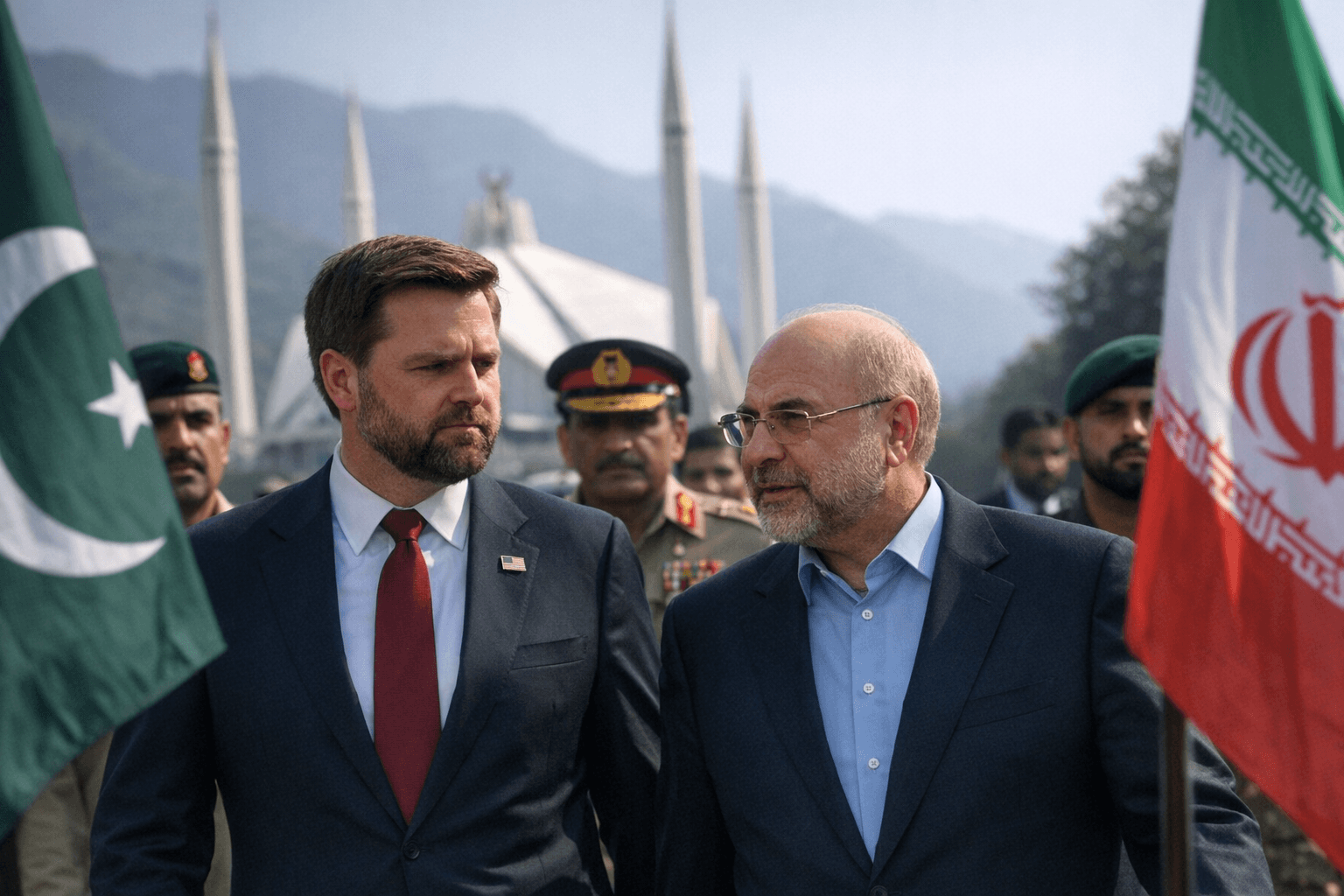
The contradictions inside Iran's own government were visible before any handshake. Qalibaf alleged that three clauses of Tehran's 10-point proposal had already been violated, while IRGC-affiliated Fars News flatly denied that any negotiations with Trump had taken place at all.
Vance told reporters before departing that he expected "positive" results and said he had received "pretty clear guidelines" from Trump. Trump said on NBC that he was "very optimistic," describing Iranian leaders as "much more reasonable" in private and adding, "They've been conquered. They have no military."
Pakistan's ambition for the summit is deliberately modest. Former U.S. Ambassador to Pakistan Cameron Munter forecast both sides would arrive with maximal demands, leaving Pakistani officials to referee toward any middle ground. Islamabad's stated goal is simply to produce a deal that keeps the talks alive. That minimalism reflects how far the two sides remain from any durable agreement, and how much now depends on whether Vance and Qalibaf, a former IRGC commander representing a government whose supreme leader was killed six weeks ago by American and Israeli forces, can clear even that low bar.
This article was produced by Prism’s automated news system from verified source data, official records, and press releases, then run through automated quality and moderation checks before publishing. The system is built and supervised by the people who set the standards it runs under. Read our full AI policy.
Did this article answer your question?


