New film shows how weather forecasts helped win D-Day
A new film revisits the forecast that gave Eisenhower a 24-hour delay, and the wartime science that turned weather into a weapon.
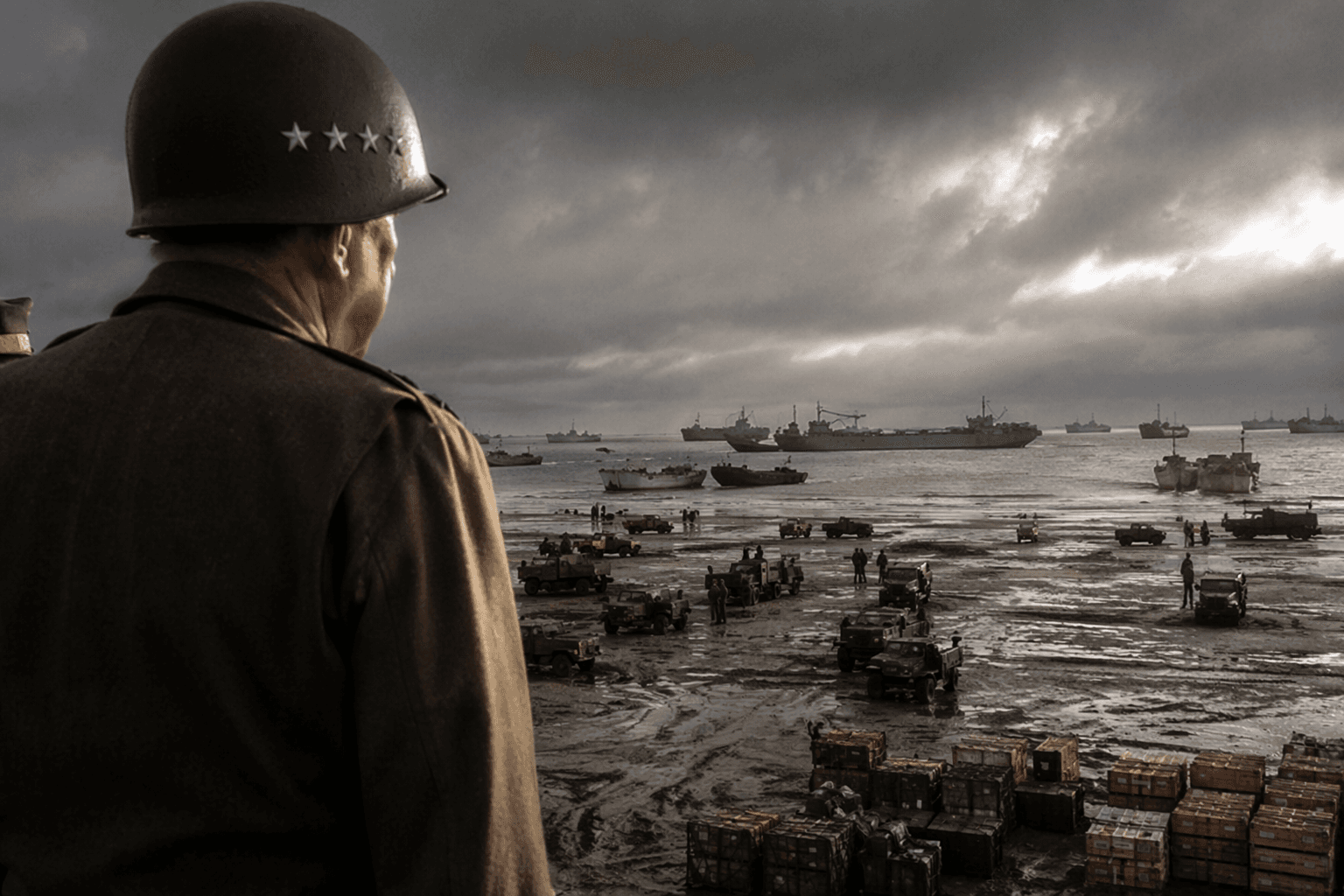
A bad forecast changed the course of D-Day. In the early hours of June 4, Dwight D. Eisenhower accepted meteorologist James Stagg’s warning and pushed the Normandy invasion back 24 hours, buying time for the Allies to wait for the narrow weather opening that appeared on June 6, 1944.
The new film Pressure turns that moment into a wartime drama, with Andrew Scott as Stagg and Brendan Fraser as Eisenhower. That choice of subject is not just historical atmosphere. D-Day demanded a rare combination of favorable tides, moonlight, wind, cloud cover and sea conditions, and a mistake in the forecast could have stranded troops in the English Channel or exposed the landing force on the beaches of France.
What makes the story so striking is how limited meteorology was at the time. In 1944, forecasters had no satellites, no computer models and no weather radar. American forecasters leaned more heavily on historical weather patterns for the same date and place, while British forecasters focused on temperature, pressure, humidity and weather fronts. The Met Office says military decisions were also informed by air reconnaissance, ship observations, UK observation sites and German information once the Enigma code had been broken.
That mix of data helped identify a short weather window. Some accounts describe it as only nine suitable days in late May and early June, with June 5 the first date in a narrow three-day period that fit the necessary astronomical conditions. The forecast that emerged from that system became, in the words of University of Reading meteorologist Andrew Charlton-Perez, the major weather story of World War II.
Pressure frames that history as a tense decision at Southwick House near Portsmouth, rather than a conventional combat film. That matters because the real drama was not just military courage, but information, timing and uncertainty. Stagg’s warning gave Eisenhower a chance to postpone the landing by 24 hours, and the invasion went ahead on June 6.
The episode still resonates because D-Day marked a turning point in weather science as much as in military history. The forecast proved that atmospheric knowledge could shape outcomes on a global scale, and the tools refined in that era helped lay the groundwork for modern forecasting, now essential not only for war planning but for disaster preparedness, shipping, aviation and emergency response.
This article was produced by Prism’s automated news system from verified source data, official records, and press releases, then run through automated quality and moderation checks before publishing. The system is built and supervised by the people who set the standards it runs under. Read our full AI policy.
Did this article answer your question?