New guide emphasizes breath-led approach to reclining big toe pose
A practical how-to for Supta Padangusthasana was published Jan 8, 2026, detailing technique, variations, and teaching cues to support safe hamstring mobility and joint health.
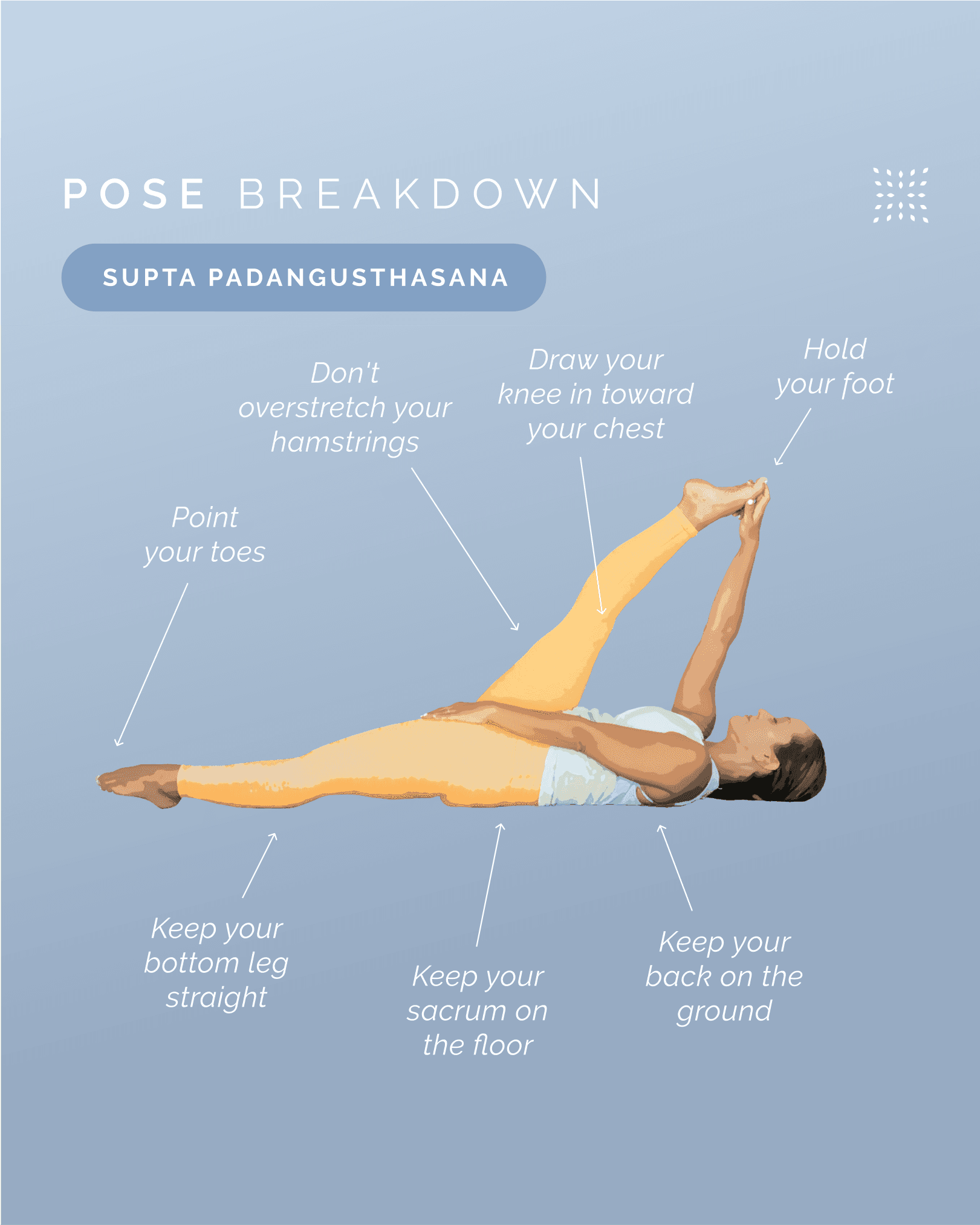
A clear, practice-oriented how-to for Supta Padangusthasana, reclining big toe pose, was published on Jan 8, 2026, offering teachers and home practitioners step-by-step instruction and practical cues to make the pose accessible and safe. The piece centers on slow, breath-led progression, with specific alignment points and variations that let students work within their range while prioritizing pelvic stability and abdominal engagement.
The article opens with the fundamentals: how to arrive in the pose from a supine position, options for keeping the grounded leg strong, and how to find a neutral pelvis before initiating hamstring stretch. Teaching points focus on drawing the navel in to support the lower back, keeping the pelvis level so the stretch targets the hamstrings rather than loading the lumbar spine, and using the breath to invite incremental range of motion rather than forcing length.
Practical variations anchor the tutorial. A belt or strap gives extra reach for less flexible students and allows teachers to cue length through the spine instead of a tug on the leg. A wall variation provides feedback and control by pressing the lifted foot into the wall while the practitioner tunes into pelvic alignment. A side variation opens options for a lateral line stretch while preserving the same core cues of abdominal engagement and steady breathing. Each variation is presented with classroom-friendly language and modifications suitable for at-home practice.
The guide outlines physiological and psychological benefits of this slow, breath-led approach. Gradual stretching with mindful breathing supports hamstring mobility while protecting joints, and the emphasis on pelvic stabilization reduces the risk of compensatory lumbar extension. Psychologically, the tutorial highlights how breath-led pacing can lower anxiety around range-of-motion work and encourage attention to sensation rather than forced outcome.
For teachers, the piece includes clear cues that translate across different class levels: prioritize quality of alignment, offer the belt or wall early, and coach students to back off when the breath becomes shallow. For solo practitioners, the instructions make it straightforward to adapt the pose to daily needs, whether warming up before a flow or using the posture for rehabilitative maintenance.
The takeaway? Move with the breath, not with ego. Our two cents? Keep the pelvis steady, recruit the core, and use props as precision tools—not crutches—to help you extend safely. Practice patience in the hamstrings; incremental progress guided by steady breathing pays off more than a quick, flashy bend.
Sources:
Know something we missed? Have a correction or additional information?
Submit a Tip