New Mexico Closes Arguments in Landmark Meta Child Safety Trial
A Santa Fe jury ordered Meta to pay $375 million after finding the company willfully misled New Mexico users about child safety on Facebook and Instagram.
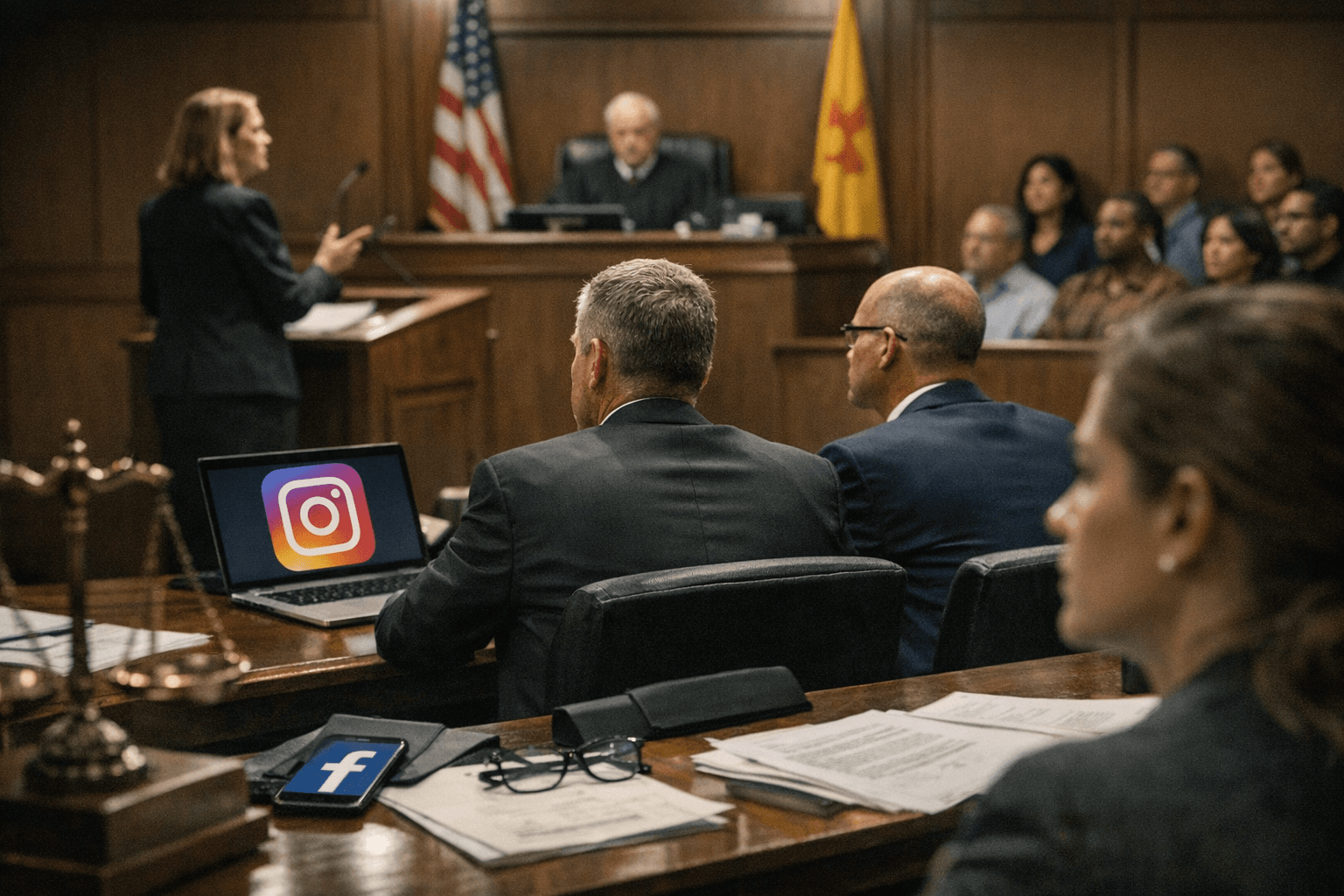
A Santa Fe jury delivered a verdict Tuesday against Meta, finding the parent company of Facebook, Instagram, and WhatsApp willfully violated New Mexico's consumer protection law by misleading users about the dangers its platforms posed to children.
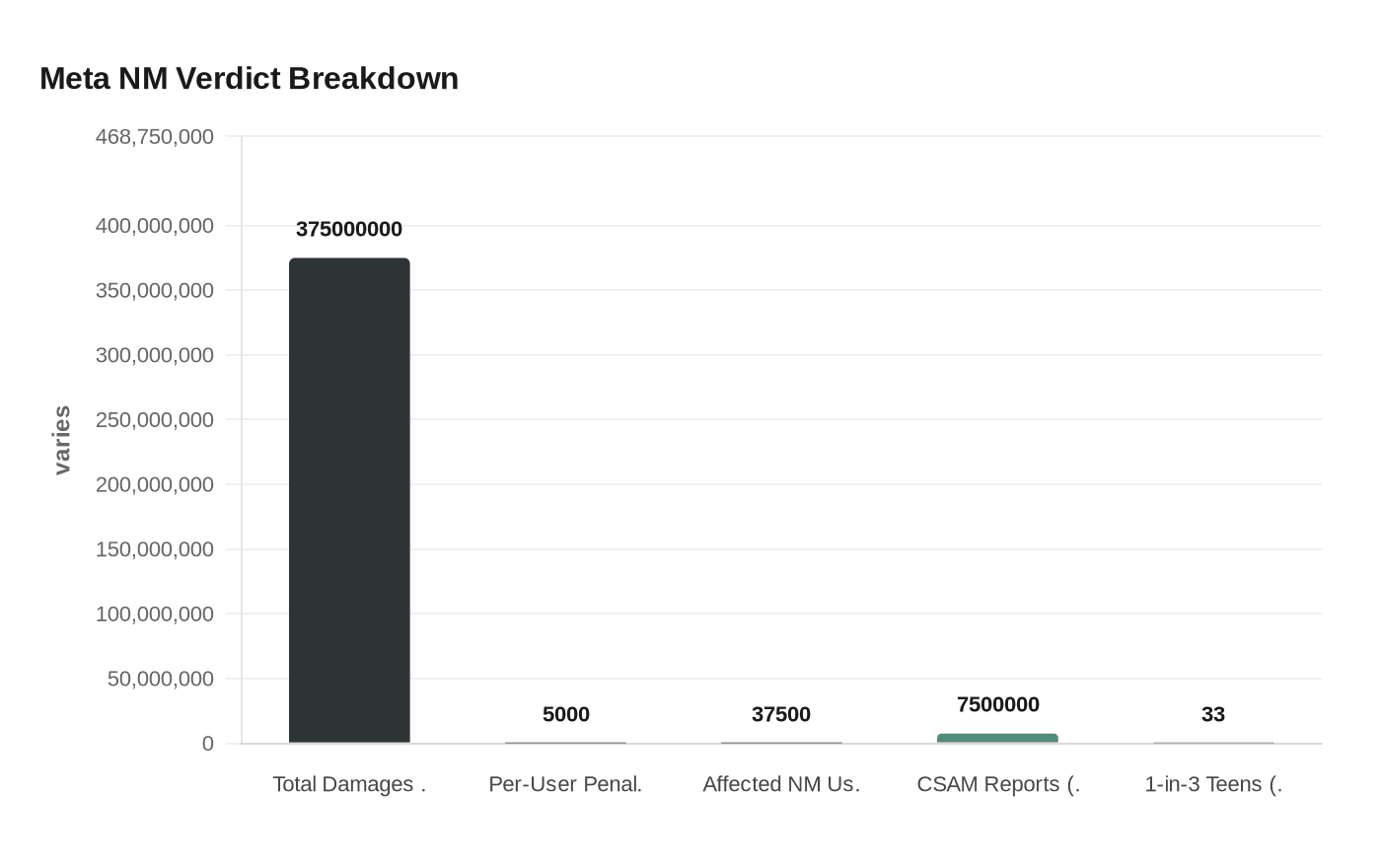
The jury found Meta willfully violated New Mexico's consumer protection laws and ordered the social media giant to pay $375 million in damages, awarding the maximum penalty of $5,000 for one count of misrepresentation of platform safety and another count of "unconscionable practices," applied against 37,500 New Mexico users.
The jury agreed that Meta made false or misleading statements and engaged in "unconscionable" trade practices that unfairly exploited the vulnerabilities of children. In reaching its verdict, jurors considered whether social media users were misled by specific statements about platform safety by Meta CEO Mark Zuckerberg, Instagram head Adam Mosseri, and Meta global head of safety Antigone Davis.
The trial, which started Feb. 9, is one of the first in a torrent of lawsuits against Meta and comes as school districts and legislators want more restrictions on the use of smartphones in classrooms. It is the first of more than forty similar cases to reach a trial and a potential verdict.
Closing arguments had concluded Monday, March 23, in Santa Fe's 1st Judicial District Court before Chief Judge Bryan Biedscheid. Prosecution attorney Linda Singer told jurors that Meta concealed what its own internal data showed about the scale of the problem. "It's clear that young people are spending too much time on Meta's products, they've lost control," Singer said. "Meta knew that and it didn't disclose it."
Singer pointed directly to internal research the company never made public. "It was included in Meta's internal research, again this was research that didn't get disclosed by Meta, one-in-three teens experienced problematic use," she told jurors. "They knew these kids were struggling with problematic use, again, addiction."
In deliberations, the jury used a checklist of allegations from prosecutors that Meta failed to disclose what it knew about problems with enforcing its ban on users under 13, the prevalence of social media content about teen suicide, and the role of Meta algorithms in prioritizing sensational or harmful content.
During the trial, prosecutors revealed legal filings detailing internal messages from Meta employees discussing how Zuckerberg's 2019 announcement to make Facebook Messenger end-to-end encrypted by default would impact the ability to disclose to law enforcement some 7.5 million child sexual abuse material reports. A recording of Zuckerberg's deposition was played for the jury on March 4, 2026, in the Santa Fe courthouse.
Meta's defense team, led by attorney Kevin Huff, argued throughout the nearly seven-week proceeding that prosecutors cherry-picked evidence and conducted a "shoddy investigation," and that the company continuously improves safety and addresses compulsive social media use without infringing on free speech. "We respectfully disagree with the verdict and will appeal," a Meta spokesperson said, adding: "We work hard to keep people safe on our platforms and are clear about the challenges of identifying and removing bad actors or harmful content."
A second portion of the trial is set to begin May 4, when the New Mexico Department of Justice will argue a public nuisance case against Meta and seek orders from Judge Biedscheid requiring the company to make changes to its platforms, potentially including age verification requirements, and possibly pay additional damages.
In a federal court in California, a separate jury has been sequestered in deliberations for more than a week about whether Meta and YouTube should be liable for harms caused to children on their platforms, in one of three bellwether court cases that could set the course for thousands of similar lawsuits. Tuesday's $375 million verdict in Santa Fe now stands as the first concrete financial judgment in that national reckoning.
Know something we missed? Have a correction or additional information?
Submit a Tip

