New South Wales reviews drone rules after Coogee shark attack
A shark bite 30 meters off Coogee Beach left a 35-year-old woman critically stable and pushed NSW to weigh drone limits against faster rescues.

A shark attack at Coogee Beach has forced New South Wales to confront a basic beach-safety tradeoff: how to keep drone rules tight enough to protect airspace and privacy, while allowing emergency crews to scan the water fast enough to spot danger. The incident has also reopened a broader question for beach-heavy jurisdictions across Australia and beyond: whether one close-range attack can justify a lasting rewrite of coastal surveillance rules.
A 35-year-old woman was bitten about 30 meters from shore on Saturday, June 13, while swimming with friends between the flags. She suffered serious injuries to her lower left leg and arms and remained in critical but stable condition at St Vincent’s Hospital on June 14. Coogee Beach and other beaches in Randwick Council’s area were closed for 24 hours after the attack, while drones flew under emergency provisions to search the water for sharks.
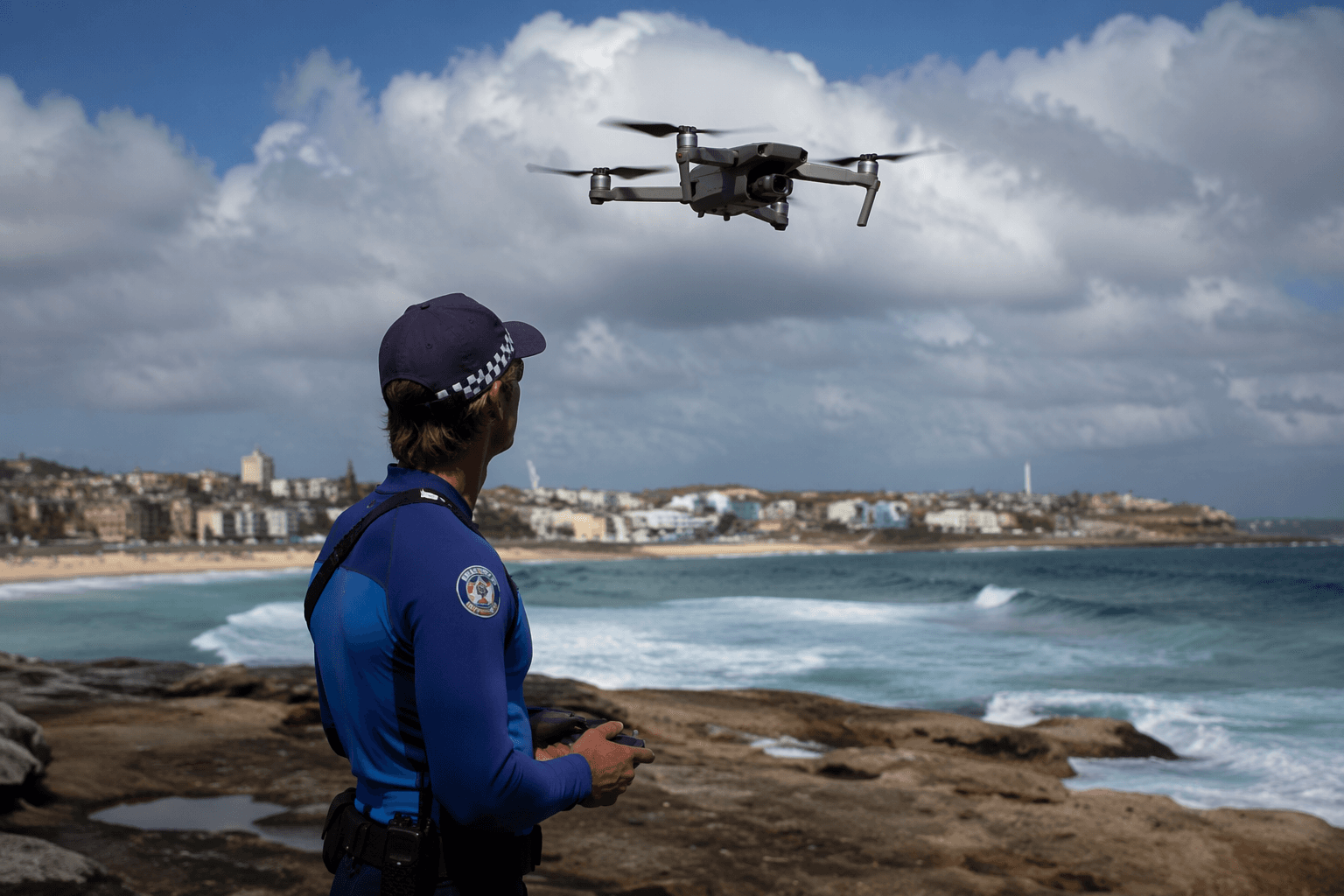
The attack immediately exposed the tension around Coogee’s airspace. The beach sits under the flight path of Sydney Kingsford Smith Airport, which had limited commercial drone use before the incident. That restriction was temporarily lifted so shark-spotting drones could operate, and state officials said they would work with the Civil Aviation Safety Authority to try to make the exemption permanent. Tara Moriarty, the New South Wales agriculture minister, said the government was taking shark activity and shark attacks very seriously and would consider fresh measures to keep swimmers safe. The government has also said “nothing is off the table” on future shark measures, including culling.
The response is being shaped by a larger and more expensive shark-management system already in place. NSW SharkSmart says the state added $6.7 million in December 2025 and January 2026 to strengthen the 2025/26 Shark Management Program, including 30 more drones, 150 additional community shark bite kits, more shark listening stations, targeted bull shark tagging and extended summer operations. A separate $2.5 million summer beach safety boost was also announced in December 2025. The current program includes 305 SMART drumlines across 19 coastal local government areas, nets at 51 beaches across eight local government areas between Newcastle and Wollongong, and up to 50 beaches patrolled by drones during school holidays, with at least one drone patrol location in every coastal local government area.
The Coogee attack lands in a state already under pressure from repeated shark incidents. Most attacks in Australia occur along the east and southeast coasts, which average about 20 incidents a year. A fatal attack on Sydney’s Northern Beaches in September 2025 had already halted a planned trial to remove shark nets from some beaches, showing how each major incident can quickly reset policy. On Coogee’s shoreline, that debate now centers on whether faster drone access is a public-safety necessity or another boundary the state will hesitate to move.
This article was produced by Prism’s automated news system from verified source data, official records, and press releases, then run through automated quality and moderation checks before publishing. The system is built and supervised by the people who set the standards it runs under. Read our full AI policy.
Did this article answer your question?


