New START Treaty Lapses, Ending Bilateral Nuclear Limits for First Time
For the first time since the 1970s, the United States and Russia have no bilateral, legally binding limits on deployed strategic nuclear warheads and delivery systems, raising risks to global stability.
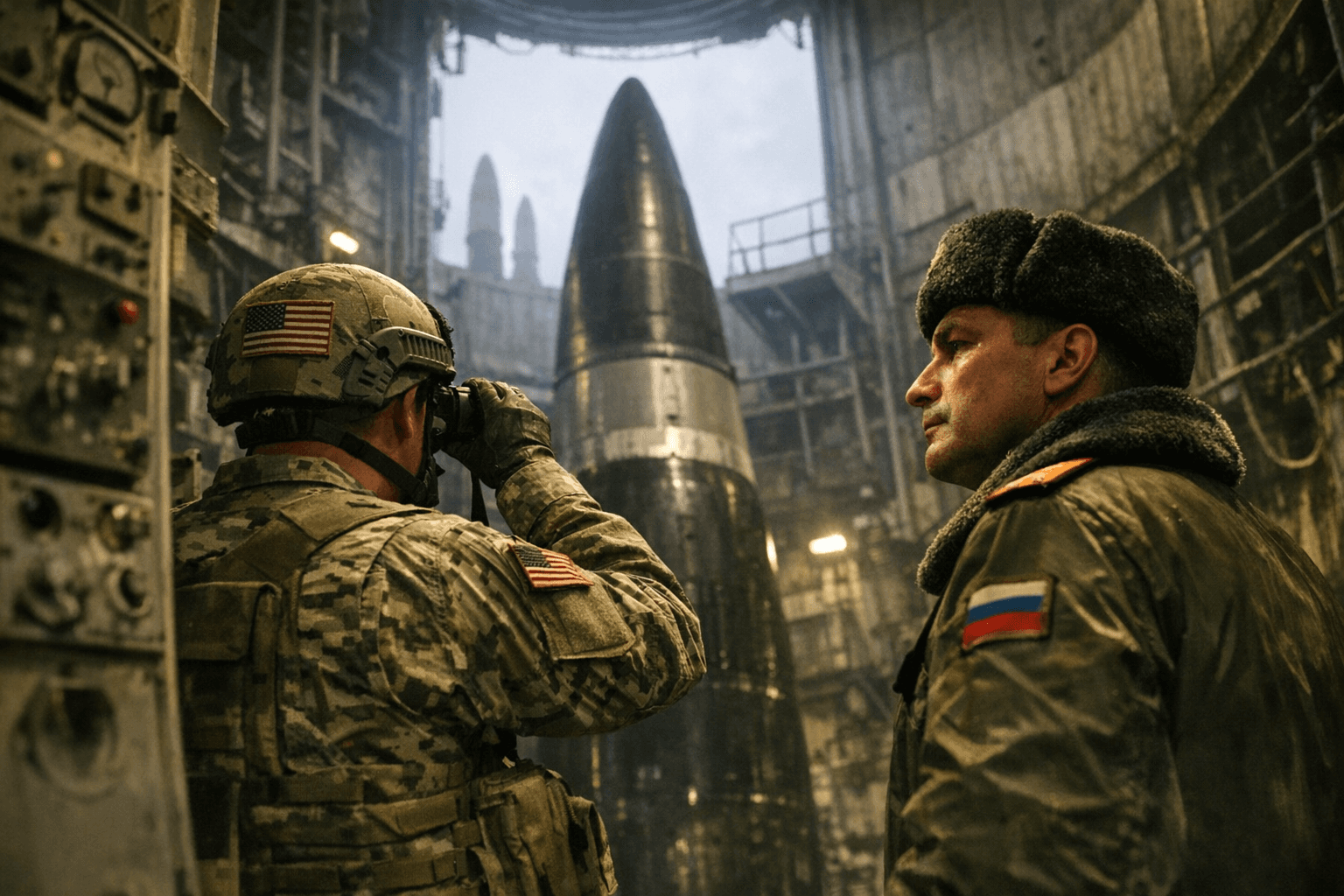
For the first time since the 1970s, there is no bilateral, legally binding cap on deployed strategic nuclear warheads and their delivery systems between the United States and Russia. The New START treaty lapsed at midnight GMT on 5 February 2026, removing the fixed ceilings and formal verification routines that governed the arsenals of the two largest nuclear powers.
Under New START, ratified limits included a cap of 1,550 deployed strategic warheads and ceilings on deployed intercontinental ballistic missiles, submarine-launched ballistic missiles, and heavy bombers with nuclear capability, together with an inspection and data-exchange regime designed to provide transparency. That verification apparatus has been impaired for several years, reducing the practical visibility that made the treaty a steadying force in strategic stability.
In the run up to the lapse, Moscow proposed an informal one-year adherence to the treaty limits, but no formal extension or new legal framework was negotiated. Washington publicly insisted that any future arrangement should include China as a participant in trilateral or multilateral talks. United Nations officials and a range of arms control experts warned that letting the treaty expire increases the risk of a renewed arms race and contributes to global strategic instability, calling for prompt resumption of negotiations and restraint by all nuclear-armed states.
The immediate implications are practical and technical. Without the treaty's data exchanges and inspection visits, open-source analysts, verification laboratories, and monitoring NGOs will have less reliable official information to confirm force postures. Satellite imagery, signal analysis, and national declarations will matter even more, increasing the premium on technical verification tools and independent monitoring methods. For researchers and community members focused on nuclear risk reduction, the lapse means shifting attention from treaty compliance details to indicators of qualitative and quantitative force changes.
Diplomatically, the lapse removes a predictable forum where Moscow and Washington exchanged information and managed crises. Deterrence stability now rests more heavily on declared policy, military signaling, and informal understandings that are harder to verify. Experts say this increases incentives for hedge deployments, rapid modernization, and doctrinal shifts that could complicate crisis management, escalation control, and confidence-building.
Official and expert reactions emphasize renewed dialogue and verification as the next steps. Expect immediate diplomatic activity aimed at restoring formats for talks, technical working groups to shore up monitoring capacity, and public exchanges about force posture. Verify official statements, watch for confirmed inspection reports, and follow verifiable technical indicators such as test launches, declared force changes, and new delivery system deployments.
What comes next matters for community members who track nuclear trends: the lapse makes independent verification work more urgent and raises the stakes for technological and policy tools that reduce miscalculation. Keep monitoring the negotiations, data releases, and technical updates that will determine whether this lapse becomes a pause in arms control or the start of a broader strategic shift.
Know something we missed? Have a correction or additional information?
Submit a Tip